Hero's Journey to Wholeness: A Practical Guide with Ben Katt
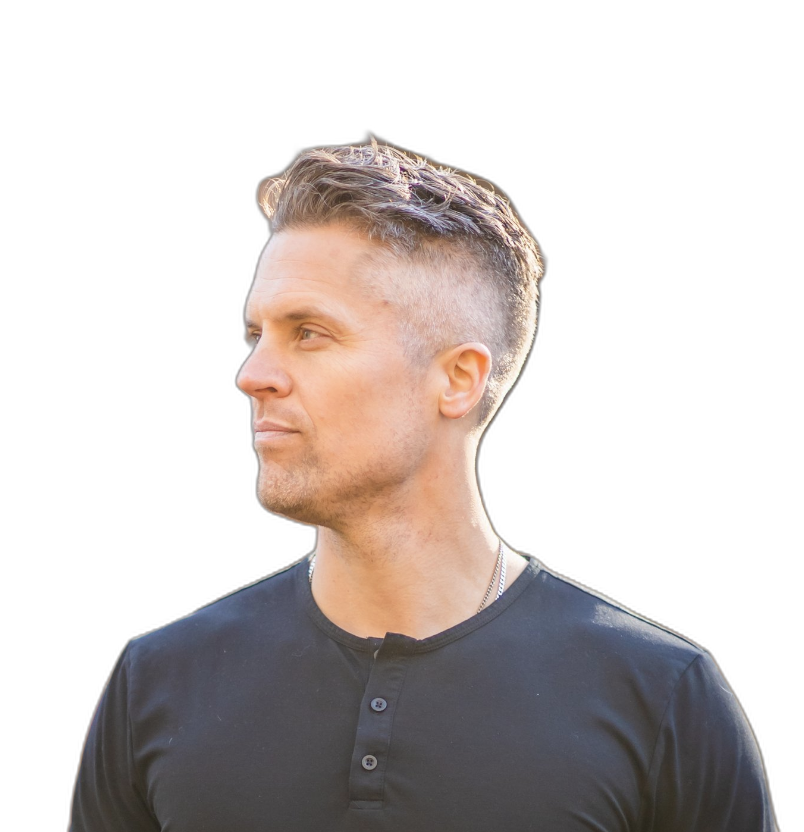
About the guest
Ben Katt
Ben Katt is a spiritual guide, meditation teacher, and author of The Way Home: Discovering the Hero's Journey to Wholeness at Midlife. He serves as Faculty in Residence at Modern Elder Academy, holds a Master of Divinity degree, is a certified advanced meditation teacher, and has worked as an ordained minister, hospice chaplain, prison meditation teacher, founder of Aurora Commons, and social healing leader at The On Being Project.
Learn more →Listen to the episode
How to use the hero's journey as a practical map for honest transition
The framework Ben Katt lays out in this conversation can help you make sense of discontent, burnout, transition, and the persistent sense that you are wearing a life that used to fit. The useful application: listen earlier, leave more honestly, enter the unknown with support, and return with practices that help you live differently.
Ben's map has three movements: leaving the familiar, falling into the unknown, and rising to wholeness. He frames the final movement as a "begin again" spiral, where you arrive somewhere more whole and then life invites another layer of growth.
Use this guide when you sense that something in your life, work, identity, relationships, or inner operating system has become too small. The aim is to:
- notice the "call" before it becomes a crisis;
- distinguish the surface change from the deeper pattern that wants attention;
- use journaling and wandering as genuine listening practices;
- build support without outsourcing your discernment;
- integrate insight through small projects, daily anchors, and a return to ordinary life.
1This is not a medical protocol, crisis plan, or replacement for therapy, spiritual direction, or qualified clinical support. Burnout, depression, grief, trauma, addiction, and suicidal ideation need appropriate care. Use these practices as reflective tools, and go slowly if inner work becomes destabilizing.
The call usually shows up as a pebble in your shoe
Ben names three common doorways into the journey: discontentment, transition, and suffering.
A call rarely arrives as dramatic collapse. More often it is a persistent low-grade sense that your life technically works while something in you is no longer available for the same bargain. Ben's own turning point came during a rainy run in Seattle when the phrase "if you don't have your heart, you have nothing" surfaced and forced him to look at how he was moving through the world.
Start with the smallest honest signal:
| Signal | What to ask |
|---|---|
| Repeating discontent | "What keeps feeling off, even after I explain why it should be fine?" |
| Life transition | "What identity is already loosening because life has changed?" |
| Burnout or depletion | "Where have I confused usefulness, achievement, or approval with being alive?" |
| Subtle envy | "What unlived quality might this person or path be mirroring back to me?" |
| Numbness or restlessness | "What conversation, choice, grief, or desire have I postponed?" |
The first move is listening. Ben emphasizes that the call is often unclear at first; you may know what you are being asked to leave long before you know what you are moving toward.
That ambiguity is exactly why many people refuse the call. The nervous system will often choose a familiar discomfort over an undefined threshold.
Look for the pattern beneath the obvious problem
The thing you want to change may not be the deepest thing asking for attention.
Ben initially fixated on a job he wanted to leave. With support, he realized the deeper work was releasing overidentification with doing, achievement, innovation, and approval, what he calls a three-headed monster of achievement, perfectionism, and people-pleasing.
Someone wants to leave a job, move cities, or end a relationship, and those impulses might be valid. But underneath sits a structural pattern that will simply relocate if the external situation changes without the internal system being met.
Use the "issue behind the issue" inquiry:
- Name the surface problem. "I want to leave this job." "I resent this role." "I feel trapped in this city."
- Name the identity payoff. "This lets me be seen as competent, special, needed, loyal, spiritual, successful, low-maintenance, or good."
- Name the cost. "To keep this identity, I have been giving up ___."
- Name the protected part. "The part of me holding this pattern may be trying to protect me from ___."
- Name the deeper leaving. "The thing I may need to leave is not only ___, but also the pattern of ___."
A new job, partner, city, or spiritual practice can become another stage for the same achievement, perfection, or approval loop if the underlying pattern goes unmet.
Narrative identity research offers cautious support for why a map like this helps. McAdams and McLean describe narrative identity as the evolving life story that gives the past and future some unity and purpose; they also note that themes of agency, exploration, and meaning-making are associated with adaptation, while causal claims need care.1 The story you use matters. It will not do the work for you.
Use journaling and wandering as listening practices
Ben's mentor bought him a journal after the rainy-run moment, and journaling became one of the first practices that helped him turn inward rather than only plan forward.
The distinction between reflection and productivity matters here. A journal can become a to-do list with better stationery. For this kind of transition, the goal is more contact with what is actually happening inside you.
Try three forms of reflective journaling:
- Signal tracking: "Where did I feel most alive, contracted, resentful, tender, or false today?"
- Pattern dialogue: "If my achiever, perfectionist, or pleaser could speak, what would it be trying to protect?"
- Call memory: "When did I first sense that this version of me no longer worked?"
Ben also highlights "wandering in the wild" as a core ritual. This can be a park, a tree, a backyard plant, a walk around the block. The key is going without the usual agenda: no step count, no performance, no problem-solving on command.
A practical wander looks like this:
- Leave your phone behind or put it away.
- Choose a safe container: a known route, a time boundary, and someone notified if you are going somewhere remote.
- Walk slowly enough that attention can be caught by something: bark, wind, ants, light, water, weeds, birdsong, a plant in a window.
- Follow attention rather than forcing insight.
- Afterward, write three lines: "I noticed ___." "It mirrored ___." "The next honest question is ___."
Research on nature exposure should be held carefully, but it points in a compatible direction. In a small controlled study, Bratman and colleagues found that a 90-minute nature walk reduced self-reported rumination and activity in a brain region associated with rumination compared with an urban walk.2 That does not mean nature walks treat depression, trauma, or burnout. It does suggest that low-agenda time outside may create useful conditions for quieter self-reflection.
Practice
Run the 20-minute call-to-adventure check-in
Use this when you feel restless, burned out, over-identified with achievement, or aware that an old version of your life is losing vitality.
- Regulate first. Take two slower breaths, feel your feet, and look around the room. Do not start by demanding a life plan from an activated system.
- Name the doorway. Ask: "Is this mostly discontent, transition, suffering, or a subtler sense of outgrowing?"
- Separate surface from pattern. Write: "The obvious thing I want to change is ___." Then: "The deeper pattern may be ___."
- Ask what wants to be left. Complete the sentence: "I may be ready to leave the familiar identity of being the person who ___."
- Choose one listening practice. Journal for ten minutes, take a phone-free wander, book a session with a therapist or spiritual director, or speak one honest sentence to a trusted friend.
- Choose a reversible next step. Do not make the biggest decision today unless safety requires it. Choose a small experiment that gives you more information within a week.
The aim is enough inner quiet and external support that the next step can become visible.
Expressive writing research is relevant here, but only cautiously. Pennebaker and Beall's early study found that writing about emotionally significant experiences was associated with short-term increases in distress and some longer-term health-related differences in a small student sample.3 The practical takeaway: reflective writing can stir real material, so keep the dose humane and use support when needed.
Get help, but protect the fragile middle of the process
Ben is direct that people need support: a therapist, spiritual director, soul friend, recovery group, spiritual community, or some container where the deeper process can be spoken honestly.
He is equally clear that not everyone deserves access to the fragile middle of your transformation. Some people will rush to solve it, minimize it, spiritualize it, debate it, or pull you back into the familiar role you have occupied in their lives.
Use a support map:
| Support type | Useful for | Watch for |
|---|---|---|
| Therapist | trauma, grief, mental health, family systems, behavior patterns | using therapy only to analyze without experimenting |
| Spiritual director or companion | meaning-making, discernment, prayer/contemplation, calling | bypassing practical or clinical needs |
| Trusted friend or mentor | honest witnessing, encouragement, reality-testing | advice that arrives before listening |
| Group or community | belonging, repetition, shared practice | conformity disguised as wisdom |
| Daily practice | anchoring insight in the body and schedule | turning practice into another perfection project |
The tactical rule: share enough to be supported, and keep the most tender parts for the people who have earned your trust.
This is especially important if your journey touches work, family, faith, identity, or belonging. A call to growth often changes your place in other people's nervous systems. Resistance from others may be the old relational pattern being renegotiated, with their system responding to the shift.
Return with a project, a practice ecology, and ordinary responsibilities
Many transformation stories end at the mountaintop, the retreat, the vision, the breakthrough. Ben and I spent time on the harder question: how do you bring what you found back into ordinary life?
After a wilderness quest with Animas Valley Institute, Ben was encouraged to come back with a project. Something actionable enough to carry insight into daily reality. His first project became a one-night solo show for his community. Later, the material evolved into The Way Home.
Use the return-project format:
- Make it concrete. A gathering, essay, garden, volunteer shift, art project, conversation, ritual, curriculum, or small service.
- Make it time-bound. One evening, four weeks, one prototype, one conversation, one season.
- Make it expressive. Let it embody something you discovered rather than only explaining it.
- Make it non-grandiose. The point is integration, and proving the importance of your breakthrough is beside the point.
- Make it accountable to ordinary life. Your family, work, health, and responsibilities can be anchors that keep the journey from becoming dissociation in mythic clothing.
Ben also recommends a balanced ecology of practices. Meditation can "turn the lights on," while other reflective, relational, somatic, or creative practices help "clean up the room."
For Nervous System Mastery readers, this is a useful integration frame:
- Stabilizing practices: breath, meditation, orienting, sleep, movement, body awareness.
- Reflective practices: journaling, therapy, spiritual direction, dreamwork, meaning-making.
- Relational practices: repair conversations, community, mentoring, honest friendship.
- Expressive practices: art, writing, service, ritual, craft, teaching, performance.
- Return practices: calendar commitments, boundaries, experiments, and small visible projects.
The question to sit with: What combination helps me stay present, honest, supported, and able to act in the life I actually have?
Key takeaways
- The hero's journey is most useful as a map for honest transition.
- The call often arrives through discontent, transition, suffering, burnout, restlessness, or the sense that an old identity no longer fits.
- The obvious external change may not be the deepest work; look for the pattern underneath the surface problem.
- Journaling and wandering help when they create genuine listening.
- Support is essential, but the fragile middle of transformation deserves protection and care in who you share it with.
- Integration requires a return: projects, practices, relationships, responsibilities, and small experiments that let insight become embodied.
- Wholeness works as a spiral. You become, you arrive, you begin again.
Free assessment
Take the free nervous system assessment.
If burnout, overachievement, people-pleasing, perfectionism, or a sense of inner disconnection keeps showing up in your life, the assessment can help you map your current nervous-system patterns and choose a steadier next step.
Take the Free AssessmentContinue exploring
- Read Achieve More by Grinding Less for a complementary guide on ambition, aliveness, and reducing unnecessary striving.
- Read Lasting Transformation for practical ways to make inner change durable instead of episodic.
- Read Somatics, Breathwork, and Emotional Fluidity for a body-first approach to emotional processing and integration.
- Read Reset Your Nervous System for simple regulation practices to use before making major life decisions from an activated state.
References
- McAdams and McLean describe narrative identity as an evolving life story that integrates reconstructed past and imagined future, and review associations between agency, exploration, meaning-making, and adaptation while noting the need to disentangle causality. See Dan P. McAdams and Kate C. McLean, "Narrative Identity," Current Directions in Psychological Science (2013), https://doi.org/10.1177/0963721413475622. ↩
- Bratman and colleagues found that healthy participants who took a 90-minute nature walk showed reduced self-reported rumination and reduced subgenual prefrontal cortex activity compared with participants who took an urban walk. See Gregory N. Bratman et al., "Nature experience reduces rumination and subgenual prefrontal cortex activation," Proceedings of the National Academy of Sciences (2015), https://doi.org/10.1073/pnas.1510459112. ↩
- Pennebaker and Beall's early expressive-writing study found that writing about traumatic events produced short-term increases in physiological arousal and negative mood, while the condition involving both facts and emotions was associated with fewer health center visits over six months in a small student sample. See James W. Pennebaker and Sandra K. Beall, "Confronting a traumatic event: Toward an understanding of inhibition and disease," Journal of Abnormal Psychology (1986), https://doi.org/10.1037/0021-843X.95.3.274. ↩