Life Beyond Total Work with Andrew Taggart
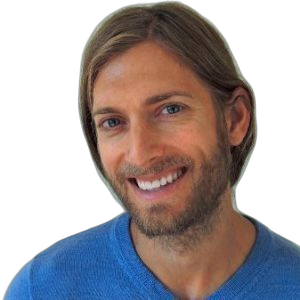
About the guest
Andrew Taggart
Andrew Taggart, Ph.D. is a practical philosopher, writer, and teacher. After leaving academic life in 2009, he began working with people around the world through philosophical conversation and meditative instruction, asking how the question of how to live can return to everyday life.
Learn more →Listen to the episode
You can't optimize your way out of total work
The problem isn't that you work too much. Modern life trains you to experience yourself as a Worker before you are anything else: doer, improver, optimizer, project manager of your own existence.
The usual solutions leave that identity intact. A better calendar, a smarter productivity stack, a more meaningful job, a quantified meditation habit can all dress up the same operating premise: I am here to accomplish, produce, and justify my existence through doing.
Andrew's alternative: learn to notice when work has become your metaphysics (your basic answer to "Who am I?") and create enough space for loss, wonderment, practice, relationship, and livelihood to reorganize around something larger than productivity.
Use this guide as a field manual for:
- diagnosing total work as an identity pattern, not only a schedule problem;
- recognizing the body signals of being trapped in worker-mode;
- using moments of loss or disorientation without rushing back onto the old horse;
- choosing practices by their telos, not by how impressive they make your spiritual résumé;
- re-entering work, service, and livelihood without turning them back into self-worth projects.
1This is not a treatment protocol for burnout, depression, anxiety, trauma, psychosis, or meditation-related distress. If work, spiritual practice, grief, or existential questioning is destabilizing you, go slowly and seek qualified support.
The body knows you're a total worker before the mind admits it
Andrew defines total work as a historical process that has transformed more and more of life into work, and human beings into capital-W Workers. He means this in an ontological sense, not merely an economic one.
A simple diagnostic: watch your first thoughts in the morning. Projects, deadlines, schedules, targets, strategies, meetings, emails, future action. Then the felt state underneath: entrepreneurial fever, overwhelm, stress, burnout, tightness, tension, restlessness, impatience, the sense of being in a cage without knowing there's another way.
Total work is a nervous-system pattern as much as a worldview. You can look for it in the body:
| Signal | Total-work translation | Better question |
|---|---|---|
| Waking with task pressure | "I am already behind." | What is here before the day becomes a project? |
| Tight jaw or held breath at the laptop | "My worth is on the line." | What is the actual task, separated from identity threat? |
| Restlessness during rest | "Rest must justify itself." | Can this be leisure without needing to become recovery work? |
| Turning hobbies into metrics | "Everything should improve me." | What is worth doing for its own sake? |
| Pride in exhaustion | "Suffering proves seriousness." | What would devotion look like without self-erasure? |
The same action can come from very different identities. Writing a proposal, caring for a child, building a company, meditating: all of these can be done as a total worker securing self-worth, or as a human being participating in a larger life. Paid work, ambition, and discipline are fine. The question is which identity is driving them.
Research on workaholism doesn't map directly onto Andrew's philosophical thesis, but offers a cautious empirical echo. Clark and colleagues' meta-analysis found workaholism associated with job stress, work-life conflict, and burnout. That doesn't prove all intense work is harmful or that "total work" is a clinical category, but it supports taking compulsive overwork patterns seriously.1
Getting knocked off the horse is the opening
Andrew's most useful image from the conversation is the horse. You're riding along toward success, calling, more education, meaningful work, a better biography. Institutions help you stay on and keep it moving at a good clip.
Then life knocks you off.
Grief, illness, burnout, failure. A strange boredom that your old answers can't touch. The quiet realization that the life you've been optimizing is too small. Andrew calls this an existential opening: the moment when something in you is curious enough, or strong enough, to stay on the ground for a while.
From there, he names two paths:
- The way of loss. You see that what mattered on the horse is gone, or no longer sufficient, and you cannot return to where you came from. This can include being genuinely lost for a time.
- The way of wonderment. You begin to marvel before what you can't yet understand. You don't know the answer, but the question itself lights the way forward.
The tactical mistake is treating the opening as a productivity interruption. You get knocked off the horse, then immediately ask: "How do I use this to become more resilient, more focused, more impactful?" That question reinstalls the rider.
Try these instead:
- What exactly did this rupture make impossible to keep believing?
- Which identity feels threatened: achiever, helper, founder, seeker, expert, good child, indispensable one?
- What am I tempted to rebuild too quickly?
- What would it mean to be lost without making lostness into a new brand?
- What question is alive before I turn it into a plan?
Andrew's own turning point came after finishing his Ph.D., when he realized he had no idea what his life was about or why he was doing any of it. He describes that as waking up to scripts that were not of his own choosing. Respect the moment when your inherited script stops working. Stay there long enough to hear what comes next.
Practice
Run the 12-minute total work disidentification audit
Use this when you feel restless, over-identified with achievement, unable to rest, or secretly proud of how much pressure you're carrying. Twelve minutes, pen and paper.
- List the morning contents. Write down the first five work-like thoughts that showed up today: deadlines, messages, metrics, people to impress, things to fix, ways to improve yourself.
- Locate the Worker in the body. Scan jaw, eyes, throat, chest, belly, hands, posture, breath. Name the dominant state: tight, urgent, feverish, collapsed, numb, restless, impatient.
- Complete the identity sentence. "If I stop doing and improving, I fear that I am ___." Don't polish the answer.
- Name what is not work. Write three things in your life that are not valuable because they make you better, more useful, more impressive, or more productive.
- Ask the live question. Borrow Andrew's closing prompt: "What is the question to which I am most vibrantly alive?" Sit with it for two minutes without answering.
- Choose one non-totalizing action. Take a walk without tracking it. Do one task without self-judgment. Rest without optimizing recovery. Help someone without converting it into proof of goodness.
The win is feeling, even briefly, that your existence is larger than the Worker. You don't need to quit your job or abandon ambition to get there.
Your spiritual résumé can be total work in disguise
Andrew calls them psychotechnologies: practices, exercises, disciplines, and spiritual exercises that can bring about a dispositional shift in a person or group. Meditation, philosophical conversation, relational practice, breathwork, community, rites of passage, even surfing can qualify, but only if they actually transform how someone sees and lives rather than becoming another object of egoic pursuit.
His key warning: total work spiritualizes. The old résumé listed companies, titles, funding, publications, credentials, output. The new one lists retreats, hours meditated, ceremonies attended, teachers studied, practices mastered, peak experiences collected.
He emphasizes telos: the "for the sake of which" a practice is undertaken. A telos differs from a goal, which tends to sit out there in the future. A telos gives the practice its meaning here and now.
Before adding a practice, ask yourself:
- For the sake of what am I doing this? Relief, status, awakening, healing, belonging, curiosity, avoidance, service, love?
- Does this practice make me more honest, more defended, or more impressive?
- Am I using it to deepen contact with life, or to avoid grief, conflict, boredom, ordinary responsibility, uncertainty?
- Who can see my blind spots when I start performing spirituality?
- What would tell me this practice is no longer serving its telos?
This matters especially in high-performance communities, where self-transformation quietly becomes another optimization domain. Andrew's critique is pro-practice and anti-hijacking: don't let the ego use meditation, breathwork, therapy, philosophy, or community as a better-decorated cage.
Start gently before you seek intensity
Andrew is careful about powerful practices. When asked to imagine an "all hands on deck" academy for becoming whole, integrated humans, he begins with a caveat: some practices are powerful and need care, context, and best practices around them.
His starting point is surprisingly modest. Come as you are, and be seen by trustworthy people who can gauge where you are. If you've never meditated, begin with concentration: count the breath, learn to quiet the senses and the mind, and discover, humbly, how wild and overgrown the mind actually is.
That caution matters because intense containers can expose people too quickly. Andrew specifically worries about putting people who have lived as total workers into demanding silent retreat structures without sufficient theory, preparation, or support, where nonordinary and destabilizing experiences can surface without warning.
A safer progression:
- Stabilize attention: simple breath counting, short sits, orienting, walking without headphones.
- Build body literacy: notice tension, restlessness, fatigue, numbness, and the urge to convert every experience into usefulness.
- Practice wise relating: let other people reveal the patterns that solitary practice may not touch.
- Include healing carefully: work with qualified practitioners when trauma, grief, or long-standing patterns emerge.
- Act in the world slowly enough to see the doer: help, build, serve, or earn without immediately turning action into self-congratulation.
The contemplative science literature supports this graduated approach. Lindahl and colleagues documented a wide range of meditation-related challenges reported by practitioners and teachers, including affective, cognitive, somatic, and perceptual changes. The practical takeaway is respect for dose, context, screening, support, and integration.2
Re-enter work without making it your self
Andrew is asking whether action can happen without the ego immediately claiming: "I did that; therefore I matter." He's arguing for a different relationship to doing, not for passivity.
Near the end of the conversation, he draws an important distinction. Caring for a child, lending a hand, helping people, creating genuine community committed to the common good: these don't need to be called "work" too quickly. Livelihood is a real and lovely question, but it can't be asked to hold everything we want from life.
A re-entry checklist:
| Domain | Total-work version | Post-total-work experiment |
|---|---|---|
| Livelihood | "My work must give me identity, meaning, status, community, and salvation." | "How can I earn and contribute without demanding that livelihood answer every existential question?" |
| Service | "I am good because I help." | "Can help move through me without credit-taking?" |
| Ambition | "My life matters if the outcome proves it." | "Can I act from devotion and release the fruits?" |
| Practice | "My practice makes me advanced." | "Does this make me more truthful, loving, and free?" |
| Rest | "Rest makes me more productive." | "Rest belongs to life, not only to recovery." |
Andrew leaves listeners with questions rather than a program: What is the question to which you are most vibrantly alive? What question have you been neglecting, overlooking, or forgetting to ask, one that could make all the difference in how you lead your life?3
You can't answer those with another task list.
Key takeaways
- Total work is identifying as a Worker before anything else. The body often reveals it as tightness, urgency, restlessness, and future-oriented pressure.
- Being "knocked off the horse" becomes an existential opening when you stay on the ground long enough to hear what comes next.
- Loss and wonderment are the paths by which a larger life becomes visible, not inefficiencies to be solved.
- Psychotechnologies need a clear telos, or they become spiritualized total work with a better aesthetic.
- Start with gentle, supported practices before seeking intensity, especially if you're already strained.
- Livelihood matters, but it can't carry every question of meaning, love, identity, community, and wisdom.
Free assessment
Take the free nervous system assessment.
If urgency, over-identification with work, restless striving, or collapse make it hard to feel who you are beneath doing, the assessment can help you map your current nervous-system patterns and choose a steadier next step.
Take the Free AssessmentContinue exploring
- Read Achieve More by Grinding Less for a practical guide to dropping unnecessary effort without collapsing.
- Read Self-Development Is Flawed for another lens on why endless self-improvement can keep the old identity intact.
- Read Emotional Freedom & Healthy Ambition for a complementary approach to ambition without self-abandonment.
- Read The Art and Science of Interoception for more on sensing internal signals before they drive behavior.
References
- Clark, Michel, Zhdanova, Pui, and Baltes' meta-analysis found workaholism associated with several strain-related and work-life outcomes, including job stress, work-life conflict, and burnout. This is adjacent evidence about compulsive overwork patterns, not proof of Andrew's broader philosophical thesis. See "All Work and No Play? A Meta-Analytic Examination of the Correlates and Outcomes of Workaholism," Journal of Management (2016), https://doi.org/10.1177/0149206314522301. ↩
- Lindahl, Fisher, Cooper, Rosen, and Britton documented meditation-related challenges across domains such as affective, cognitive, somatic, and perceptual experience. The study supports careful preparation and support around intensive practice; it does not imply that meditation is inherently dangerous or clinically contraindicated for everyone. See "The varieties of contemplative experience: A mixed-methods study of meditation-related challenges in Western Buddhists," PLOS ONE (2017), https://doi.org/10.1371/journal.pone.0176239. ↩
- Andrew Taggart, Imagining Life Beyond Total Work with Andrew Taggart, 1:46:04–1:47:32. Guest-bio details were cross-checked against Andrew's public website, https://andrewjtaggart.com/ and https://andrewjtaggart.com/about-2/. ↩