Light, Circadian Rhythm, and Nervous System Regulation: A Practical Guide with Matt Maruca
About the guest
Matt Maruca
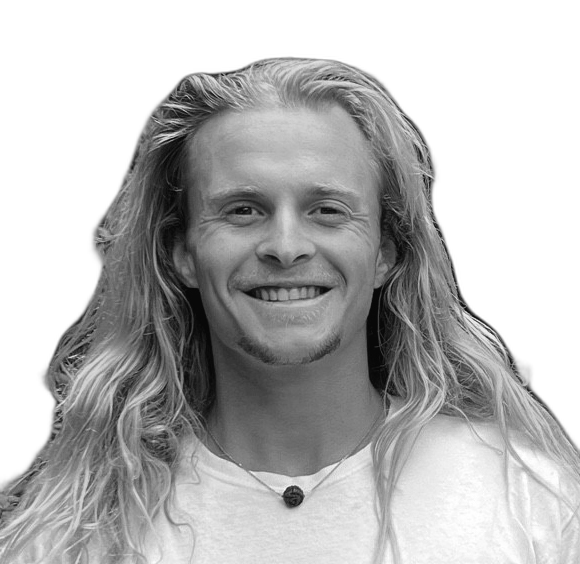
Matt Maruca is the founder and CEO of Ra Optics, a company focused on blue-light protection eyewear and light-therapy products. His public Ra Optics story describes how early health challenges led him to study mitochondria, light, circadian rhythms, and the role of daily light exposure in health and human performance.
Learn more →Listen to the episode
Brighter days, darker nights, less optimization drama
Your nervous system does better when the body receives clear signals about what time it is. Outdoor light early, enough daylight during the day, lower light at night, and a rhythm that helps sleep arrive without a fight. That is the practical core of Jonny's conversation with Matt Maruca, and it is simpler than most light-optimization advice makes it sound.
Matt's path started with health experiments, mitochondria, light science, and circadian rhythm, then turned inward when he realized that optimized biology did not automatically create joy, ease, or wholeness. That arc matters here. Light hygiene is one environmental lever that can make regulation easier. It is also, for a certain kind of person, a seductive way to avoid the messier work underneath.
Use this guide when you are:
- waking up wired, foggy, or late-shifted and wondering where to start;
- getting little outdoor light but a lot of screen light;
- using blue blockers, red lights, supplements, or tracking devices but still feeling stressed;
- trying to support sleep and mood without overclaiming or medicalizing every bad night;
- noticing that "optimization" has become another way to avoid feeling what is happening inside.
1This is a nervous-system practice guide, not medical advice, sleep-medicine advice, psychiatric care, ophthalmology advice, or a promise that light changes will treat insomnia, depression, trauma, endocrine disorders, circadian rhythm sleep-wake disorders, or chronic illness. If symptoms are significant, persistent, unsafe, or medication-related, work with qualified clinicians. Do not stare at the sun.
Build the day-night contrast before buying more tools
The first move is contrast. Go outside in the morning. Dim things down at night. That gap between bright and dark is the signal your body is listening for.
Modern life tends to flatten it. Dim offices all day, glowing rectangles all night, meals at random hours, work stress running right up to the pillow. Matt talks about light, blue-light protection, circadian meal timing, and the tangible difference he feels when he honors those rhythms versus when he ignores them.
A sober version of the protocol:
| Timing | Signal to strengthen | Practical move | What not to overclaim |
|---|---|---|---|
| First hour after waking | "It is daytime." | Go outside for 2-10 minutes. Let outdoor light reach your eyes indirectly. | Morning light will not solve every sleep, mood, or trauma pattern. |
| Midday | "This is the active part of the day." | Take a walk, eat a real meal, or work near a window when possible. | A perfect routine is less important than a repeatable one. |
| Sunset/evening | "The day is winding down." | Dim overhead lights, warm screens, reduce intensity, create a shutdown cue. | Blue blockers are not a license for endless stimulation. |
| Last hour before sleep | "Nothing urgent is happening." | Keep light low, stop work loops, breathe slowly, read paper, stretch, or journal. | Darkness helps conditions; it does not force sleep on command. |
The research bridge is strong enough to be useful and modest enough to keep us honest: light is a major circadian cue, morning light tends to advance the clock, evening and night light tends to delay it, and light exposure can affect sleep, alertness, and mood in timing-dependent ways.1 More recent display-light research suggests that evening screen light with higher melanopic content can lengthen sleep latency and suppress or delay melatonin compared with lower-melanopic settings.2
You do not need a complicated lux prescription. Your first experiment can be absurdly simple: brighter days, darker nights.
When light practice becomes another cage
Matt's cautionary arc is one of the more honest parts of this conversation. He had applied everything he knew about light, mitochondria, electromagnetic fields, water, hormones, neurotransmitters, and circadian rhythm. He was still stuck.
“I still keep my phone on airplane mode. I still block blue light at night... and I love it and I feel great when I do and I feel the effects, the disruption when I don't. But all that's to say I was doing all that stuff already but still feeling stuck.”
This is a pattern that shows up often in the Nervous System Mastery community. Someone discovers a real lever (sleep, light, breath, food, HRV, cold exposure) and builds an identity around it. The protocol quietly becomes a way to stay in control rather than a way to become more present with their actual life.
A filter:
| If your light practice creates... | It may be helping | If it creates... | It may be becoming control |
|---|---|---|---|
| More morning orientation | Clearer state | Panic when the routine is imperfect | Fragility |
| Easier evening downshift | Better conditions for sleep | Endless product research at midnight | Avoidance |
| More outdoor contact | Sensory regulation | Fear of restaurants, travel, or social life | Rigidity |
| Better awareness of screens | Cleaner boundaries | Shame after one late night | Moralization |
| Curiosity about inner state | Integration | "Once my protocol is perfect, I'll feel safe" | Postponed emotional work |
The target is a body that receives fewer contradictory signals and a person who can still eat dinner at a restaurant with overhead lighting without spiraling.
If you want a complementary protocol-heavy guide, pair this with Nervous System Protocols: Morning Light, Magnesium, Movement, and Breath. If you need a lower-complexity baseline, start with Reset Your Nervous System.
Practice
Run a 7-day light rhythm reset
Use this when sleep, energy, or emotional reactivity feels slightly off and you want a concrete circadian experiment before reaching for more supplements, devices, or analysis. Stop or adapt if it worsens symptoms, migraines, mania risk, eye discomfort, or sleep anxiety.
- Pick a stable wake window. Choose a wake time you can hit within 30-60 minutes for seven days. Perfection is irrelevant.
- Get outdoor light before phone light. Within the first hour, go outside for 2-10 minutes. No sungazing. On cloudy days, stay a little longer if comfortable.
- Add one midday anchor. Walk outside, eat lunch away from the screen, or work near a window. Biology responds to environmental timing signals, not just fuel.
- Create a digital sunset. Two hours before bed, lower screen brightness, use warm settings, dim overhead lights, and reduce work intensity. If you use amber or red lenses, treat them as support, not permission to keep stimulating yourself.
- Keep late food light. If late meals disturb your sleep, test making lunch or an earlier dinner the main meal for the week. Matt describes doing this for his own circadian rhythm.
- Track only three signals. Morning energy, evening sleepiness, and emotional reactivity. A one-line note is enough.
- Review without moralizing. Ask: "Did brighter days and darker nights make regulation easier?" If yes, keep the smallest useful piece. If no, simplify or seek more specific support.
The win is giving your nervous system a week of unambiguous rhythm and noticing what actually shifts.
Pair circadian support with inner-state practice
The episode becomes most interesting when Matt stops treating light as the whole answer. He describes a turning point where "enough dopamine" and "enough sunlight" still didn't make him happy, and he started to see how often he was choosing stress, misery, or a victim orientation without realizing it.
For Nervous System Mastery readers, translate that carefully. This does not mean people choose trauma, depression, illness, oppression, or difficult life circumstances. What it means is that there is often a trainable gap between stimulus and reaction, and that gap looks something like this:
- Something triggers you.
- The body mobilizes around threat.
- The mind builds a story that makes the state feel inevitable.
- The reaction either discharges, integrates, or hardens into identity.
Light, sleep, food timing, and movement can make that gap wider and easier to find. They cannot do the actual work of feeling anger, grief, fear, shame, or longing without being run by those states. Jonny makes this bridge explicitly in the conversation: down-regulation, outdoor light, grounding, nature, and co-regulation can support the deeper work of rising out of reactivity and returning to an open-hearted state.
A two-layer approach:
| Layer | Question | Practice |
|---|---|---|
| Environment | What signal is my body receiving? | Morning light, evening dimming, food timing, movement, less screen intensity. |
| Inner state | What am I doing with the state that arises? | Pause, feel the body, name the emotion, exhale, choose the next honest action. |
For the body-sensing side, read The Art and Science of Interoception. For a breath-based way to train the gap, read Functional Breathwork.
Let the trigger become a cue, not a verdict
Matt gives a specific example: moments of anger with people close to him show him where he wants to react, be right, close his heart, or make someone else feel his frustration. The question he sits with is striking: what part of myself would I have to let go of to stay open here instead of closing down?
That question needs room for the full picture. Sometimes anger deserves clean expression, a firm boundary, repair, or protection. Sometimes it needs to be felt fully rather than spiritually bypassed. Sometimes it signals genuine harm. And sometimes, as Matt points toward, it is an old identity demanding to run the system one more time.
A trigger protocol that holds both regulation and truth:
- Orient. Look around the room. Feel your feet. Let the body know where and when it is.
- Lower the physiological volume. One slow nasal inhale, longer exhale, repeat three times.
- Name the state. "Anger is here." "Fear is here." "I want to be right."
- Check reality. Is there actual danger, a boundary issue, or a repair needed?
- Choose the next clean action. Speak, pause, leave, apologize, set a boundary, journal, move, or ask for support.
- Do not turn the state into identity. The fact that anger arrived does not mean anger gets the steering wheel.
This is where light practice loops back in. A nervous system that is underslept, late-shifted, screen-saturated, and underfed has less capacity to choose in those moments. A clearer rhythm does not make you enlightened. It gives your practice a better floor to stand on.
Key takeaways
- Light is one of the strongest environmental signals for circadian timing: make days brighter and nights darker before adding complexity.
- Morning outdoor light and evening dimming work by strengthening contrast. The body responds to the gap between bright and dim.
- Blue-light tools can help some people, but watch for the moment they become a rigid identity or a justification for overstimulation.
- Matt's deeper lesson is that outer light practices and inner-state work need each other: physiology can support regulation, but it cannot do your emotional integration for you.
- Treat triggers as cues for practice: orient, downshift, feel, reality-check, and choose a clean next action.
- The goal is a nervous system that receives unambiguous signals and has more room to respond honestly.
Free assessment
Take the free nervous system assessment.
If your sleep, light habits, reactivity, or inner-state practices feel inconsistent, the assessment can help you map your current nervous-system patterns and choose a steadier next experiment.
Take the Free AssessmentContinue exploring
- Read Nervous System Protocols: Morning Light, Magnesium, Movement, and Breath for a broader low-friction protocol stack.
- Read Reset Your Nervous System for simple downshifting practices when optimization becomes overwhelming.
- Read The Art and Science of Interoception to refine how you sense body-state changes without becoming obsessive.
- Read Functional Breathwork for breath practices that pair well with light and rhythm changes.
References
- For a cautious overview, see C. Blume, C. Garbazza, and M. Spitschan, "Effects of Light on Human Circadian Rhythms, Sleep and Mood," Somnologie 23 (2019): 147-156, https://doi.org/10.1007/s11818-019-00215-x. The review supports timed light as a major circadian cue while also showing that outcomes depend on timing, intensity, spectrum, individual context, and study design. ↩
- See I. Schollhorn et al., "Melanopic Irradiance Defines the Impact of Evening Display Light on Sleep Latency, Melatonin and Alertness," Communications Biology 6 (2023): 228, https://doi.org/10.1038/s42003-023-04598-4. This supports reducing biologically potent evening display light; it does not imply that screen settings alone resolve insomnia or mental-health conditions. ↩