Mindfulness, Resilience & Leadership: Courage Training with Joel Levey
About the guest
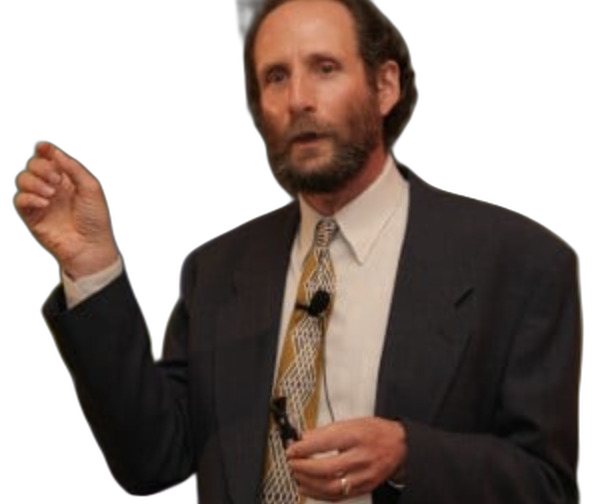
Joel Levey
Dr. Joel Levey is co-founder, with Michelle Levey, of Wisdom at Work and The International Center for Corporate Culture and Organizational Health. Since the 1970s, the Leveys have helped bring mindfulness, mind fitness, contemplative science, stress mastery, resilience, and compassionate leadership practices into organizations including healthcare, business, government, NASA, and military contexts.
Learn more →Listen to the episode
Mindfulness becomes useful under pressure when it trains courage, not just calm
The practical answer from this conversation is that mindfulness, used well, trains the courage to meet stress, fear, grief, power, uncertainty, and responsibility without immediately freezing, fleeing, attacking, or numbing.
Joel's core frame: the point is to develop enough spaciousness that fear can be recognized as "fear is here" rather than "I am fear," and then choose how to deploy your attention, energy, and action. That shift sounds small. It changes what happens next.
Use this guide as a field manual to:
- turn suffering into inquiry without romanticizing it;
- build an "envelope of support" before doing deeper inner work;
- practice a short courage-based mindfulness protocol;
- integrate silence, retreat, or intense practice without getting the "psychic bends";
- translate contemplative training into leadership, conflict, and daily life.
1This is educational, not a medical protocol. Meditation and mindfulness can be supportive for many people, but they are not guaranteed treatments for trauma, anxiety, depression, moral injury, grief, panic, dissociation, or other health concerns. If practice brings up overwhelming material, reduce intensity and work with qualified support.
Suffering either shuts down your curiosity or cracks it open
Joel's own path began with direct contact: illness, emotional overwhelm, family resilience, spiritual practice, and a question that kept pulling him forward: "How can I help?" Most people I talk to have some version of this fork. The same experience that breaks one person open becomes the thing another person walls off entirely.
|| When suffering closes the system | When suffering opens inquiry | || --- | --- | || "I cannot feel this." | "What support would let me feel 5% more safely?" | || "This proves something is wrong with me." | "What is this teaching me about being human?" | || "I need to escape my body." | "Can I find one sensation I can stay with?" | || "No one can help." | "Who has walked through something like this with wisdom?" | || "I must solve it now." | "What is the next kind, truthful step?" |
The pivot between those two columns is curious contact plus adequate support. Joel keeps coming back to this: role models, mentors, teachers, peers, circles of practice. Those were the conditions that helped suffering become a doorway for him.
Try this when you are under pressure:
- Name the pressure plainly. "This is grief." "This is fear." "This is overload." "This is shame."
- Separate identity from state. "Fear is with me" lands in the body differently than "I am terrified."
- Ask a service question. "What would reduce suffering here by one degree?"
- Add support before intensity. Talk to a mentor, therapist, coach, trusted friend, teacher, or peer before going deeper alone.
- Choose one embodied action. Breathe, walk, eat, rest, apologize, ask for help, set a boundary, or return to the next necessary task.
The research case should stay modest. A major systematic review found moderate evidence that mindfulness meditation programs can help with anxiety, depression, and pain in some adult clinical populations, while finding low or insufficient evidence for several other outcomes and no evidence that meditation outperformed active treatments like exercise or behavioral therapies.1 Mindfulness can be useful. It should not be marketed as magic.
Build an envelope of support before you go deeper
One of the most practical lines in the episode is easy to miss: serious meditation requires an "envelope of support and inspiration." Without that, people tend to collect zen decor while avoiding the practice, or they push into difficult inner material with nothing holding them.
Use Joel's support logic as a pre-flight checklist before a deeper practice period, retreat, or emotionally intense inquiry.
1. Mentorship
- Do you have a teacher, therapist, supervisor, facilitator, or elder who can help you interpret what arises?
- Are they grounded enough to normalize difficult material without encouraging bypassing or grandiosity?
2. Practice literacy
- Do you understand the basic method you are using?
- Do you know what to do when attention wanders, emotion intensifies, or the body starts bracing?
3. Relational support
- Who knows you are entering a deeper practice period?
- Who can help you re-enter ordinary life afterward?
4. Safety and titration
- Can you stop, open your eyes, move, orient, or ask for help if practice becomes too much?
- Are you confusing courage with force?
5. Integration
- What will help the insights become behavior: journaling, conversation, repair, boundaries, rest, service, or changed work rhythms?
Joel's story about designing the Jedi Warrior / Ultimate Warrior Training Program makes this concrete in a high-stakes way. The training was never "just meditate harder." It included a long preparation arc, skilled teachers, intensive practice, psychophysiological tools, ethical framing, and a six-month container designed to train attention, emotion, courage, and wise use of power.
The leadership lesson here: do not ask people to become more vulnerable, mindful, or emotionally honest without building the container that makes honesty safe enough to metabolize.
Practice
Run a 7-minute courage mindfulness protocol
Use this when you are activated but not flooded. If you feel panicky, dissociated, unsafe, or overwhelmed, stop the practice, orient to the room, move your body, and seek appropriate support.
- Minute 0–1: orient. Look around the room. Name five neutral objects. Feel your feet, seat, hands, and jaw. Let your body know where and when you are.
- Minute 1–2: name what is here. Use Joel's identity-shift: "Fear is here," "anger is here," "sadness is here," or "overwhelm is here." Avoid turning the state into your whole self.
- Minute 2–4: feel one tolerable edge. Choose a sensation that is present but workable: pressure in the chest, heat in the face, tightness in the belly, buzzing in the hands. Stay with 5–10% more contact, not 100%.
- Minute 4–5: widen the sky. Imagine the sensation as a cloud moving through a larger sky of awareness. Do not force it to leave. Let it be held in a bigger field.
- Minute 5–6: ask the service question. "What would be a wiser, kinder, more courageous next step?" Let the answer be practical.
- Minute 6–7: choose one action. Send the message, take the walk, pause the argument, ask for help, close the laptop, or return to the work with less reactivity.
The goal is building enough inner room that fear does not have to make the decision for you.
Silence tunes the instrument, but re-entry is where people get the bends
Joel and Michelle Levey spent a year in mostly silent retreat. His frame for it: silence as tuning the instrument so it can serve more cleanly in the world. That metaphor prevents two common mistakes.
One is treating retreat as escape: "I will disappear from life so I do not have to deal with it." The other is treating it as conquest: "I will prove my spiritual seriousness by enduring intensity." Joel's frame is different. Deep practice is about knowing the instrument of body, mind, heart, attention, and awareness well enough that your presence becomes more responsive and beneficial.
If you are experimenting with silence, a graduated ladder helps:
|| Level | Practice | Integration | || --- | --- | --- | || Daily pause | 3–10 minutes of silent sitting | Choose one calmer next action | || Half day | Phone off, simple meals, walking, journaling | Re-enter with light tasks only | || One day | Structured sits, mindful movement, no productivity goals | Speak slowly; avoid major decisions immediately | || Multi-day retreat | Qualified teacher, clear container, emergency support | Schedule decompression and relational support | || Intensive retreat | Strong guidance, screening, community, aftercare | Plan gradual re-entry, not instant performance |
Joel's re-entry story is especially practical. After a year of mostly solitary practice, he and Michelle did not immediately slam back into normal work and sensory overload. They spent time in nature, moved slowly, talked again, re-socialized, integrated, and only then returned to ordinary responsibilities.
That "surface gradually" principle applies after any intense nervous-system experience: retreat, breathwork, grief work, therapy intensives, psychedelic-assisted therapy where legal and supported, leadership offsites, or major life transitions. The pattern is consistent: transformative experiences lose their thread within 48 hours when people go straight back to email at full speed.
A simple re-entry rule: for every intense inner experience, schedule at least one ordinary integration block. Walk. Eat. Sleep. Talk to someone grounded. Let your calendar be spacious if possible. Convert one insight into one changed behavior.
Meditation research supports cautious curiosity here. Brewer and colleagues found differences in default mode network activity and connectivity in experienced meditators compared with controls, consistent with less mind-wandering during several meditation practices.2 That does not prove all meditation produces the same changes, or that deeper retreat is right for everyone. It does suggest attention training can relate to measurable shifts in self-referential processing.
Translate inner courage into ethical power
One of the strongest moments in the episode: Joel describes receiving advice from the Dalai Lama that if you can help people with tremendous power develop more wisdom and compassion in how they wield it, take the project.
This is the bridge from personal practice to leadership. Mindfulness expands past "How do I calm myself?" into harder, more consequential questions:
- "How does my state affect the people around me?"
- "Where does my power outrun my wisdom?"
- "What happens to my ethics when I am afraid?"
- "Do I become more controlling when I feel uncertainty?"
- "Can I stay connected to compassion when stakes are high?"
Joel also describes another teacher's instruction to "teach them courage," later unpacked as courage, compassion, patience, nonreactivity, and "heart power." That cluster works as a leadership diagnostic.
Before a difficult decision, rate yourself from 1–5:
|| Capacity | Question | || --- | --- | || Courage | Am I willing to see what is uncomfortable but true? | || Compassion | Am I including the human cost, not only the objective? | || Patience | Am I letting enough signal emerge before reacting? | || Nonreactivity | Can I pause before converting threat into action? | || Heart power | Is my strength connected to care? |
If any score is low, do not shame yourself. Use it as practice data. A leader's nervous system becomes part of the operating environment for everyone around them. The work is becoming more trustworthy under pressure, which is quieter and harder than looking serene.
This is also where hype causes real harm. Van Dam and colleagues caution that mindfulness research and communication often suffer from definitional ambiguity, methodological issues, inflated claims, and under-attention to possible adverse effects.3 For leaders, the ethical takeaway is clear: do not use mindfulness as a veneer over unsafe culture, moral injury, impossible workloads, or avoidable structural harm. Practice should increase contact with reality, not help people tolerate dysfunction more politely.
Key takeaways
- Mindfulness is most practical when it trains courage: the capacity to stay present with fear, grief, stress, and power without being ruled by them.
- Suffering can shut down curiosity or open it; the difference often depends on support, mentors, safety, and service-oriented inquiry.
- Serious practice needs an envelope of support: teachers, peers, practice literacy, safety, and integration.
- Silence can tune the instrument, but re-entry matters. Come back gradually after intense practice.
- Leadership mindfulness is not just self-calming. It is the ethical use of attention, power, nonreactivity, patience, and compassion.
- Do not overclaim outcomes. Meditation can be helpful, but it is not a universal treatment or substitute for appropriate care.
Free assessment
Take the free nervous system assessment.
If pressure, responsibility, conflict, or emotional intensity changes how you lead and respond, the assessment can help you map your current nervous-system patterns and choose a steadier next step.
Take the Free AssessmentContinue exploring
- Read New Frontiers of Breathwork: Translating the Language of the Breath & Cultivating Nervous System Resilience for a body-first lens on resilience and recovery.
- Read Meditation for Alignment: Stop Over-Efforting for a complementary guide to meditation without forcing.
- Read Reset Your Nervous System for simple regulation practices before deeper inquiry.
- Read The Art and Science of Interoception to build the sensing capacity that makes mindfulness more embodied.
References
- Goyal et al. found moderate evidence that mindfulness meditation programs improved anxiety, depression, and pain in adult clinical populations, but low or insufficient evidence for several other outcomes and no evidence of superiority over active treatments. See "Meditation Programs for Psychological Stress and Well-being," JAMA Internal Medicine (2014), https://pubmed.ncbi.nlm.nih.gov/24395196/ and https://doi.org/10.1001/jamainternmed.2013.13018. ↩
- Brewer et al. found that experienced meditators showed reduced activity in key default mode network regions across several meditation practices and different connectivity patterns relative to meditation-naive controls. This is mechanistic evidence, not proof of universal benefit. See "Meditation experience is associated with differences in default mode network activity and connectivity," PNAS (2011), https://doi.org/10.1073/pnas.1112029108. ↩
- Van Dam et al. caution that mindfulness and meditation research is affected by definitional ambiguity, methodological limitations, hype, and under-attention to adverse effects. See "Mind the Hype: A Critical Evaluation and Prescriptive Agenda for Research on Mindfulness and Meditation," Perspectives on Psychological Science (2018), https://pmc.ncbi.nlm.nih.gov/articles/PMC5758421/ and https://doi.org/10.1177/1745691617709589. ↩