Navigate Challenging Emotions: Build an Emotional GPS with Cris Beasley
About the guest
Cris Beasley
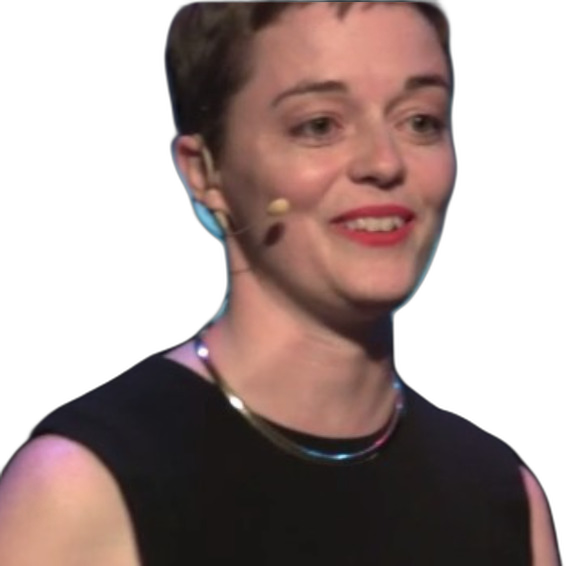
Cris Beasley is an interdisciplinary artist, technologist, strategic advisor, and creator of Becoming Dragon, an Enneagram-inspired oracle deck for exploring shadow emotions. Her work bridges product design, embodiment, creativity, and practical self-inquiry.
Learn more →Listen to the episode
The way through a difficult emotion is to orient toward it, feel it, and ask what it is pointing at
When a hard emotion shows up, most people default to fixing it, explaining it away, or powering through. Cris Beasley offers a different approach: treat the emotion as a signal, not a verdict, and let it teach you something before you decide what to do.
Two caveats, because Cris is careful about this: if the basics are unstable (sleep, food, panic, psychosis, severe distress, or enough daily support), deeper shadow work may be the wrong next step. The practices here assume a baseline of safety.
When a feeling is already on the "front burner," the sequence she walks through is clear:
- Settle enough to know what is actually here.
- Locate the emotion in the body.
- Ask what the emotion is protecting, revealing, or requesting.
- Choose one grounded action.
- Integrate the insight in ordinary life.
Cris's framework grew from real wreckage: burnout after shutting down a company, learning to follow curiosity through her body, building a shadow-emotion card deck, and learning to work with uncomfortable feelings rather than override them. This guide pulls the tactical protocol out of that story.
Start with the pot that is already boiling
When people first encounter language like "shadow work," the mind often starts scanning for every hidden wound, every unfelt emotion, every unresolved pattern. The scanning itself becomes a project.
Cris's guidance is simpler: start with the pot that is already boiling over.
That might be a recurring conflict you keep replaying, a decision that makes your stomach knot, jealousy you keep judging yourself for, money stress you avoid looking at, grief or resentment that keeps leaking into daily life, or a body signal that keeps asking for attention.
Do not begin by excavating everything. Begin with the thing that is already asking for your attention.
A useful first-pass map:
- Name the pot. "The thing boiling over is ___."
- Reduce the scope. "The next workable edge is ___."
- Track the body. "When I think about it, I feel ___ in ___."
- Choose the support level. "This is safe to explore alone / with a friend / with a therapist or trained guide / not today."
- Ask for the next honest step. "What would create one degree more clarity, safety, or integrity?"
Your nervous system does not need you to become an archaeologist of every wound by Friday. It needs you to meet what is present at a dosage you can metabolize.
Research on interoception (the sensing and interpretation of internal body signals) gives cautious support to this approach. Interoceptive awareness is closely linked with emotion recognition and regulation, though the quality of attention and the person's context matter enormously.1
Micro-choices rebuild access to felt preference
One of Cris's most usable practices is almost comically small: pick the tea you actually want.
Her point has nothing to do with tea. If you cannot choose which cup you want because scarcity, guilt, or "I should save the good one" takes over, you have found useful data about your current state. That tiny override is the same pattern at work when you ignore a boundary, stay too long in a meeting, or say yes when your body said no three seconds earlier.
Micro-choices train the system to notice preference before the stakes get high.
Try these low-stakes calibrations:
- Tea or drink: "Which one do I actually want?"
- Walk direction: "Which street, path, or turn has a tiny spark?"
- Clothing: "What would feel kind to my body today?"
- Music: "What sound matches or shifts my state?"
- Food: "What would feel nourishing rather than performatively 'good'?"
- Work block: "Which task has clean energy, and which one is only shame-pressure?"
Cris learned this through "wanders": going outside with no goal other than following curiosity. Over time, she began to notice curiosity as a physical sensation: which streets pulled her, what stopped her, where novelty mattered, and how different "assignments" changed the route.
You can turn that into a 15-minute practice:
- Leave your phone in your pocket.
- Walk without a productivity goal.
- At each intersection, pause and ask: "Where do my feet want to go?"
- Notice the signal: expansion, pull, warmth, curiosity, relief, resistance.
- When you return, write one sentence: "Today my body showed me ___."
This works especially well if burnout, over-functioning, or people-pleasing has spent years training you to override yourself. You are rebuilding access to felt preference, one tiny decision at a time.
Translate jealousy, shame, and anger into usable information
Cris's card-deck insight is that many uncomfortable emotions contain a clarifying signal when approached carefully. The goal is to stop adding shame on top of the original signal and get specific enough that the emotion becomes actionable.
Take jealousy. Cris describes it as a signpost toward desire: someone has, embodies, or expresses something you want.
Instead of "I am jealous, therefore I am bad," try:
- "What exactly am I jealous of?"
- "Is it a skill, freedom, intimacy, recognition, courage, beauty, ease, belonging, or aliveness?"
- "If I had the thing I think I want, how do I imagine I would feel?"
- "Can I feel even 5% of that state in my body now?"
- "What is one non-dramatic step toward that quality?"
The same translation applies to other emotions:
- Anger may point to a boundary, injustice, fatigue, or a need that has been ignored.
- Shame may point to a longing for repair, belonging, privacy, or kinder standards.
- Resentment may point to an unspoken agreement you no longer consent to.
- Anxiety may point to uncertainty, inadequate preparation, over-responsibility, or an activated body.
- Grief may point to love, attachment, meaning, or a transition your system has not yet completed.
The important word is may. Emotions are data. You still need discernment, context, and sometimes outside support.
1Do not use emotional intensity as proof that a story is true. Use it as proof that something in your system wants attention.
No guide, ceremony, or peak experience can do your integration for you
Cris's central warning: a healer does not "heal you." She argues that even in conventional medicine, the practitioner may create conditions or interventions, but the body integrates the change.
Emotional work often becomes seductive at exactly the wrong moment. When you are in pain, it is tempting to hand your authority to:
- a charismatic teacher,
- a modality,
- a diagnosis,
- a card deck,
- a psychedelic ceremony,
- a coach, therapist, or healer,
- a single overwhelming insight.
Better frame: support can orient you, but integration happens in your life.
Cris makes this point especially strongly around entheogenic and psychedelic experiences. A big experience can reveal a pattern, but if you return to life with no integration, no support, and no new behavior, the insight may become destabilizing rather than useful. Academic reviews of psychedelic-assisted therapies echo this: existing clinical studies typically use screening, preparation, controlled settings, and follow-up, while adverse events remain inconsistently reported.2
For practical purposes:
- Do not treat psychedelics as a shortcut through basic regulation.
- Do not pursue intense shadow work during acute instability without qualified support.
- Do not confuse a powerful session with completed healing.
- Do not let any guide override your bodily sense of safety or consent.
- Do plan integration: rest, journaling, therapy, relational repair, new behavior, and time.
The test of insight is whether it helps you respond differently the next time life triggers the old pattern.
Practice
Run the emotional GPS protocol
Use this when a difficult emotion is present but not so overwhelming that you need immediate professional or crisis support. If you are at risk of harming yourself or someone else, seek urgent help in your local area.
- Orient. Look around the room and name five neutral facts: "I am sitting at my desk. It is Friday. The window is open." Let the body know where and when it is.
- Find the front-burner pot. Ask: "What is the one emotional issue already boiling over?" Do not scan for everything.
- Locate it. Ask: "Where do I feel this in my body?" Use plain language: throat, jaw, chest, belly, hands, back, eyes.
- Name the signal. Complete: "This emotion may be pointing toward ___." Try boundary, desire, grief, repair, rest, truth, support, or action.
- Ask the sovereignty question. "What do I know, underneath the noise, that I am not yet letting myself know?"
- Choose one integration step. Send the message, take the walk, book the appointment, look at the bank account, cancel the commitment, eat, sleep, or ask for help.
- Close the loop. Put a hand somewhere steady and say: "I do not have to solve my whole life. I only have to take the next honest step."
The aim is one more trustworthy conversation between body, emotion, and action.
Key takeaways
- Challenging emotions are signals to orient around, not enemies to eliminate.
- Start with the "front-burner pot" rather than trying to excavate your whole unconscious.
- Micro-choices (tea, walking direction, music, food, clothing) rebuild access to felt preference, especially after burnout or chronic people-pleasing.
- Curiosity can be practiced as a body signal, not only a mental interest.
- Jealousy becomes more workable when translated into specific desire and the felt state underneath the desired object.
- Guides, therapists, healers, card decks, and ceremonies can support awareness, but integration happens through your own life and choices.
- Deeper shadow work is not always the next step. Stabilization, sleep, food, medical care, therapy, and social support may need to come first.
Free assessment
Take the free nervous system assessment.
If difficult emotions keep turning into shutdown, spiraling, people-pleasing, or reactivity, the assessment can help you map your current nervous-system patterns and choose a steadier next step.
Take the Free AssessmentContinue exploring
- Read The Art and Science of Interoception for a deeper look at body signals as usable nervous-system data.
- Read The Best Decision-Making Is Emotional for more on choosing from felt sense without abandoning discernment.
- Read Reset Your Nervous System for simple regulation practices to use before deeper inquiry.
- Listen to Functional Breathwork: Use Interoception to Regulate Your Nervous System for a practical bridge between breath, body awareness, and state change.
References
- For research context, Price and Hooven describe interoceptive awareness as relevant to emotion regulation and present a body-oriented therapeutic framework for cultivating it; this supports cautious interest in body-based awareness, not the claim that noticing sensations alone treats trauma or mental illness. See "Interoceptive Awareness Skills for Emotion Regulation," Frontiers in Psychology (2018), https://doi.org/10.3389/fpsyg.2018.00798. See also Pinna and Edwards' systematic review on associations between interoception, vagal tone, and emotional regulation, Frontiers in Psychology (2020), https://doi.org/10.3389/fpsyg.2020.01792. ↩
- Breeksema et al. found that MDMA and serotonergic psychedelic treatments in clinical studies were generally well tolerated but emphasized that adverse events were often poorly defined or inconsistently assessed, and that caution is warranted due to small samples and study-design limitations. See "Adverse events in clinical treatments with serotonergic psychedelics and MDMA," Journal of Psychopharmacology (2022), https://doi.org/10.1177/02698811221116926. ↩