Wilderness Rites of Passage for Leadership: A Practical Guide with Brooks Barron
About the guest
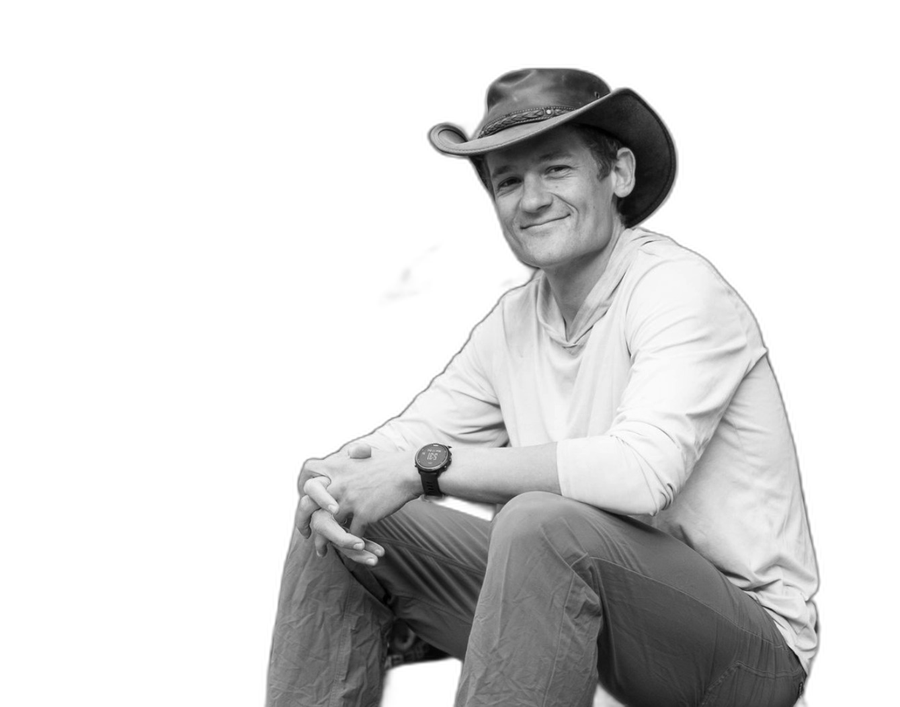
Brooks Barron
Brooks Barron is the founder and primary guide of Soulful Impact. He is a leadership coach, credentialed psychedelic guide, wilderness guide, and soul guide whose work helps visionary leaders translate wise understanding into soulful leadership. His background includes training with the Conscious Leadership Group, Animas Valley Institute, NOLS, and the Center for Medicinal Mindfulness, along with an MBA/MS from Stanford and an AB in Public Policy from Princeton.
Learn more →Listen to the episode
A wilderness rite of passage is most useful when you need identity-level change, not just a better productivity system
The practical answer from Jonny Miller’s conversation with Brooks Barron is this: wilderness-based rites of passage can help when the problem is not simply that you are tired, inefficient, or unclear. They are most relevant when an old identity has become too small, your way of making an impact is costing you aliveness, and you need a structured encounter with uncertainty, nature, grief, shadow, and support.
That does not mean everyone in crisis should go fast, go remote, fast for several days, or replace therapy with a wilderness quest. Brooks is careful to distinguish between work that helps you stabilize your current life and work that intentionally invites a “death and rebirth” of identity. The key is discernment: do you need rest, clinical support, relational repair, and nervous-system stabilization — or are you also being called into a deeper threshold?
Use this guide as a practical decision map for:
- sensing whether you are in burnout, avoidance, or a genuine life threshold;
- shifting from fear-driven impact to aliveness-led contribution;
- beginning nature connection safely before attempting a major quest;
- working with shadow, need, and vulnerability without spiritual bypassing;
- returning from insight with community, accountability, and ordinary responsibilities.
1This is not medical, psychiatric, or emergency advice. Wilderness quests, fasting, solo time outdoors, psychedelic work, and intense spiritual practice can be destabilizing or physically risky. If you are in acute crisis, suicidal, medically vulnerable, trauma-activated, or unsure about your safety, prioritize qualified clinical support, trusted people, and local emergency resources.
Decide whether you need stabilization, transformation, or both
Brooks frames a vision quest as a ceremonial threshold: a person consciously lets go of parts of an old identity and opens to being guided by mystery, nature, dreams, and a larger intelligence than the planning mind. That can be powerful. It can also disrupt the life structures that were built around the old identity.
Before seeking a dramatic rite of passage, do a sober readiness check:
| If this is present | Start here | Why |
|---|---|---|
| Acute distress, panic, suicidality, mania, addiction risk, or unsafe relationships | Professional support, crisis resources, trusted people, medical care | A quest is not a substitute for stabilization or protection. |
| Exhaustion, insomnia, resentment, or overwork | Rest, boundaries, nervous-system regulation, fewer commitments | You may need recovery before revelation. |
| Repeating identity conflict: “I can function, but I can’t keep being this version of me” | Therapy/coaching plus structured threshold work | The surface problem may be pointing at a deeper identity transition. |
| Strong longing for nature, solitude, ceremony, and symbolic letting go | Begin with a safe nature wander or guided retreat | Start with a reversible dose before a high-intensity rite. |
| Integration support already exists | Consider a guided wilderness program with screening and aftercare | The return is as important as the threshold. |
Brooks says desperation often motivates modern Western people to seek a quest because these practices are not built into mainstream culture as expected developmental passages. Classic anthropology describes rites of passage as involving separation, liminality, and reincorporation — leaving an old role, entering a threshold state, and returning with a changed social position.1 In modern life, the third step is often the weakest. People may have a powerful experience, then return to work, family, Slack, school pickup, and old relational expectations with no shared ritual container.
A useful rule: do not use intensity to avoid intimacy. If you cannot yet have a clean conversation, ask for help, name your needs, or slow down when activated, more wilderness may not be the next medicine. It may be time to build capacity first.
Audit whether your impact is coming from fear or aliveness
One of the most useful leadership distinctions in the episode is Brooks’ description of trying to make a positive impact from “below the line”: driven by threat, approval-seeking, control, and the need to be seen as good.
He describes wanting to help with climate and environmental issues, yet slowly realizing that the externally “good” work was not bringing him closer to aliveness. His mind had an impact strategy; his body and soul were giving different feedback.
Try the above/below-the-line impact audit:
| Question | Below-the-line clue | Above-the-line clue |
|---|---|---|
| Why am I doing this? | “So I can be good, approved of, indispensable, or safe.” | “Because it feels alive, generous, beautiful, and honest.” |
| What happens if it fails? | Shame, collapse, blame, self-attack, image management | Grief or disappointment, but also learning and adaptation |
| What am I neglecting? | Sleep, body, family, joy, friendship, humility, actual needs | Some sacrifice may exist, but not chronic self-abandonment |
| How do I relate to reality? | “The world must change so I can be okay.” | “I can accept reality and still take a wholehearted swing.” |
| What part of me is leading? | The fixer, savior, pleaser, controller, or performer | The part that feels connected, resourced, and in service |
This is not an argument against ambition or service. Brooks’ point is subtler: impact rooted in fear can look noble while quietly burning you out. Impact rooted in aliveness may become more effective because it is less dependent on self-abandonment, moral performance, or control.
For Nervous System Mastery readers, this pairs well with the body-first question: what does my nervous system know about this strategy that my self-image refuses to admit? If the answer is “I am exhausted, brittle, resentful, and secretly trying to earn love,” that is not a reason to shame yourself. It is a signal to reorganize.
Begin with a safe nature wander before you attempt a bigger threshold
Brooks’ simplest starting practice is not a multi-day solo quest. It is a “soul-centric nature wander”: go somewhere natural, enter a more intentional state of attention, avoid unnecessary conversation, and begin a relationship with the more-than-human world.
A rite interrupts the default mode of hiking as performance, optimization, or scenery consumption. Mystical experiences are optional.
A grounded nature-wander protocol:
- Choose a safe container. Pick a known area, check weather, bring water, tell someone if you are going remote, and respect land rules.
- Set a simple threshold. Before you begin, pause and say internally: “For the next 30–90 minutes, I am here to listen.”
- Drop the achievement frame. No summit, step count, podcast, Strava, or problem-solving agenda.
- Let attention choose. A tree, rock, bird, stream, weed, shadow, or patch of light can become the object of relationship.
- Practice praise. Speak appreciation out loud if appropriate: “I notice your color.” “I appreciate the way your roots hold.” “When I hear this water, my body softens.”
- Follow your body carefully. Brooks shares the image of letting your “belly button” lead — wandering by felt sense rather than by conquest — while still staying safe.
- Close the loop. Journal: “What did I notice?” “What did it mirror?” “What is the next honest action?”
Research on nature exposure is relevant, but it should be held modestly. Attention Restoration Theory proposes that natural environments can support recovery from directed-attention fatigue through qualities like fascination and being away.2 Wilderness therapy studies also suggest possible benefits in some youth and adolescent populations, but the evidence base varies widely by program design, population, therapeutic component, and methodological rigor.3 None of this proves that a nature wander will solve burnout, trauma, or leadership confusion. It does suggest that low-agenda contact with natural environments can be a useful condition for attention, reflection, and self-honesty.
Practice
Run the 45-minute threshold walk
Use this when you feel caught between an old identity and a not-yet-clear next chapter. Keep it simple, safe, and reversible.
- Regulate before you leave. Take three slower breaths, feel your feet, and orient to the room. Do not begin from urgency if you can help it.
- Name what you are leaving. Write one sentence: “The identity I may be ready to loosen is the one who ___.”
- Cross a small threshold. Step onto a trail, into a park, through a gate, or around a block as if crossing from ordinary planning into listening.
- Ask one question. “What wants to be known that my productivity mind keeps skipping?”
- Follow attention. Let your senses choose where to pause. If nothing happens, let nothing happen.
- Offer praise. Appreciate one specific feature of the natural world out loud or silently.
- Return deliberately. Before checking your phone, write: “The next grounded step is ___.” Make it small enough to do within 48 hours.
The win is not a vision. The win is practicing a different relationship with attention, control, and guidance.
Work with shadow and need so spirituality does not become bypassing
Brooks repeatedly points to a leadership paradox: the parts you reject as “bad” may contain energy, protection, clarity, or life that you need access to. His example is aggression. He had judged that part of himself as dangerous, yet in one real-world moment he needed clean protective force to respond effectively.
The same pattern appears in the nice-versus-kind distinction. Jonny names how “being nice” can become people-pleasing: avoiding truth so nobody feels disappointed. Kindness may require more courage, contact, and clean discomfort.
Use this shadow-to-choice inquiry:
| Rejected part | Common fear | Possible gift when integrated |
|---|---|---|
| Aggression | “I will harm people.” | Protection, boundaries, decisive action |
| Neediness | “I will be a burden.” | Honest support, intimacy, sustainable pacing |
| Ambition | “I will become selfish.” | Devotion, craft, meaningful contribution |
| Anger | “I will lose control.” | Information about violated values or limits |
| Grief | “I will fall apart.” | Love, humility, reorientation |
Brooks’ own fatherhood season exposed a core pattern: believing he could do more than he could and needed less than he needed. When need stayed in the blind spot, burnout followed. That is a leadership issue, not just a private emotional issue. A leader who cannot feel need may build systems that reward overextension, under-asking, and heroic depletion.
This is also where Brooks’ comments on animism and spiritual bypassing become practical. He values conversation with nature, mystery, and the more-than-human world — but he defines bypassing as using spirituality to avoid discomfort, shadow, fear, or personal responsibility. The antidote is humility, community, and a willingness to be wrong.
A simple discernment test:
- If the guidance makes you feel special, superior, or exempt from feedback, slow down.
- If the guidance helps you become more honest, grounded, relational, and accountable, keep listening.
- If you are using nature, ceremony, psychedelics, breathwork, or meditation to avoid repair, grief, boundaries, or therapy, name the bypass directly.
The goal is not to make spiritual life sterile. It is to make it trustworthy.
Return with practices, people, and responsibilities that can hold the new identity
The most neglected part of a rite of passage is the return. Brooks notes that in cultures with intact initiation systems, elders and the village understand that the initiate is not the same person anymore. In contemporary life, the people around you may unconsciously expect the old version back.
That means integration has to be designed.
Use a return plan before any major threshold experience:
- Name what changed. “The old pattern I am not recommitting to is ___.”
- Name what stays ordinary. Bills, caregiving, sleep, work, food, email, and relationships still matter.
- Choose one visible practice. A weekly nature wander, therapy appointment, men’s/women’s group, leadership check-in, or morning body scan.
- Choose one relational repair. Where does the new identity need to become a cleaner conversation?
- Choose one boundary. What commitment, role, or performance pattern no longer gets automatic access to your life force?
- Choose one contribution. What small act of service carries the insight into the world without grandiosity?
- Choose one community mirror. Who has permission to tell you if you are bypassing, inflating, collapsing, or drifting?
Brooks’ aspiration is to build communities of leaders who are impact-driven, connected to the animate wild world, and devoted to tracking their own consciousness rather than outsourcing discernment to spiritual experience alone. That is the real leadership frame: a rite of passage is not complete when you receive insight. It is complete when your life, relationships, and responsibilities can metabolize the insight.
For a nervous-system lens, pair the return with basic regulation. Major inner shifts often need boring supports: meals, sleep, sunlight, movement, co-regulation, finances, calendar edits, and fewer heroic promises. The sacred does not become less sacred when it is scheduled responsibly.
Key takeaways
- A wilderness rite of passage is best understood as threshold work for identity-level change, not a quick fix for stress.
- If you need stabilization, clinical care, or rest, start there. Intensity is not always wisdom.
- Fear-driven impact often hides approval-seeking, control, and self-abandonment.
- Aliveness-led impact is not passive; it is action that comes from trust, acceptance, and a more resourced body.
- A safe nature wander is a better first step than a dramatic solo quest for most people.
- Shadow work matters because rejected parts often contain boundaries, needs, protection, and life energy.
- Spiritual practice becomes more trustworthy when paired with humility, feedback, community, and responsibility.
- The return is part of the rite: integrate through practices, relationships, boundaries, and ordinary commitments.
Free assessment
Take the free nervous system assessment.
If you are navigating burnout, over-responsibility, people-pleasing, or a threshold where an old identity no longer fits, the assessment can help you identify your current nervous-system patterns and choose a steadier next step.
Take the Free AssessmentContinue exploring
- Read Full Aliveness and Conscious Leadership for a complementary guide to above/below-the-line awareness and responsibility.
- Read Achieve More by Grinding Less for a practical reframe on ambition, aliveness, and reducing depletion.
- Read Reset Your Nervous System for simple practices to use before making major decisions from an activated state.
- Read The Art and Science of Interoception to deepen your ability to notice the body signals that Brooks describes as essential feedback.
References
- Arnold van Gennep’s classic model describes rites of passage as involving separation, margin/liminality, and aggregation/reincorporation; Victor Turner later developed the idea of liminality as a threshold state. See Arnold van Gennep, The Rites of Passage (1909/1960), and Victor Turner, The Ritual Process: Structure and Anti-Structure (1969). This is an anthropological lens, not clinical evidence that a modern quest produces any specific outcome. ↩
- Kaplan’s Attention Restoration Theory proposes that natural environments can support recovery from directed-attention fatigue through qualities such as being away and fascination. See Stephen Kaplan, “The restorative benefits of nature: Toward an integrative framework,” Journal of Environmental Psychology 15, no. 3 (1995): 169–182, https://doi.org/10.1016/0272-4944(95)90001-2. ↩
- Wilderness therapy research is mixed and context-dependent. For example, Bettmann and colleagues reported medium effect sizes across several outcomes in a meta-analysis of private-pay adolescent wilderness therapy studies, while noting variation in constructs and program features. See Joanna E. Bettmann et al., “A Meta-analysis of Wilderness Therapy Outcomes for Private Pay Clients,” Journal of Child and Family Studies 25 (2016): 2659–2673, https://doi.org/10.1007/s10826-016-0439-0. This should not be generalized to all wilderness programs or treated as evidence for unsupervised rites of passage. ↩