Practical Tools for Improving Your HRV with Salim Najjar
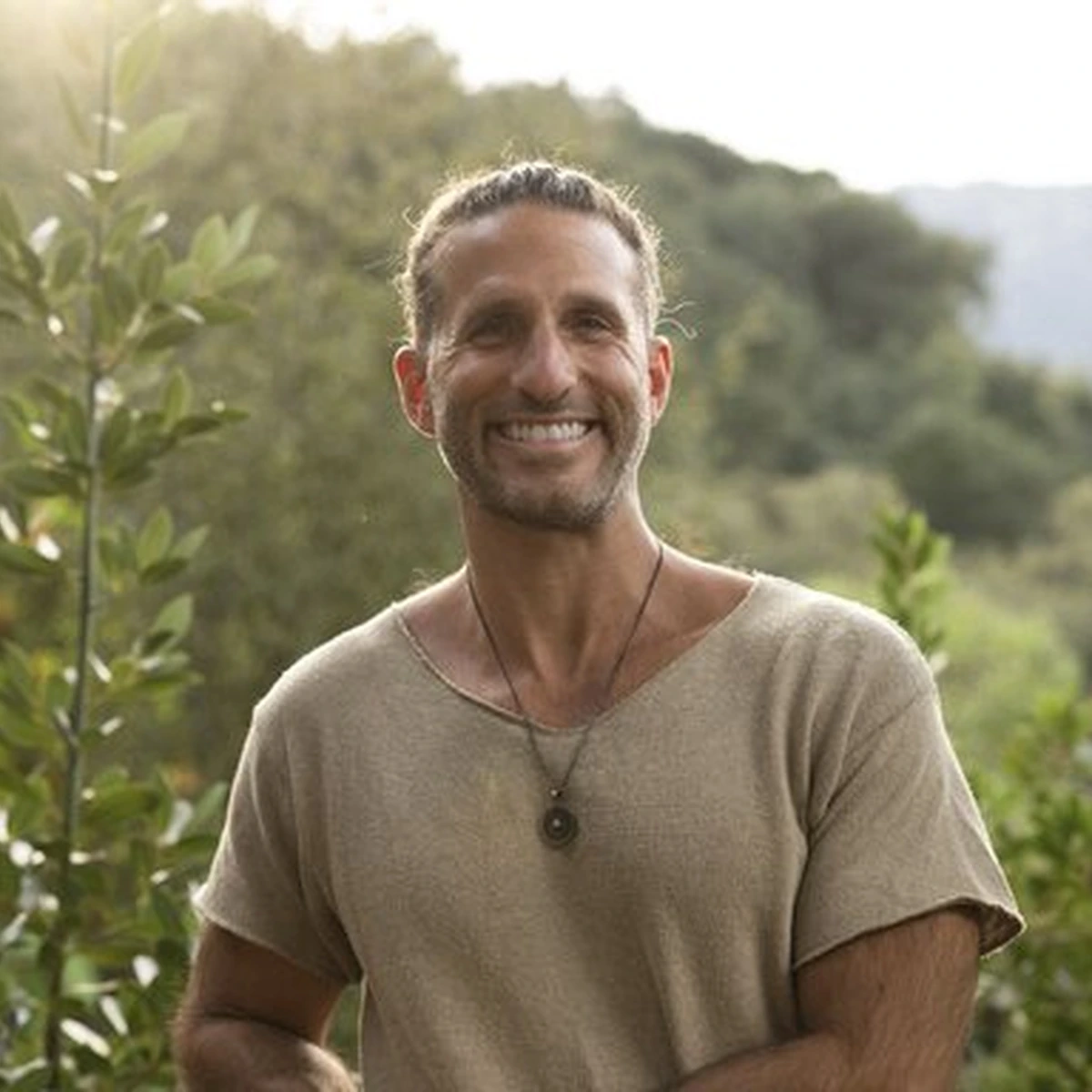
About the teacher
Salim Najjar
Salim Najjar is known as That HRV Guy: an engineer-turned-nervous-system guide who teaches heart rate variability as a practical feedback loop for stress, recovery, and autonomic balance. In the Nervous System Mastery Masterclass Vault, his session frames HRV as a language of the nervous system and a feedback loop for practice.
Learn more →Listen before you optimise
Salim Najjar found HRV while he was running a beverage company in New York and trying to biohack his way through five hours of sleep.
“I tried hacking my way to optimizing my HRV. I really didn’t see that needle move. It wasn’t until I started listening to it, and really listening to my body, that I started to see it change.”
He now treats regulation as his first job:
“My only job is to regulate my nervous system. I believe it’s everybody’s first job. Once you do that, the real authentic you gets to come through.”
HRV is your body’s language
Heart rate variability is the changing interval between heartbeats. Salim reads it as a reflection of how the nervous system is responding to its current environment.
“The whole intent of a language is for an ecosystem within a community to communicate. The whole intent of your HRV is for your nervous system and body to solely communicate with you. Comparing does you no good.”
His baseline is the average over the previous 30 days. A morning score below that baseline says the previous day placed more load on the system than it has recently been used to. A higher score may mean there is more room for training, stress, or a difficult conversation.
“That’s not a good or bad thing. It’s just data. It’s a language.”
The number does not get the last word. Salim is explicit about that too:
“You can also just listen and feel, and see what is resonant and dissonant with you based on your own knowing. There’s nothing that beats your own knowing.”
Five pathways for HRV growth
Salim organises his own experience into five pathways:
- Sleep, the foundation. His first change was giving up the attempt to thrive on five hours.
- Hormetic stress, the catalyst. Apply manageable stress, then consciously recover. The recovery is part of the training.
- Reframing, the shift. Your relationship to an event can change the load it places on the system.
- Intentionality, the alignment. Keep checking whether the way you are living still fits what matters to you.
- Community, the amplifier. Co-regulation, vulnerability, and being with other people affect the nervous system too.
Cold plunges and hard workouts are optional. Salim’s point is to learn which forms of stress and recovery your body can use.
“Some people, cold plunging is not a good thing. You don’t need to do that necessarily, but some way to train the nervous system to go from sympathetic to parasympathetic intentionally.”
Put recovery in the calendar
Most people already have the stressful half of hormetic training covered. Salim asks them to practise the return.
“Take the intentional pauses. Take the time to intentionally get your body in a parasympathetic state, not just when you sleep, during the day.”
When he was running his company, he blocked thirty minutes in his calendar for a twenty-minute non-sleep deep rest practice. A shorter break between calls can be two minutes of unforced breathing. The specific tool matters less than reliably interrupting the “go, go, go” state.
Practice
Salim’s HRV reset
- Settle. Use a few rounds of easy box breathing.
- Bring up a manageable stressor. Choose something current but not overwhelming.
- Drop the story. Notice physical qualities such as temperature, movement, pressure, or intensity.
- Stay curious. Let the sensation be present without trying to fix it.
- Return. Tap lightly at the centre of the chest, breathe, and recall three things you appreciate.
Salim describes this as training the movement from rest to activation and back to rest. Stop if the exercise becomes overwhelming.
Curiosity and levity
Salim still recognises the part of himself that wants to take everything to an extreme. His relationship with it has changed.
“My two favorite tools along my journey are, one, curiosity. Just bring curiosity to the programs that are being run. But the second is levity. You’ve got to be able to laugh at the comedy of it all because it makes it a lot easier.”
His closing advice returns to the same place he started:
“Listen to the data if you track HRV, but more importantly listen to yourself, and how your body feels and how you feel.”
Free assessment
Map your nervous system patterns.
Take the Free AssessmentContinue exploring
- Read The Art and Science of Interoception.
- Try Reset Your Nervous System.
- Explore Taking in the Good.