Ancient Healing Wisdom: Grounded Practice with Dr. John Churchill
About the guest
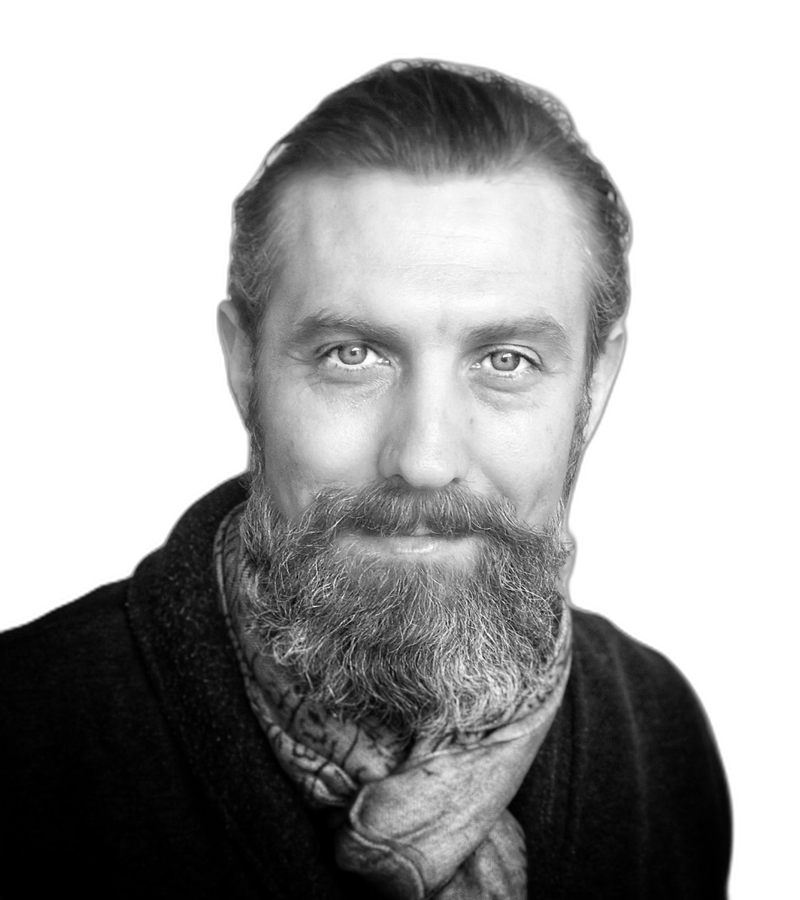
Dr. John Churchill
Dr. John Churchill is the founder and senior teacher of Planetary Dharma, a doctor of psychology, author, practitioner of Chinese Medicine, and a founding member of Ken Wilber's Integral Institute. He spent 15 years training and teaching Great Seal meditation in an Indo-Tibetan Mahayana lineage under Dr. Daniel P. Brown and has developed a Fourth Turning Planetary Dharma path integrating somatically based contemplative practice, psychodynamic healing, adult development, and meditation.
Learn more →Listen to the episode
Awakening built on survival physiology will eventually crack
If your spiritual practice sends you up, out, or forward before your system can feel safe, supported, and actually here, you're building on top of unresolved survival physiology. That is the core practical argument from this conversation with John Churchill.
John's move is to bring ancient contemplative practice back down to the ground. He argues that modern seekers need a path integrating attentional training, trauma digestion, attachment repair, adult development, and community structure. Not just more peak experiences or abstract nonduality talk.1
This guide is a way to use the episode:
- begin practice with contact, ground, and felt support;
- choose practices by developmental layer rather than by spiritual ambition;
- separate attention from awareness without forcing a special state;
- treat shadow work as digestion, with real stakes and real relief;
- build containers, teachers, and peer fields that make long-term practice safer.
1For Nervous System Mastery readers, the key distinction: does the practice increase contact with reality, or help you bypass the body?
Make the ground your first meditation object
John's most actionable recommendation comes near the end of the episode: if you want to loosen the fusion between awareness and attention, spend time lying on the ground and learning to let yourself be held. Then, as you walk through the day, track the degree to which you are still allowing support to be here.
The instruction is not "relax harder." It is to make contact with the most literal support available: floor, chair, earth, bed, wall, cushion. In John's language, the ground beneath you is not a preliminary step before nonduality. It is one of the most direct places to practice nonduality because "ground" is arising within experience right now.
Use this as a hierarchy of practice:
- Contact before breath. First feel what is already touching you: heels, sacrum, back ribs, shoulder blades, skull, palms.
- Support before insight. Notice whether you are receiving support or subtly bracing against it.
- Down before up. If your practice tends to lift into spaciousness, concepts, light, or disembodied witnessing, include the downward vector first.
- Safety before intensity. If you are activated, dissociated, or emotionally flooded, choose the practice that increases orientation and contact rather than the one that creates a bigger state.
Attachment research offers a cautious bridge here. Secure attachment is associated with emotion-regulation capacity and with the felt availability of support; adult security can also be temporarily strengthened through relational and symbolic cues.2 That does not prove lying on the ground "heals attachment." But it supports John's practical emphasis: felt support changes what the nervous system can metabolize. It is not optional decoration on top of "real" practice.
Practice
Run the 5-minute held-by-ground reset
Use this before meditation, breathwork, therapy, a difficult conversation, or any practice that tends to pull you into intensity.
- Lie down or sit with full contact. Choose a surface where your body can safely release some weight. Let your eyes stay open if that feels more regulating.
- Name five contact points. For example: "heels, calves, pelvis, back ribs, head." Do not visualize support; feel the pressure and texture that are already here.
- Let 2% more weight arrive. Instead of commanding yourself to relax, ask: "Where am I still hovering above the ground?" Let one small area yield.
- Orient outward. Look around the room. Notice colors, edges, light, and distance. This keeps grounding from becoming an inward collapse.
- Track the old grab. Where does attention tighten, scan, or try to manage the experience? Let that tightening be included rather than fought.
- Stand up slowly. Take ten steps while asking: "To what degree am I letting myself be held right now?"
If the practice increases panic, numbness, traumatic memory, or dissociation, stop and orient to the room. Work with a qualified trauma-informed practitioner rather than forcing stillness.
Match the practice to the developmental layer
Most people pick their practice based on aspiration. They admire a teacher, read about a tradition, or had one powerful experience and now they want more. John frames human development as layered: early attachment and safety, self-structure and cognition, adult ego development, transpersonal opening, and deeper contemplative realization. Different injuries require different interventions.
If the issue is cognitive distortion, attachment soothing alone may not reprogram the story. If the issue is early safety, abstract insight may not reach the body. If the issue is spiritual bypassing, more intensity reinforces the escape route.
Before choosing a practice, ask:
- What layer is active? Body threat, attachment longing, shame story, power conflict, existential grief, spiritual opening, or ordinary fatigue?
- What is the smallest regulating move? Ground contact, food, sleep, orienting, journaling, relational repair, movement, therapy, meditation, or skilled guidance?
- Am I trying to transcend what hasn't yet been included? John's phrase is essentially "include and then transcend," and the body keeps score of what you skipped.
This matters enormously for meditation. John describes early contemplative training as stabilizing attention so you can look more deeply at reactivity, conditioning, and trauma. But meditation is not automatically benign for every person in every state. Research on meditation-related adverse effects is still developing, yet studies have found that trauma history and trauma-related symptoms can predict distress or adverse effects in some mindfulness-based contexts.3
A trauma-informed rule of thumb:
- If practice brings more contact, choice, and orientation, continue gently.
- If practice brings more rigidity, dissociation, panic, or compulsion, reduce intensity and widen support.
- If practice repeatedly destabilizes you, treat that as information about sequencing, dosage, and container. Not spiritual failure.
Separate attention from awareness
John gives a provocative model: trauma narrows the attentional system and fuses awareness to survival-oriented attention. When everyone around you relates to that contracted self, it becomes normalized as "who I am."
You don't have to adopt John's full metaphysics to use the move. Practically:
- Attention is the spotlight: the email, the threat, the ache, the argument, the mantra, the goal.
- Awareness is the wider field: the body, room, sounds, space, support, choices, and the fact that attention is moving.
- Fusion is when the spotlight feels like the whole world.
- Practice is remembering the field without attacking the spotlight.
Try this during ordinary stress:
- Name the object attention is fused to: "the message," "the sensation," "the decision," "the image of myself failing."
- Keep the object in awareness, but include three other data streams: contact with the chair, sounds in the room, and peripheral vision.
- Ask: "Is attention scanning for threat right now?"
- If yes, add safety cues before insight: look around, feel the ground, lengthen the exhale naturally, or speak to someone safe.
- Then return to the object with a wider field.
The goal is to stop mistaking a survival spotlight for your entire identity. Attention is useful. The confusion happens when the spotlight's urgency becomes the only thing that feels real, and then you organize your whole life around it.
Shadow work as digestion
John's view of shadow work is refreshingly concrete: the "shadowy" material is often what families and cultures taught you to negate. When you reclaim free will and presence from unconscious reactive systems, awareness expands.
Shadow work is the digestion of unconscious reactivity so that life force, choice, and contact return.
A grounded shadow practice has three movements:
- Stabilize enough to look. If the material overwhelms you, return to support, orientation, and relational safety.
- Find the avoided energy. Anger, grief, desire, power, tenderness, need, pleasure, or fear may have been exiled because expressing them once felt unsafe.
- Reclaim the function, not the old behavior. Anger may restore boundary. Grief may restore love. Desire may restore vitality. Power may restore the capacity to stay present rather than dominate.
John says you don't become awake by awakening what is already awake; you become awake by awakening darkness. In nervous-system terms, this means the path includes increasing capacity to stay present with the parts of experience you previously had to contract around.
Keep this clean:
- Don't use "shadow work" to justify impulsive disclosure, emotional dumping, or boundary violations.
- Don't use spiritual language to skip repair.
- Don't do deep trauma excavation alone because you heard a powerful podcast.
- Measure progress by increased contact, responsibility, humility, and range. Catharsis alone is not the metric.
Choose containers by their accountability structure
John argues that one role of a teacher is to see your practice from a perspective you cannot yet access. But he also names why teacherly authority has been damaged: traditions often failed to integrate psychological work, and teachers' unworked material harmed students.
The question becomes: what container makes authority accountable?
Use this checklist before entering a practice community, intensive, or psychedelic-adjacent container:
- Developmental fit: Can the guide distinguish trauma, attachment, cognition, ego development, and transpersonal states?
- Scope clarity: Are they honest about what they can and cannot treat, facilitate, or diagnose?
- Psychological integration: Do they have supervision, peer accountability, ethical guidelines, and repair processes?
- Pacing: Is there permission to slow down, opt out, orient, or choose a less intense practice?
- Community reality: Are peers trained over time, or is the field held together by charisma and peak experiences?
- Medicine humility: If psychedelics are involved, is the work legal, screened, supported, integrated, and not sold as a shortcut?
John sees psychedelics as potentially useful within a lifelong curriculum (for healing, openings, group practice, or phase transitions) but he is clear that glimpses must be matched with practice. A state is not a path. A ceremony is not a nervous-system foundation.
His larger vision is a long-term mandala: a graded cohort journey where people train together long enough to build trust, shared language, peer perception, and a culture capable of holding deeper transformation. Organizational research on psychological safety points in a compatible direction: teams learn better when members believe the group is safe for interpersonal risk-taking.4 That doesn't validate every spiritual community's claims, but it reinforces a basic design principle: deep practice needs conditions where people can tell the truth, make repairs, and keep learning.
Key takeaways
- Ancient healing wisdom becomes more useful when sequenced through the body rather than used to bypass it.
- Ground contact is a direct way to train safety, support, and non-separation. It's not a beginner practice to outgrow.
- The right practice depends on the active developmental layer: safety, attachment, cognition, shadow, ego development, or transpersonal opening.
- Meditation and psychedelics can be powerful, but intensity without screening, pacing, and integration can destabilize some people.
- Shadow work is digestion of reactivity into presence, choice, and responsibility. Measure it by your range, not your catharsis.
- Teachers and communities matter most when their authority is accountable, psychologically integrated, and able to support long-term practice.
Free assessment
Take the free nervous system assessment.
If your practice often turns into bracing, bypassing, shutdown, or chasing bigger states, the assessment can help you map your current nervous-system patterns and choose a steadier next step.
Take the Free AssessmentContinue exploring
- Read The Art and Science of Interoception for a deeper map of sensing internal signals before they drive behavior.
- Read Functional Breathwork: Use Interoception to Regulate Your Nervous System for breathwork protocols that account for nervous-system state.
- Read Navigate Challenging Emotions for another practical guide to meeting difficult inner material without being consumed by it.
- Read Behind the Scenes of Nervous System Mastery for more on how Nervous System Mastery thinks about practice design and embodied learning.
References
- Dr. John Churchill and Jonny Miller, The Orchestra of Ancient Healing Wisdom & Practices with Dr. John Churchill, 00:34–01:47 and 09:51–12:30. Guest-bio details were cross-checked against John's Planetary Dharma bio, https://www.planetarydharma.com/john-1. ↩
- For cautious research context, Mikulincer and Shaver review evidence linking attachment orientations with emotion regulation and describe security as a resource in threat contexts. See "Attachment orientations and emotion regulation," Current Opinion in Psychology (2019), https://doi.org/10.1016/j.copsyc.2018.02.006. This supports the importance of felt support; it does not prove that any single grounding exercise resolves attachment injury. ↩
- Meditation research is mixed and context-dependent. Britton and colleagues' work on meditation-related adverse effects in mindfulness-based programs found that negative-valence or negative-impact experiences can occur and should be monitored; see "Defining and Measuring Meditation-Related Adverse Effects in Mindfulness-Based Programs," Clinical Psychological Science (2021), https://doi.org/10.1177/2167702621996340. This supports screening and trauma-sensitive adaptation, not blanket avoidance of meditation. ↩
- Edmondson's field study introduced team psychological safety as a shared belief that a team is safe for interpersonal risk-taking and found it associated with team learning behavior. See "Psychological Safety and Learning Behavior in Work Teams," Administrative Science Quarterly (1999), https://doi.org/10.2307/2666999. The organizational context differs from contemplative communities, so this is a design analogy rather than proof of spiritual outcomes. ↩