Meaning Crisis, Post-Traumatic Growth, and Homegrown Humans with Jamie Wheal
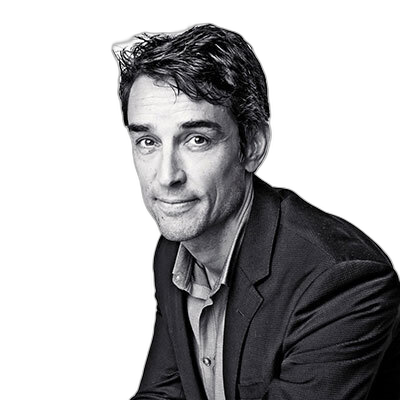
About the guest
Jamie Wheal
Jamie Wheal is the founder of the Flow Genome Project and author of Recapture the Rapture and Stealing Fire. His work explores peak performance, neuroanthropology, leadership, culture, and the practical design of experiences that support healing, inspiration, and connection.
Learn more →Listen to the episode
If the meaning crisis feels too big, build one grounded culture of repair
When the world feels unstable, the temptation is to reach for a story that promises certainty, salvation, or a golden ticket for "our" people. Jamie Wheal calls those rapture ideologies: narratives where the world is beyond repair, an inflection point is coming, and one favored tribe gets through while everyone else is left behind. The pattern shows up in religious eschatology, techno-utopianism, doomsday environmentalism, and crypto exit fantasies alike.
His alternative is less glamorous and more useful: create repeatable, local, body-based, community-supported ways for people to access healing, inspiration, and connection, then turn those states into service, art, repair, and courage.
Use this guide when you are:
- overwhelmed by the meaning crisis, climate grief, polarization, or institutional distrust;
- drawn to peak states but wary of spiritual bypassing, cult dynamics, or guru culture;
- interested in breath, music, intimacy, ritual, or psychedelics without turning them into a cure-all;
- trying to metabolize grief into love, contribution, and post-traumatic growth without romanticizing trauma;
- asking Wheal's closing question: "What is mine and mine alone to do, and how do I begin it?"
1This is a reflection and practice guide, not medical advice, trauma treatment, psychedelic guidance, or a substitute for qualified care. Breathwork, sexuality, substances, intense ritual, grief work, and altered states can be destabilizing. If you are in acute crisis, suicidal, manic, medically vulnerable, trauma-activated, or unsure about consent or safety, prioritize professional support and trusted people.
Name the rapture story before it recruits your nervous system
Wheal's diagnosis of the meaning crisis starts with a loss of shared handrails. Organized religion no longer functions as a singular authority for many people. Secular liberalism widened inclusion but often failed to offer a felt sense of salvation, belonging, or ultimate meaning. Layer on economic precarity, ecological danger, institutional distrust, and exponential change, and people become vulnerable to simple stories that regulate fear by manufacturing enemies and promised exits.
The tactical move is not to shame yourself for wanting meaning. It is to notice when that hunger has quietly become a search for an escape hatch.
Run this rapture-ideology audit on whatever story currently has your nervous system's attention:
| Signal | Nervous-system pull | Grounded counter-move |
|---|---|---|
| "The world is irredeemably doomed." | Collapse, cynicism, dissociation | Name one repairable local layer: body, home, street, school, watershed, team. |
| "Only our people see the truth." | Belonging through superiority | Ask who is excluded and what complexity the story has to erase. |
| "The inflection point is almost here." | Urgency, adrenaline, purity tests | Slow down enough to distinguish real urgency from manipulation. |
| "If I buy in, I get the golden ticket." | Relief, specialness, dependency | Look for 99% solutions: practices that do not require leaving most people behind. |
| "More information will save us." | Cognitive overdrive | Add embodiment, relationship, art, ritual, and direct service. |
Wheal's critique is not anti-meaning. It is anti-outsourcing. If you do not consciously build meaning, your fear will happily accept it from whoever offers the most compelling myth.
For a nervous-system lens, pair this with Reset Your Nervous System: fear-based certainty is easier to spot after the body has downshifted.
Build a healing-inspiration-connection flywheel, not a peak-state addiction
Wheal keeps returning to a simple triad: healing, inspiration, and connection. These are recurring human nutrients, not luxury upgrades. A person might enter through any door: a grief circle, a breathwork session, an intimate conversation, a recovery meeting, a wilderness experience, a song, or a moment of beauty. Once inside, the other doors tend to swing open more easily.
The risk is confusing a summit experience with a finished life. Wheal is explicit that "enlightenment" can become another rapture ideology if it promises you are finally off the hook of being human. Peak states earn their keep by returning you to ordinary life with more honesty about what needs mending.
Use this flywheel as an integration map:
- Stabilize first. If your system is flooded, begin with food, sleep, orientation, slower exhale breathing, professional care, or co-regulation.
- Open safely. Choose a low-risk doorway into awe, grief, movement, music, nature, prayer, art, or breath.
- Name what surfaced. Do not rush to interpret. Ask: "What did this reveal about what hurts, what matters, or what I love?"
- Connect with a trustworthy person. Insight becomes more durable when someone witnesses it without inflation.
- Take one repair action. Apologize, simplify, serve, make art, set a boundary, help a neighbor, or change a habit.
- Repeat at human dosage. The flywheel is cyclical. It is not a one-time breakthrough.
A cautious research bridge: slow breathing practices have been associated in some studies with autonomic and psychological changes such as increased HRV and relaxation, but the evidence base is heterogeneous and not a universal treatment claim.1 Treat breath as one accessible lever, not as proof that every intense protocol is safe for every person.
Work with grief as praise, but do not make trauma your credential
One of the most useful distinctions in this episode is between the tragic and the post-tragic. Wheal describes the pre-tragic as the phase before life has fully broken our idealized expectations. The tragic begins when grief, injustice, loss, or disillusionment reveals that life will not deliver the promised rose garden. The post-tragic is accepting the wound and getting back up anyway: choosing love after walking through the valley.
Post-traumatic growth can be weaponized if the framing gets sloppy. Trauma is not good. Suffering does not automatically ennoble. Nobody should be pressured to find the gift in grief while they are still trying to survive. The humbler, evidence-based claim is that with support, time, meaning-making, and relational holding, some people report positive changes alongside ongoing pain: deeper relationships, new possibilities, appreciation of life, personal strength, or spiritual change.2
Try this grief-to-love inquiry when you are resourced enough (and only then):
| If grief says... | Translate it as praise for... | One grounded expression |
|---|---|---|
| "This should not have happened." | The value of what was harmed | Protect one small version of that value today. |
| "I miss them / it / who I was." | Love that still has nowhere to go | Write, speak, make, plant, cook, donate, or serve in their honor. |
| "The world is too much." | A heart that has not gone numb | Reduce input; increase one embodied act of care. |
| "I cannot fix this." | Humility before scale | Choose a right-sized contribution rather than heroic collapse. |
| "I am broken." | A place where tenderness may enter | Ask for witness before demanding yourself to be useful. |
Wheal invokes the spirit of "grieve globally, thrive locally": let the world break your heart open, then root the response where your hands can actually touch reality. For a complementary conversation, read Grief, Service, and Life with Charles Eisenstein.
If you are going to engineer states, engineer the container too
Wheal's "Alchemist's Cookbook" frame asks a provocative question: what happens if we take ordinary human drivers (breath, movement, music, intimacy, bodywork, rhythm, ritual, and sometimes substances) and design them intentionally for healing, inspiration, and connection? He describes a 12-week consenting-couples experiment that combined structured sexuality, bodywork, breathwork, music, and optional substances while tracking outcomes with measures related to mystical experience, flow, PTSD symptoms, heart-rate variability, affect, and closeness.
The tactical lesson is not "copy the protocol." It is this: if you are going to experiment with powerful state-shifting tools, stop treating vibes as evidence and intensity as wisdom.
Use these design constraints:
- Consent is the floor. Especially with intimacy, touch, sexuality, substances, power dynamics, or group ritual, consent must be explicit, sober, reversible, and ongoing.
- Screen for risk. Trauma history, dissociation, mania, psychosis risk, cardiovascular issues, medications, pregnancy, addiction risk, and relational instability can all change what is safe.
- Prefer low-risk levers first. Slow breathing, nature, music, gentle movement, journaling, art, and trusted conversation often provide useful signal without maximal intensity.
- Measure lightly. Track sleep, mood, conflict, closeness, HRV if you already use it, and whether your life becomes more honest and kind afterward.
- Integrate before escalating. A practice that produces revelation but degrades relationships, work, sleep, or humility is not working yet.
- Separate facilitation from devotion. Wheal warns about cults of personality, specifically the danger of leaders who both open sacred states and claim interpretive authority over them.
The MDMA research Wheal references was conducted in controlled clinical settings with screening, preparation, supervised sessions, and integration; it should not be generalized into DIY trauma treatment.3 Powerful openings require trustworthy containers.
Practice
Run a 30-minute minimum viable sacred experiment
Use this when you want more healing, inspiration, or connection without chasing intensity. Keep it legal, sober unless medically supervised, nonsexual unless you already have a clear consensual container, and easy to stop at any point.
- Choose one doorway. Breath, music, nature, movement, prayer, art, or a trusted conversation. Do not stack everything at once.
- Name the intention. "For 30 minutes, I am practicing contact with ___." Examples: grief, gratitude, courage, forgiveness, aliveness.
- Regulate first. Take three slow breaths, feel your feet, and orient to the room or landscape. Start from enough safety to remain choiceful.
- Enter gently. Put on one song, walk without your phone, breathe at a comfortable slower pace, draw, stretch, or speak honestly with someone safe.
- Track three signals. What happened in the body? What emotion appeared? What value became clearer?
- Close deliberately. Eat, drink water, look around, and write one sentence: "The grounded action this asks of me is ___."
- Do the action within 24 hours. Keep it small: send the apology, rest, make the appointment, clean the room, call the friend, donate, repair, create.
The win is not transcendence. The win is a repeatable loop from state shift to grounded repair.
Turn soul force into place-based contribution
Wheal's closing move is bracingly practical: we do not need endless blank-page redesigns of civilization. We need people to wake up, look around their culture and community, dust off what still works, and build good, true, and beautiful things.
That means post-traumatic growth cannot remain self-improvement. At some point, the question becomes contribution.
Try the "mine and mine alone" filter:
- What wound keeps teaching me what matters? Not as identity, but as information.
- What beauty reliably brings me back to life? Music, children, rivers, craft, friendship, justice, gardens, comedy, movement?
- Where do I have actual contact? Household, team, clients, neighborhood, school, watershed, online community, craft lineage.
- What can I do without needing everyone to agree first? A repair that starts below the culture-war layer.
- What would still feel worth doing if no one called me special? This protects contribution from performance.
- How do I begin this week? Make the first move so small that your nervous system can stay with it.
Wheal's phrase "stay awake, build stuff, and help out" is a complete operating system. For Nervous System Mastery readers, the nervous-system question is: what level of activation lets you remain awake enough to see clearly, connected enough to care, and regulated enough to act?
For more on embodied action without over-efforting, read Achieve More by Grinding Less and The Art and Science of Interoception.
Key takeaways
- The meaning crisis makes people vulnerable to rapture stories: escape narratives that regulate fear by offering certainty, enemies, and golden tickets.
- Healing, inspiration, and connection work best as a repeatable flywheel, not a one-time awakening.
- Peak states are useful only if they return you to ordinary life with more honesty, repair, service, and humility.
- Grief can become praise, but trauma should never be romanticized or used to pressure people into premature meaning-making.
- Hedonic engineering requires consent, screening, measurement, and aftercare, especially when working with intimacy, substances, or intense altered states.
- Post-tragic maturity means accepting the tragedy of life and choosing love, contribution, and courage anyway.
- The practical question is not "How do I save everything?" It is: "What is mine and mine alone to do, and how do I begin it?"
Free assessment
Take the free nervous system assessment.
If overwhelm, grief, collapse, urgency, or meaning-seeking are making it hard to choose a grounded next step, the assessment can help you map your current nervous-system patterns and identify where regulation, capacity, and connection may support clearer action.
Take the Free AssessmentContinue exploring
- Read Grief, Service, and Life with Charles Eisenstein for a complementary guide on heartbreak, service, and staying open to the world.
- Read Wilderness Rites of Passage for Leadership for a grounded map of identity-level thresholds and integration.
- Read Achieve More by Grinding Less for practical ways to act from aliveness rather than fear-driven effort.
- Read Reset Your Nervous System for simple regulation practices before making decisions from overwhelm.
References
- Zaccaro and colleagues reviewed 15 studies on slow breathing in healthy subjects and reported associations with autonomic, central nervous system, and psychological outcomes, while noting methodological limits and the need for further study. See Andrea Zaccaro et al., "How Breath-Control Can Change Your Life: A Systematic Review on Psycho-Physiological Correlates of Slow Breathing," Frontiers in Human Neuroscience 12 (2018): 353, https://doi.org/10.3389/fnhum.2018.00353. ↩
- Tedeschi and Calhoun's Posttraumatic Growth Inventory describes self-reported positive changes after traumatic events across domains such as relating to others, new possibilities, personal strength, spiritual change, and appreciation of life. This does not imply trauma is beneficial or that growth is required. See Richard G. Tedeschi and Lawrence G. Calhoun, "The Posttraumatic Growth Inventory: Measuring the Positive Legacy of Trauma," Journal of Traumatic Stress 9, no. 3 (1996): 455–471, https://doi.org/10.1002/jts.2490090305. ↩
- The phase 3 MDMA-assisted therapy study discussed around this topic used controlled clinical protocols with preparation, supervised experimental sessions, integration, screening, and clinician-administered outcome measures. It should not be treated as evidence for unsupervised MDMA use. See Jennifer M. Mitchell et al., "MDMA-Assisted Therapy for Severe PTSD: A Randomized, Double-Blind, Placebo-Controlled Phase 3 Study," Nature Medicine 27 (2021): 1025–1033, https://doi.org/10.1038/s41591-021-01336-3. ↩