Mindfulness and Procrastination: Diagnose the Real Block with Arthur Worsley
About the guest
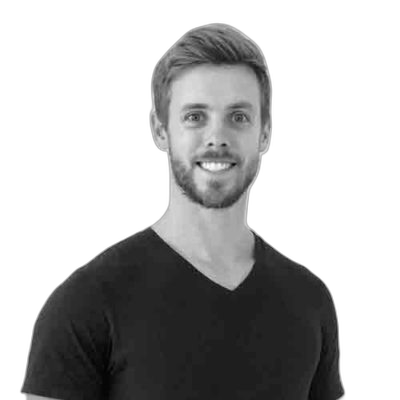
Arthur Worsley
Arthur Worsley is a writer, coach, and meta-learning practitioner who studied neurophysiology at Oxford, became conversationally fluent in eight languages, and has taught productivity and learning systems through Faster to Master and The Art of Living.
Learn more →Listen to the episode
The useful question is "what kind of procrastination is this?"
Procrastination is a signal that something in your system needs specificity, support, meaning, or recovery. Arthur Worsley breaks it into four causes: lack of clarity, lack of courage, lack of motive, and lack of energy.
Which means the first useful question becomes: What kind of procrastination is this?
Use this guide when you are avoiding a project, delaying a hard conversation, scrolling instead of starting, or doing useful-looking tasks that quietly replace the real thing. The aim is to:
- catch procrastination earlier by naming your personal "canary signals";
- diagnose whether the block is clarity, courage, motive, or energy;
- use mindfulness as a real-time awareness tool, not a productivity performance;
- choose the smallest next intervention instead of applying generic self-discipline;
- ask Arthur's closing question: "What is the one most important thing I should be doing right now?"
1This is not a medical protocol. Procrastination can overlap with stress, grief, ADHD, depression, anxiety, trauma, burnout, sleep debt, or life circumstances. Use these practices as reflection tools, and seek qualified support when avoidance is severe, persistent, or destabilizing.
Catch the "when" before you debate the "why"
Arthur's first move is deceptively simple: before trying to fix procrastination, make a list of what you do when you procrastinate.
Most people discover the pattern late, after the second episode, the long scroll, the kitchen loop, the over-research spiral, the sudden need to reorganize the desk. By then a behavioral cycle is already running, and the force required to change direction has gone up. The earlier you catch the entry point, the less willpower the redirect costs.
Build a personal canary list:
| Procrastination signal | What it may be hiding |
|---|---|
| Opening email, Slack, WhatsApp, or social media "just to check" | Avoiding an ambiguous next step |
| Watching one more video or episode | Seeking relief from task aversion |
| Cleaning, planning, organizing, or exercising at the wrong moment | Doing a productive substitute instead of the important thing |
| Tight throat, chest pressure, jaw tension, restlessness | Fear, visibility, conflict, or emotional activation |
| Needing the perfect setup before starting | Courage or clarity disguised as standards |
Arthur makes a useful distinction: time intentionally wasted is not wasted time. A walk, film, workout, or nap can be exactly right. It becomes procrastination when it masks avoidance of a task you have already decided matters.
Piers Steel's meta-analytic review found procrastination associated with task aversiveness, delay, self-efficacy, impulsiveness, distractibility, organization, and achievement motivation.1 That does not reduce anyone's avoidance to a formula. It does suggest "try harder" is almost always too blunt an instrument.
Diagnose the four causes before choosing the fix
Arthur compares generic procrastination advice to walking into a doctor's office saying "I feel sick" and receiving twelve random medications without a diagnosis. The intervention only works when it matches the cause.
1. Lack of clarity: "I don't know exactly what to do next"
This is the most common cause and often the easiest to fix. You know the project, but the next physical action is fog.
Try:
- Write the outcome in one sentence.
- Write the next visible action: email, open, draft, ask, schedule, outline, delete, decide.
- Reduce it until it can be started in less than two minutes.
- If there are multiple threads in your head, do a quick capture list before choosing one.
Clarity blocks often feel like laziness because the nervous system is trying to act on something it cannot see.
2. Lack of courage: "I know what to do, but I'm afraid of what happens if I do it"
Arthur names fear of failure as the common version. What I find more interesting in this conversation is the visibility angle: sometimes procrastination protects us from being seen, judged, rejected, or exposed.
Try:
- Name the feared consequence: "If I publish this, I fear ___."
- Separate action risk from identity risk. "This draft could be criticized" is different from "I will be revealed as inadequate."
- Make the exposure smaller: send it to one trusted person, publish a short version, ask one question, or rehearse the conversation aloud.
- Add support: co-working, coaching, therapy, a friend, or a container that makes the emotional load bearable.
Courage means dosing the next action so fear is present but not steering.
3. Lack of motive: "I don't care enough about why this matters"
This shows up when the task is inherited, stale, disconnected, or misaligned. Arthur notes it often happens earlier in life, when someone else defines the goal: an exam, project, assignment, or path you never chose.
Try:
- Ask: "Who says this matters?"
- Ask: "What does this make possible if I complete it?"
- Link it to a longer horizon: today, this week, this year, the life area it serves, the mission it supports.
- If no honest motive appears, decide whether to delegate, renegotiate, shrink, or consciously drop it.
Sometimes the most productive act is admitting a goal was never yours.
4. Lack of energy: "The wall is bigger than me right now"
Arthur's energy metaphor is memorable: if you are at a ten-foot state, a six-foot wall is manageable. Drop to a one-foot state and that same wall feels impossible.
Try:
- Sleep, eat, hydrate, move gently, or take a real break before demanding effort.
- Switch to a lower-energy task that still supports the same project.
- Cut the task into a tiny rep: one sentence, one file, one message, one decision.
- If exhaustion is chronic, treat it as a system problem rather than a discipline failure.
This matters especially for nervous-system work. If your body is under-recovered, self-criticism increases activation without increasing useful capacity.
Practice
Run the 5-minute procrastination triage
Use this when you catch yourself avoiding something important. The goal is to identify the smallest honest next move.
- Name the canary. "I noticed I am ___." Examples: scrolling, checking messages, researching more, cleaning, snacking, freezing, tightening in the chest.
- Name the avoided thing. "The thing I may be avoiding is ___." Keep it specific.
- Pick one cause. Ask: "Is this mostly clarity, courage, motive, or energy?" If two are present, start with the more basic one: energy before courage, clarity before motivation.
- Choose the matching intervention. Clarity → define the next action. Courage → shrink the exposure. Motive → reconnect or renegotiate the why. Energy → recover or reduce the load.
- Set a ten-minute container. Do one small rep, then reassess. Stopping after ten minutes is allowed.
- Record the lesson. Write one line: "Today's procrastination was mostly ___, and the useful move was ___."
The win is learning what your avoidance is trying to tell you early enough to respond with something better than force.
Implementation-intention research supports this kind of "if this signal, then this response" structure. Gollwitzer and Sheeran's meta-analysis found that forming if-then plans had a medium-to-large positive effect on goal attainment across studies.2 Pre-deciding the next move reduces the cognitive load of choosing while you are already activated.
Use mindfulness to notice procrastination before it is running
Arthur's frame is practical: meditation is to mindfulness what gym training is to playing football. Sitting practice may increase the chance that you notice procrastination earlier, but the real payoff comes in ordinary transitions: the moment between reading the project brief and reaching for your phone.
For procrastination, mindfulness helps at three levels:
- Behavioral awareness: "I just opened YouTube after reading the project brief."
- Emotional awareness: "I feel dread because this will be judged."
- Somatic awareness: "My throat and chest tighten when I think about sending the email."
The body cue matters because thought is often late. By the time your mind has constructed a reasonable explanation for why you "needed a break," the throat, jaw, chest, or belly already signaled the avoidance pattern.
Try Arthur's transition-based mindful moments:
- Before opening a new tab, pause for one breath.
- Before standing up from your desk, ask what you are moving toward.
- Before switching tasks, ask whether you are choosing or escaping.
- When you notice a body cue, label it gently: "activation," "fear," "fog," "fatigue," or "resistance."
Arthur also describes tracking mindful moments with simple hair ties moved from one wrist to the other. The count matters less than the mechanism: turning awareness into something visible and tactile enough to remember during the day.
Interoception research supports this kind of body-first check-in. Price and Hooven describe interoceptive awareness skills as relevant to emotion regulation, especially the ability to identify, access, and appraise internal body signals.3 Body signals become early data for better self-regulation when you learn to listen before the story takes over. For anxiety, trauma, ADHD, or burnout, professional support remains important.
Build a bounding box so focus and play have somewhere to happen
Arthur pushes back on the idea that productivity has to kill play. His analogy is a football pitch: the game gets more creative because there are boundaries, rules, and a shared field.
For procrastination, the absence of a boundary often creates more anxiety than the boundary itself. If the task can happen anywhere, anytime, in any form, your mind has to keep renegotiating everything from scratch. That renegotiation is itself a form of avoidance.
Create a light bounding box:
- Time: "I will work on this from 9:00 to 9:30."
- Place: "This happens at the desk, not from bed."
- Definition of done: "A rough outline with five bullets is enough."
- Recovery rule: "After the sprint, I walk without my phone."
- Not-to-do: "No email, research, or formatting until the first ugly draft exists."
Then ask Arthur's closing question: What is the one most important thing I should be doing right now?
Sometimes the answer is sleep, a message to someone you love, a difficult conversation, exercise, or a pause. Sometimes it really is the thing you have been putting off.
Key takeaways
- Procrastination has four distinct causes (clarity, courage, motive, energy), and the fix only works when it matches the cause.
- Start with awareness: list your personal procrastination "canaries" so you catch the pattern before it is fully running.
- Clarity needs a next action. Courage needs a smaller exposure. Motive needs a real why. Energy needs recovery or load reduction.
- Mindfulness helps you notice behavior, emotion, and body cues before avoidance becomes a full storm.
- Simple tracking (hair ties, tallies) makes mindfulness more visible, but the number only matters if it increases choice.
- Boundaries support play and focus without turning life into rigid optimization.
- The most useful priority question: "What is the one most important thing I should be doing right now?"
Free assessment
Take the free nervous system assessment.
If procrastination often shows up as freeze, overthinking, urgency, avoidance, or exhaustion, the assessment can help you map your current nervous-system patterns and choose a steadier next step.
Take the Free AssessmentContinue exploring
- Read Focus on What Matters Most for another practical guide on attention, prioritization, and choosing the right next action.
- Read The Art and Science of Interoception for a deeper look at sensing internal body signals before they drive behavior.
- Read Reset Your Nervous System for simple regulation practices to use before forcing productivity.
- Read Achieve More by Grinding Less for a complementary guide on reducing unnecessary effort while staying engaged.
References
- Steel's meta-analytic review of procrastination found associations with task aversiveness, delay, self-efficacy, impulsiveness, distractibility, organization, and achievement motivation, among other factors. See Piers Steel, "The Nature of Procrastination: A Meta-Analytic and Theoretical Review of Quintessential Self-Regulatory Failure," Psychological Bulletin (2007), https://pubmed.ncbi.nlm.nih.gov/17201571/ and https://doi.org/10.1037/0033-2909.133.1.65. ↩
- Gollwitzer and Sheeran's meta-analysis found that implementation intentions (if-then plans specifying when, where, and how to act) had a medium-to-large positive effect on goal attainment across 94 independent tests. See "Implementation Intentions and Goal Achievement: A Meta-analysis of Effects and Processes," Advances in Experimental Social Psychology (2006), https://doi.org/10.1016/S0065-2601(06)38002-1. ↩
- Price and Hooven describe interoceptive awareness skills as relevant to emotion regulation and present a body-oriented framework for identifying, accessing, and appraising internal body signals. See "Interoceptive Awareness Skills for Emotion Regulation," Frontiers in Psychology (2018), https://doi.org/10.3389/fpsyg.2018.00798. ↩