Somatic Intuition: Quiet the Inner Critic by Moving Attention Into the Body
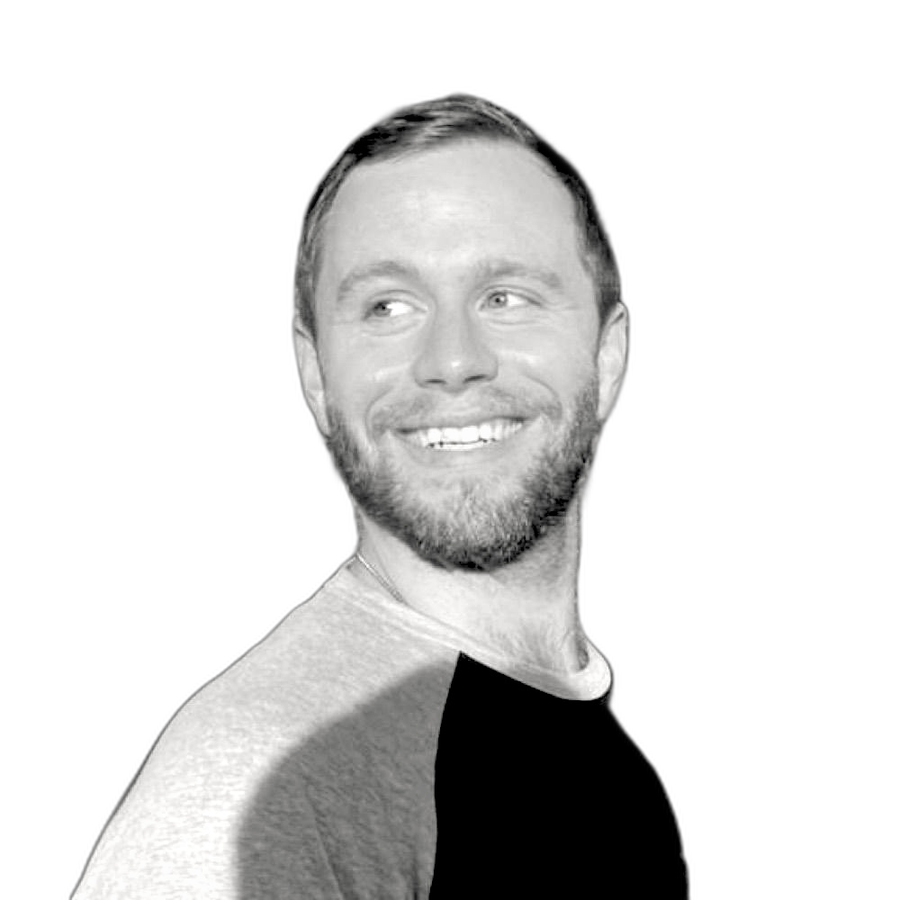
About the guest
River Kenna
River Kenna is a writer, journey artist, hedge yogi, and creator of Somatic Resonance. His work explores embodiment, presence, attunement, unconscious wisdom, aliveness, and more wholehearted ways of being.
Learn more →Listen to the episode
The inner critic often gets louder when everything has to process in the head
River Kenna describes spending much of his life with a constant inner voice: a vocal loop that always needed something to chew on. In school, that helped him perform. After college, it turned against him. The same mind that could optimize and analyze began chewing on River himself.
His shift came through embodied meditation and what he calls somatic resonance. The inner monologue softened. Emotions became more available. The body became less like an object he was dragging around and more like a field of intelligence he could participate with.
That is the core nervous-system reframe in this episode: the inner critic is not always a thinking problem. Sometimes it is a routing problem. Everything snaps to the head because the head has become the only place with enough "gravity" to process experience.
Somatic practice gives experience somewhere else to go. 1This is not about defeating thought. It is about letting thought become one channel in a larger system.
Self-criticism can become a closed loop
The phrase "inner critic" can sound harmless, like a mildly annoying narrator. But harsh self-scrutiny is clinically relevant. A systematic review and meta-analysis found that higher pre-treatment self-criticism is associated with poorer psychotherapy outcomes across longitudinal studies, even though change-score findings were mixed.1
That does not mean every critical thought is pathological. Sometimes self-evaluation is useful. The problem is when the mind becomes a closed loop: monitor, judge, tighten, repeat.
In River's language, the head becomes the default gravity well. Any problem, sensation, memory, or ache gets pulled upward into verbal processing. The verbal system then tries to solve material that may not be verbal in the first place.
Common signs:
- you can explain your emotions but not feel them move;
- every body sensation becomes a theory;
- the critic gets sharper when you are tired or lonely;
- you try to think your way into safety;
- the same insight repeats without changing the body.
Somatic work becomes interesting here because the body gives stuck material a different medium to move through. The verbal system never has to reach the right conclusion first.
Move attention lower than the argument
River's practical model is simple: wherever you put awareness in the body, you create more "gravity" there. Most of us have spent years training the head to be the only place where experience gets metabolized. Somatic meditation redistributes that weight.
At first, this may feel underwhelming. You put awareness in the chest, belly, legs, or feet. Nothing dramatic happens. Over time, River found that experiences stopped snapping only into thought. Some things could process through the heart. Some through the gut. Some through movement, tears, image, warmth, shaking, or quiet.
Research on interoception gives this a grounded frame. Interoception is the capacity to sense, interpret, and integrate internal bodily signals. Reviews increasingly connect interoceptive ability with emotion experience and regulation, while noting that bottom-up, body-based approaches still need more research than top-down mindfulness models.2
The Nervous System Mastery translation: if you only listen to the mind, you only receive part of the signal.
Body scan, but without the spotlight in your head
One of River's cleanest practices is a distinction between two ways a body scan can feel.
The common way: there is a "me" in the head holding a flashlight. It shines attention on the thigh, the foot, the belly, the heart. The body becomes a sequence of parts being inspected by a manager.
The other way: let the body be aware of itself.
Not "I am aware of my heart," but "the heart is aware of itself." Not "I am checking my feet," but "the feet are allowed to be aware from the inside." The body is already non-numb. There is already sensation before the head arrives to inspect it. The practice is to let that existing awareness brighten.
Practice
Let the body be aware of itself
Use this when the inner critic is loud, when you are overthinking, or when you can explain what you feel but cannot feel it move.
- Start with one area. Choose the feet, belly, hands, heart, jaw, or throat.
- Notice the inspecting habit. Feel how the head wants to look at that area and report back.
- Drop the spotlight. Instead of looking from the head, let the chosen area be aware from within itself.
- Use River's phrase: non-numb. Before you search for sensation, notice that some kind of bodily knowing is already there.
- Let it brighten by 5%. Do not force intensity. Let the area take up slightly more space in awareness.
- Follow small movements. If the body wants to sigh, swallow, shift, shake, stretch, cry, or soften, allow a safe amount.
If this becomes overwhelming, open your eyes, orient to the room, feel your feet on the ground, and return to ordinary contact. Somatic work should increase capacity, not flood the system.
Emotion may need movement, not another explanation
River describes moments where image, atmosphere, narrative, and body sensation begin to move together. Sometimes the shoulder wants to roll. Sometimes there is a twitch, a shake, a twist, or a spontaneous movement. He calls this, half-playfully, "emotional peristalsis": the body moving stuck material through.
Jonny mirrors this from his own experience: sometimes breathwork, meditation, or dropping into an emotion leads to a sense that the body is doing something while the conscious self is witnessing it.
This is easy to overstate, so the caveat matters. Spontaneous movement is not automatically wisdom. The body can discharge, protect, reenact, avoid, or express. When approached slowly, with curiosity and safety, movement can reveal material that analysis alone keeps circling.
A grounded way to test it:
- Notice the emotion in the body.
- Ask what tiny movement wants to happen.
- Let 5% of the movement occur.
- Pause and feel the effect.
- Stop before the system floods.
The criterion is whether more clarity, breath, grief, warmth, boundary, or choice becomes available afterward. Drama is not the metric.
Somatic intuition is not anti-thinking
River contrasts a systematic mode and a spontaneous mode. The systematic mode loves control, shaping, fixing, manipulating, and making the world do what it wants. The spontaneous mode can enter the stream of what is happening and participate with it.
The problem is hierarchy, not a simple good-mode/bad-mode split. When the control system is in charge, it tries to block out the rest. When the spontaneous mode is more primary, it can include the systematic mode as part of a larger intelligence.
That is a useful distinction for nervous system work. Somatic intuition does not mean abandoning discernment. It means letting discernment be informed by more than verbal cognition.
You might still make a spreadsheet. You might still use logic, evidence, planning, and language. But the spreadsheet is no longer the only oracle. The body, image, emotion, energy, timing, and relational field also get a vote. 2The goal is not to become less intelligent. It is to stop confusing control with intelligence.
Aliveness is not only thrill
Later in the conversation, River and Jonny explore aliveness. At first, aliveness can feel like thrill: flow, exhilaration, sympathetic charge, the sense that you are on the wave of creation.
River points to a deeper layer: a bodily faith in the unfolding of what is happening, even when the surface experience is unpleasant. Jonny connects this with grief, breathwork, and the discovery that aliveness can include both high activation and deep parasympathetic safety.
Many people use "regulation" to avoid intensity. River and Jonny are pointing to something subtler: enough regulation to stay open while intensity moves.
The nervous system does not become more alive by suppressing difficult material. It becomes more alive by having enough capacity to let more of life pass through without clenching around all of it.
A safety note on suicidal ideation and intense somatic work
River speaks honestly about suicidal ideation in his past. Jonny also references Bill Plotkin's idea that some suicidal imagery can symbolically point toward a part of the psyche that is ready to die, rather than literal physical death.
That frame can be meaningful in the right context, but it should not be romanticized. If suicidal thoughts are active, specific, escalating, or paired with intent or means, treat that as urgent and get live support immediately. Somatic and imaginal practices are not substitutes for crisis care, trauma-informed therapy, medical care, or trusted human help.
A good rule: intense inner material should be approached with enough external support, pacing, and reality contact that the body learns safety rather than overwhelm.
Key takeaways
- Inner criticism can become a closed loop when all experience has to process in the head.
- Somatic practice can redistribute attention into the body so emotion has more channels to move through.
- River's body-scan distinction is practical: stop inspecting the body from the head; let the body be aware of itself.
- Somatic intuition is not anti-thinking. It lets thought become part of a wider intelligence.
- Emotional movement should be titrated. Follow small signals, then pause and check the effect.
- Aliveness is not just thrill; it can include grief, activation, quiet, and embodied trust.
Free assessment
Take the free nervous system assessment.
Map how your system responds to stress, rumination, shutdown, emotional intensity, and body awareness, then get a clearer next step for building regulation without getting trapped in your head.
Take the Free AssessmentContinue exploring
- Read Functional Breathwork: Use Interoception to Regulate Your Nervous System for another body-first approach to nervous system regulation.
- Read Nervous System Mastery: State, Choice, Capacity, and Real-Life Practice for the broader Nervous System Mastery philosophy of state, capacity, and experimentation.
- Read How to Work With Chronic Anxiety for a practical guide on anxious loops and nervous-system validation.
References
- Löw, Schauenburg, and Dinger, Self-criticism and psychotherapy outcome: A systematic review and meta-analysis, Clinical Psychology Review (2020), PMID 31864153: https://pubmed.ncbi.nlm.nih.gov/31864153/. For intervention context, see Wakelin et al., Effectiveness of self-compassion-related interventions for reducing self-criticism: A systematic review and meta-analysis, PMID 33749936: https://pubmed.ncbi.nlm.nih.gov/33749936/. ↩
- For research context, an integrative review argues that interoceptive ability is central to emotion experience and regulation and can be trained through mind-body interventions, while noting that bottom-up movement and emotional-expression approaches remain under-investigated. See Interoceptive Ability and Emotion Regulation in Mind–Body Interventions (2024), PMC11591285: https://pmc.ncbi.nlm.nih.gov/articles/PMC11591285/. Body-scan training has also shown potential to improve interoceptive accuracy in controlled studies; see PMID 28955213: https://pubmed.ncbi.nlm.nih.gov/28955213/. ↩