Belief and Behavior Change: Test Identity Without Forcing Yourself
About the guest
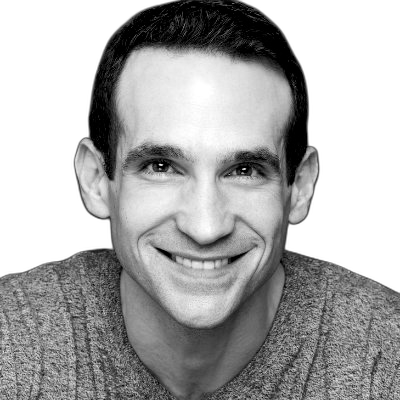
Nir Eyal
Nir Eyal is a New York Times bestselling author and a globally recognized authority on behavior change and human potential. He writes, consults, and teaches about the intersection of psychology, technology, business, attention, and belief, and is the author of Hooked, Indistractable, and Beyond Belief.
Learn more →Listen to the episode
You already know what to do. So why aren't you doing it?
Most people I talk to have read the books, done the courses, know the protocols. They can tell you exactly what behavior would change their life. Something still doesn't move.
Nir Eyal's provocation in this conversation landed differently for me: action fails earlier than we think. You may know the behavior and want the benefit, but if an unseen belief says, I am not the kind of person who can do this, the nervous system will organize around that prediction before the plan gets a chance.
What works? Identify the belief shaping your behavior, test whether it serves you, and take one small action that gives the body new evidence.
The central move in this episode:
- Name the belief. What thought, label, or assumption keeps you from the relationship, behavior, or version of yourself you want?
- Test its usefulness. Whether or not it contains truth, does it help you live with more agency, connection, skill, and care?
- Try on the opposite. If the exact opposite were true, who would you be?
- Act immediately. What is one small thing you can do right now from that new perspective?
For Nervous System Mastery readers, this is nervous-system work because beliefs are predictions in the body. Tightening before a hard conversation. Bracing before movement. Urgency around attention. Collapse around identity. A reflexive sense that a change is "not for people like me." 1A belief does not need to be false to be limiting. The more practical test is whether holding it rigidly makes your system more adaptive, honest, and alive.
Beliefs are tools you can pick up and put down
Nir distinguishes between facts, faith, and beliefs. Facts require evidence. Faith, in his framing, does not depend on evidence. Beliefs sit in between: strongly held convictions that may or may not be true, and may or may not be useful.
He uses prayer as one example. The practical angle: a ritual can create agency when it redirects attention toward gratitude, patience, strength, wisdom, or service rather than passive wishing. In nervous-system terms, a belief or ritual earns its place by what it trains you to notice and do.
A belief can be partly accurate and still function poorly:
- "I'm not good at staying in touch."
- "I have a short attention span."
- "Remote friendships are not nourishing."
- "My body is fragile."
- "If this is difficult, it means I'm not built for it."
- "I'm just an anxious person."
The question that matters: what happens when you keep living inside it?
Nir describes the common puzzle: people read a useful book, want the result, know the steps, and still do not implement them. His "motivation triangle" adds the missing base: belief. If you do not believe the behavior will work, do not believe the benefit will arrive, do not know how to do it, or do not believe you can become the person who does it, motivation collapses.
Research on identity-based motivation points in a similar direction. Daphna Oyserman and colleagues argue that people are more likely to act when a behavior feels congruent with who they are or who they are becoming; the same difficulty can be interpreted as meaningful when it fits identity, or as evidence that "this is not for me" when it does not.1
The practical task: make the next right behavior feel identity-congruent enough that difficulty doesn't immediately become a stop sign.
Curiosity finds what self-attack never will
Nir's own path into this topic began with a question: why do we fail to do what we already know would help us?
That question works better than self-attack. Instead of "Why am I so lazy?" try:
- What belief would make my current behavior make sense?
- What prediction is my body making about this action?
- What am I assuming will happen if I try?
- What identity would be threatened if I changed?
- What benefit do I secretly not believe is available?
- What discomfort am I trying not to feel?
This connects with Nir's earlier work on distraction. He says the deeper issue was the discomfort underneath the reach for the phone: "time management is pain management." Behavior often protects you from a feeling, prediction, or belief that has not yet been brought into contact with reality.
Curiosity moves the system from courtroom to laboratory.
A courtroom asks: "Who is guilty?"
A laboratory asks: "What is happening, what is the mechanism, and what experiment would teach us something?"
Shame narrows the nervous system. Curiosity widens it enough to notice options.
One proof point changes identity faster than a thousand affirmations
What struck me about this conversation was how tactical Nir got, coaching me through a live belief experiment in real time.
I named a belief: I'm not great at staying in touch with long-distance friends, partly because it doesn't feel as nourishing as in-person connection.
Nir separated two layers:
- Identity belief: "I am not good at staying in touch with long-distance friends."
- Benefit belief: "Long-distance friendships are not that nourishing."
Then he asked me to try on the opposite:
- "Long-distance relationships are deeply nourishing."
- "I am great at staying in touch with long-distance friends."
The goal is to see what becomes available when you temporarily live from that perspective. In my case, I felt more expansive, anticipated connection, and identified a small immediate action: choose three friends and send voice memos during a morning walk.
This is the core mechanism: new identity needs embodied evidence. A small action, today.
If you want to become "a person who repairs quickly," send the apology text. If you want to become "a person who can meet activation with skill," take one slow exhale before replying. If you want to become "a person who nurtures friendship," send one specific message rather than planning an abstract social overhaul.
The identity becomes more believable when the nervous system has fresh evidence that it is not pretending.
Practice
Run the belief-turnaround experiment
Use this when you notice a behavior you genuinely want but keep avoiding, postponing, or making complicated. Keep it small enough to complete in five minutes.
- Pick one stuck behavior. Choose something concrete: sending a message, starting a walk, opening the document, booking the appointment, having the conversation, or practicing one regulation tool.
- Name the limiting belief. Finish this sentence: "The belief that might be keeping me stuck is…" Include identity beliefs, benefit beliefs, and capability beliefs.
- Ask Nir's test question. "Is this belief serving me or hurting me?" Do not argue about it for twenty minutes. Notice the felt effect of holding it.
- Try on the opposite. Write the clean opposite. Example: "I am bad at staying in touch" becomes "I am someone who nourishes friendships across distance."
- Ask who you would be. If the opposite were true, how would your posture, breath, tone, attention, and next action change?
- Take one immediate proof step. Do something now: write the first sentence, choose the three names, put the shoes by the door, send the voice note, open the calendar, or take the first regulated breath.
- Track the residue. Afterward, ask: "Did this make the new belief slightly more available?" If yes, repeat. If no, refine the belief and the action.
The aim is to create a small, honest encounter between identity and action, and let the nervous system update from there.
Labels can be maps or cages, depending on how tightly you hold them
Nir's phrase "your labels are your limits" is deliberately provocative.
A grounded version: labels are powerful nervous-system cues. They organize attention, expectations, choices, relationships, treatment, and identity. Sometimes that is genuinely helpful. A diagnosis can offer relief, language, care, community, accommodations, and effective treatment. A chosen identity can reduce decision fatigue and help you live with integrity.
But a label becomes costly when it hardens into a fixed verdict:
- "My brain is broken."
- "This is just who I am."
- "People like me cannot change."
- "Because I have this pattern, skills will not matter."
- "Because a pill exists, I do not need practice."
- "Because I practice skills, support or medication would mean failure."
Nir uses the phrase "pills don't teach skills" to emphasize that medication cannot substitute for learning regulation, attention, relationship, and behavior-change capacities. That point is valuable, but it needs care. Medication can be appropriate, helpful, and sometimes essential. Skills can also be appropriate, helpful, and sometimes essential. The more useful frame: what combination of support gives this person more agency, safety, function, and integrity?
The same caution applies to pain. Nir describes how his beliefs about back pain changed after learning about neuroplastic pain and pain reprocessing therapy. There is credible evidence that, for some people with primary chronic back pain, helping the brain reinterpret pain as non-dangerous can reduce pain intensity.2 That does not mean all pain is psychological, that symptoms should be ignored, or that anyone should self-diagnose. Beliefs about danger and safety can be one important part of the pain picture.
The Nervous System Mastery stance: use labels when they increase clarity and support. Loosen them when they reduce agency and contact with reality.
Integrity is what belief change is actually for
I noticed a through-line between Nir's work on distraction and this newer work on belief: both are about living intentionally, with less regret and more integrity.
Nir's definition of being indistractable: decide in advance how you want to use your time and attention, then notice when your behavior diverges from that intention.
Belief change works the same way.
A useful belief helps you:
- act in alignment with your values;
- stay connected to other people;
- tolerate discomfort without outsourcing agency;
- update when reality gives you better evidence;
- keep practicing skills instead of collapsing into identity;
- reduce regret by choosing deliberately.
When the system is under-resourced, beliefs become rigid because rigidity feels safer than uncertainty. When there is enough capacity, beliefs become more testable. You can ask, "Is this serving me?" without needing the answer to protect your entire self-concept.
Nir closes with a question worth carrying: which beliefs are serving you, and which are hurting you, regardless of their truth?
Key takeaways
- Behavior change often fails at the level of belief, not information. You may know what to do and want the benefit, while still not believing the behavior will work or that you can become the person who does it.
- Treat beliefs as tools, not permanent truths. A belief can be partly true and still be limiting if it keeps you from agency, connection, or skillful action.
- Curiosity is a better entry point than shame. Ask what belief would make your current behavior make sense.
- Identity changes through evidence. Try on the opposite belief, notice who you would be from that perspective, then take one immediate proof step.
- Labels can help when they create clarity and support; they can hurt when they become fixed verdicts about what is possible.
- Medication, diagnosis, skill practice, community, and nervous-system training are not moral categories. The useful question is what combination increases agency, safety, function, and integrity.
- The practical experiment: identify one limiting belief and take a five-minute action from the opposite perspective today.
Free assessment
Take the free nervous system assessment.
If a limiting belief keeps showing up as anxiety, shutdown, avoidance, or reactivity, the assessment can help you map your current stress patterns and choose a steadier next step for regulation.
Take the Free AssessmentContinue exploring
- Read Digital Distraction: Reclaim Attention Without Quitting Technology for a complementary guide to attention, technology, and agency.
- Read Functional Breathwork: Use Interoception to Regulate Your Nervous System for more on noticing internal signals before they become automatic behavior.
- Read How to Increase Your Nervous System Capacity for a practical look at stress dosing, recovery, and adaptive capacity.
- Read How to Work With Chronic Anxiety for a grounded approach to anxiety loops, avoidance, and emotional processing.
References
- For research context, Oyserman and colleagues' identity-based motivation framework suggests that people are more likely to pursue actions that feel congruent with salient identities, and that experienced difficulty can either reinforce importance or signal "not for me" depending on identity fit. See Oyserman et al., "An Identity-Based Motivation Framework for Self-Regulation," Psychological Inquiry (2017), https://doi.org/10.1080/1047840X.2017.1337406. ↩
- For one high-signal but specific example, Ashar et al. found that pain reprocessing therapy reduced pain in a randomized clinical trial of adults with primary chronic back pain; the treatment explicitly targeted beliefs that pain reflected tissue danger. This supports cautious attention to belief and threat appraisal in some chronic pain presentations, not broad self-diagnosis or ignoring medical evaluation. See "Effect of Pain Reprocessing Therapy vs Placebo and Usual Care for Patients With Chronic Back Pain," JAMA Psychiatry (2022), https://doi.org/10.1001/jamapsychiatry.2021.2669. ↩