How to Increase Your Nervous System Capacity
About the guest
Ryan Duey
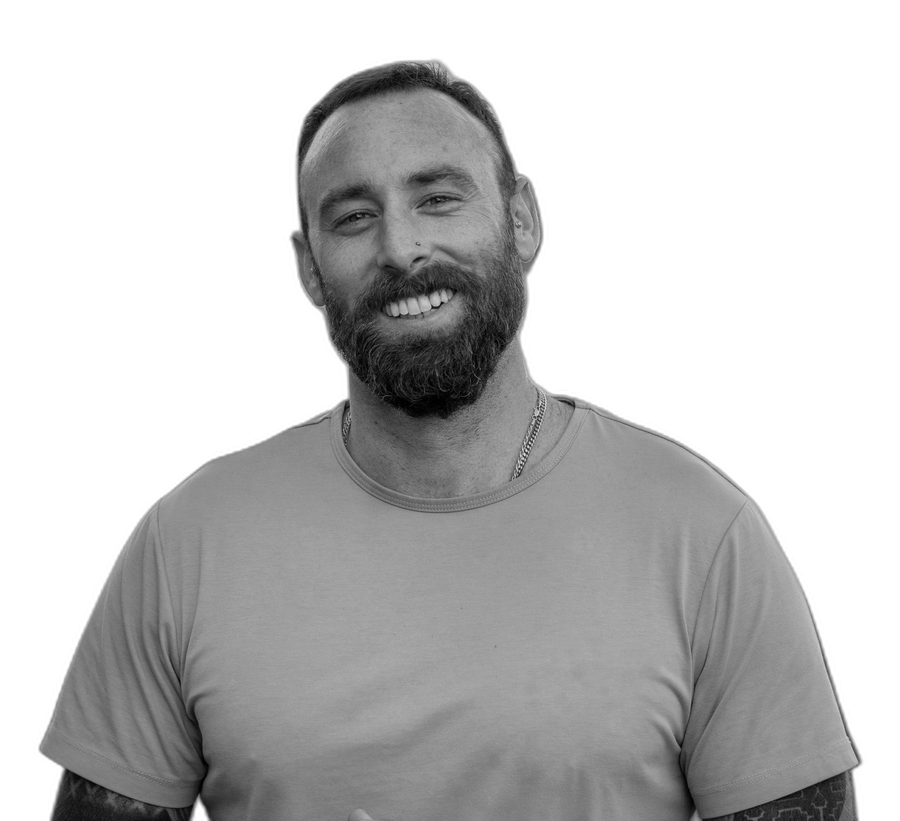
Ryan Duey is the co-founder of Plunge, the cold-plunge and sauna company that grew from a pandemic-era garage project into a national recovery brand. Before Plunge, he founded Capitol Floats in Sacramento, and his work has continued to circle around cold exposure, float therapy, entrepreneurship, and practical nervous system training.
Learn more →Listen to the episode
Where capacity actually gets tested
Nervous system capacity is the ability to stay in contact with intensity without collapsing, armouring, or handing your state over to the room. In this conversation with Ryan Duey, capacity stays close to real life: cold exposure, business, intimate partnership, grief, near-death clarity, and the practices that stretch a person without breaking them.
The logic is practical. Small, chosen stressors prepare you for the larger ones you never get to schedule. In cold water, the protocol is clean: choose a dose, step in, notice what happens. Life later tests whether the training transferred.1 1This is the bridge between "wellness tool" and "training protocol": the cold plunge itself is the doorway. The training is the nervous system learning it can meet intensity.
Capacity is trainable
Ryan describes cold, sauna, hard workouts, breathwork, business, and relationships as arenas for emotional regulation. The cold plunge is controlled: you choose the dose, enter on purpose, notice what happens to your breath and muscles, then come out and recover. Business and partnership are messier. The stakes include money, reputation, desire, disappointment, and the very human wish to stay loved.
His framing: you wouldn't expect to squat heavy without a progression plan, so why would you expect your nervous system to handle relational conflict or financial pressure without one?
Capacity training asks:
- Where do I get micro hits of safe intensity?
- Where do I meet macro hits that stretch identity, leadership, or intimacy?
- Which practices help me return to presence when stakes are real?
The cold is a mirror
I describe cold exposure as "a high-stakes meditation" and "a mirror to my own internal state." Cold water gives feedback before the mind has time to tidy the story.
The first shock is physical: breath catches, shoulders lift, jaw tightens. The body recruits a threat response and lobbies hard for you to leave. That moment is the useful one. Can you feel the contraction without making it the whole truth? Can the exhale lengthen before you start performing calm for some invisible audience?
Most people I talk to find the same thing: their default strategy in cold water mirrors how they handle intensity everywhere else. Brace, flee, bargain, or soften.
A simple cold exposure inquiry:
- Before entering: what state am I bringing in?
- During the first 30 seconds: what is my default strategy (brace, flee, bargain, soften)?
- After settling: what changes when I stop fighting the sensation?
- After leaving: what tells me I have actually recovered?
Inner adventure over abstract self-improvement
Ryan uses the word "gift" for what followed his head-on motorcycle accident in Thailand. Held carefully, that does not make the crash good or necessary. It points to the clarity that can arrive after the body has had a close call and the old timeline suddenly feels less convincing.
From a hospital bed, he began asking what he actually wanted to do. That inquiry eventually led toward the Amazon, plant medicine, floating, and his first business. 2I frame plant medicine here as "inner adventure" and "Terra Incognita"; the uncharted territory moved from outer expedition to inner landscape.
The practical invitation is modest:
- Notice what you keep postponing.
- Ask what future permission slip you are waiting for.
- Treat the inner landscape as real terrain.
Secure attachment as capacity fuel
One of the most grounded threads in this conversation is Ryan tracing ambition and confidence back to feeling loved. His language is plain: the foundation was knowing he had a home and was loved. From there, ambition had somewhere safe to launch.
Capacity is easier to build when the nervous system has a place to return. A failed pitch, a partner's disappointment, an honest request: these can feel total when belonging feels conditional. Secure attachment gives intensity an ending. Repair is possible, support can be received, and the body does not have to treat every relational wobble as exile.2
Practically, this means capacity work can include strengthening the base itself: asking for help, practising repair, naming needs before they leak out sideways, and letting steady love actually register instead of deflecting it with busyness or self-sufficiency.
Practice
Build your capacity map
Use this as a weekly reflection. Keep it specific enough that you can see patterns over time, because vague intentions ("be more present") tend to dissolve by Wednesday.
1. List your controlled stressors
Examples: cold exposure, sauna, breathwork, hard workouts, public speaking reps, difficult but safe conversations.
For each, ask:
- What dose feels challenging but recoverable?
- What happens first: breath holding, jaw tension, rushing, proving, checking out?
- What tells me I am training presence rather than performing intensity?
- What recovery signal am I watching for afterwards?
2. List your live arenas
Examples: business, partnership, parenting, leadership, creative risk, money conversations, family boundaries.
For each, ask:
- What is at stake here: money, status, belonging, desire, safety, being understood?
- Where do I contract in my body when the stakes become real?
- What emotion do I avoid feeling?
- What conversation, request, boundary, or repair would increase capacity if I met it cleanly?
3. Add one micro-dose
Choose one small, repeatable stressor this week. Keep it boring enough to do consistently, and stop while recovery is still available. Afterward, track what helps your system downshift: longer exhales, warmth, movement, quiet, or contact with someone steady.
4. Add one relational rep
Choose one honest conversation, boundary, request, or repair. Say one true sentence earlier than usual. Capacity becomes much more honest when it enters relationship, because the stakes are no longer theoretical.
Key takeaways
- Capacity grows through safe, repeated contact with intensity.
- Cold exposure is useful because the dose is chosen and the feedback is immediate.
- Business and partnership reveal transfer: can regulation stay available when money, love, or identity is involved?
- Capacity needs both stress and a secure base to return to.
- The work is staying available when life gets louder. Invulnerability is the wrong target.
Free assessment
Take the free nervous system assessment.
Map how your nervous system responds to pressure, intensity, and recovery, then get a clearer next step for building capacity without forcing your way through.
Take the Free AssessmentContinue exploring
- Read How Your Nervous System Operates for the core model beneath capacity work.
- Try Reset Your Nervous System for a body-first reset protocol.
References
- Research on cold-water immersion is promising but mixed, which is why this guide treats cold as a chosen training stressor rather than a universal wellness cure. A 2025 systematic review and meta-analysis of randomized trials found time-dependent effects, including reduced stress at 12 hours post-immersion, but also noted acute inflammatory increases, limited protocol standardization, and gaps in long-term evidence. See Cain et al., "Effects of cold-water immersion on health and wellbeing," PLOS ONE (2025), https://doi.org/10.1371/journal.pone.0317615. ↩
- For research context on why a secure relational base can affect stress physiology, see Pietromonaco and Beck, "Adult Attachment and Physical Health," Current Opinion in Psychology (2019), https://pmc.ncbi.nlm.nih.gov/articles/PMC6191372/, and Coan and Sbarra, "Social Baseline Theory: The Social Regulation of Risk and Effort," Current Opinion in Psychology (2015), https://pmc.ncbi.nlm.nih.gov/articles/PMC4375548/. ↩