Breathwork for Anxiety: How Breathing Changes Thinking
About the guest
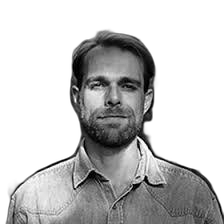
Edward Dangerfield
Edward Dangerfield is a nervous system specialist and breathwork practitioner trained in nervous system health, Chinese massage and pressure points, breathwork, nerve flossing, qi gong, biofield energy healing, yoga, meditation, anatomy, physiology, neuroscience, and developmental patterns. His work grew out of his own recovery after being caught in an avalanche and developing PTSD.
Learn more →Listen to the episode
How breathing gets tangled with anxiety
Anxiety rarely feels like an idea. It feels like a body that has started preparing for something: shallow breath, narrowed attention, tight jaw, lifted shoulders, a mind scanning for the next thing to solve.
In this conversation with Edward Dangerfield, breathwork becomes much more than a relaxation technique. The central claim: how we breathe shapes how we think. The breath pattern changes the nervous system. The nervous system changes the endocrine system. The endocrine system changes blood chemistry, perception, and which parts of the brain are easiest to access.1 1This is why breathwork can feel so immediate. You are not trying to argue yourself out of anxiety. You are changing the signal the body is already using.
Breathwork belongs in this guide as a direct input rather than a magic fix.
When the breath gets stuck in a threat-shaped pattern, the mind tends to follow. The work is to restore range: the ability to breathe, feel, focus, rest, mobilise, and return.
The inhale activates. The exhale downshifts.
Edward gives a simple entry point: the inhale is activating; the exhale is relaxing.
A yawn is the body using a fuller inhale to bring energy online. A sigh is the body using an exhale to let down. These are not metaphors. They are tiny everyday demonstrations of the breath changing state, happening dozens of times a day without conscious intention.
The nervous system is always balancing activation and recovery:2
- More inhale bias tends to bring charge, alertness, and readiness.
- More exhale bias tends to bring softening, digestion, and downshifting.
- A narrow breath pattern can trap the body in one familiar range.
- A dynamic breath pattern gives the system more options.
An anxious state is often a state with too few options. The body knows how to mobilise, scan, brace, and think ahead. It may have forgotten how to exhale all the way back into safety.
Breath changes the available mind
Edward's description of fight-or-flight is worth pausing on. Under threat, peripheral vision narrows. Attention becomes target-focused. Empathy and compassion get harder to access because the body is prioritising self-protection.
Lifesaving in the right context. Less useful during a difficult Slack message, an intimate conversation, or a leadership decision that needs nuance.
This is the practical bridge between breathwork and anxiety: when the breath pattern keeps signalling threat, the mind can become convincing without becoming accurate. Thoughts speed up. Options collapse. A neutral email starts to look like danger. A partner's facial expression becomes evidence. A future possibility becomes a current emergency.
The body has changed the lens. Breathwork is one way to change it back.
Patterns become grooves
Edward links breathwork with neuroplasticity: repeated patterns become easier to repeat.
If someone has spent years breathing shallowly under stress, that pattern becomes familiar enough to feel normal. Not pleasant. Just known. The body has rehearsed it thousands of times a day, mostly below awareness.
A pattern that was learned can be repatterned. The same neuroplasticity that carved the groove can carve a different one.
The goal is not permanent calm. That would be another kind of rigidity. Edward's language points toward malleability: the capacity to move between states without getting trapped in any single one.
A healthy breath pattern has range. Full, fast, subtle, quiet, grounded, expressive, or restful depending on what life is asking for. Anxiety shrinks that range. Practice slowly gives it back.
Practice
Map your anxious breath pattern
Use this as an observation practice, not an intense breathwork protocol. If breathwork brings up panic, trauma material, dizziness, or dissociation, stop and work with a qualified practitioner.
- Find a low-stakes anxious moment. Choose something mild: opening email, preparing for a call, checking a bank balance, or replaying a conversation from earlier today.
- Notice the pattern before changing it. Where does the breath move? Chest, belly, ribs, throat, pelvis? Is it shallow, held, rushed, collapsed, or braced? Spend at least 30 seconds just observing.
- Track the mind that comes with it. What thoughts become more believable from inside this breath pattern? What stories does your mind generate when your breathing looks like this?
- Add three slower exhales. Do not force a giant breath. Let the exhale become a little longer than the inhale, as if the body had permission to put something down.
- Check what changed. Did vision widen? Did the jaw soften? Did the thought lose 5% of its certainty? Tiny shifts count.
Breathwork and anxiety need safety
The word "breathwork" covers a wide range of practices. Some are gentle down-regulation tools. Others use deep circular connected breathing to bring people into non-ordinary states where memories, emotions, and body sensations can surface quickly and without much warning.
That intensity deserves respect.
For anxiety, the first layer is usually not heroics. It is orienting to safety, restoring exhale capacity, and giving the system repeated experiences of activation followed by return. The nervous system learns from contrast when the contrast is tolerable enough to integrate.
This is where breathwork overlaps with nervous system training more broadly. You are building the ability to feel more without getting flooded by what you feel.
"Can the system move?" beats "am I calm?"
Calm is lovely, but it can become a brittle target. Life will activate you. Emails arrive. Babies cry. Money gets weird. Bodies get sick. Partners misunderstand us.
The question is not whether activation happens. The better question: can the system move?
Can the breath lengthen after it catches? Can attention widen after it tunnels? Can the body find a little more ground without pretending nothing matters?
That is what breathwork for anxiety offers when practised wisely. Not a perfectly quiet mind. A body that stops sending the same alarm so loudly, and a mind with a different physiology to think from.
Key takeaways
- Anxiety often shows up as a breath pattern before it becomes a thought spiral.
- Inhale bias tends to activate; exhale bias tends to downshift.
- Fight-or-flight can narrow vision, empathy, and cognitive flexibility.
- Repeated breath patterns become grooves, but neuroplasticity means they can be repatterned.
- Breathwork for anxiety should start with safety, observation, and gentle range-building before intensity.
Free assessment
Take the free nervous system assessment.
Map how your nervous system responds to pressure, activation, and recovery, then get a clearer next step for building regulation without forcing yourself into calm.
Take the Free AssessmentContinue exploring
- Read How Your Nervous System Operates for the core regulation model beneath this guide.
- Try Reset Your Nervous System for a gentler entry point before deeper breathwork.
References
- Edward Dangerfield, Breathwork, The Cure For Anxiety?, around 34:00–35:10. For clinical context on breathing-focused interventions and anxiety, see Leyro et al., "Respiratory therapy for the treatment of anxiety: Meta-analytic review and regression," Clinical Psychology Review (2021), https://doi.org/10.1016/j.cpr.2021.101980. The review found respiratory interventions outperformed controls for anxiety symptoms, while noting substantial heterogeneity across protocols and study quality. ↩
- Slow-breathing research is most mature around autonomic markers such as HRV rather than every psychological claim made about breathwork. See Zaccaro et al., "How Breath-Control Can Change Your Life: A Systematic Review on Psycho-Physiological Correlates of Slow Breathing," Frontiers in Human Neuroscience (2018), https://doi.org/10.3389/fnhum.2018.00353, and Laborde et al., "Effects of voluntary slow breathing on heart rate and heart rate variability," Neuroscience & Biobehavioral Reviews (2022), https://doi.org/10.1016/j.neubiorev.2022.104711. ↩