Trusting Curiosity Through a Dark Night: A Practical Guide with Tom Morgan
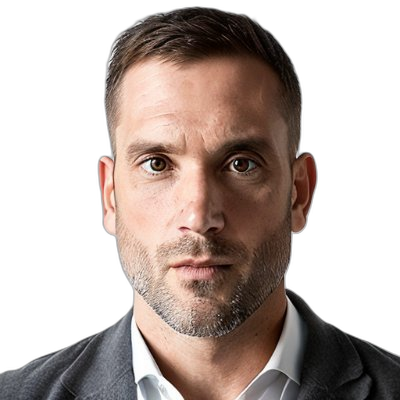
About the guest
Tom Morgan
Tom Morgan is the founder of The Leading Edge, a content platform and small member network for personal evolution. He spent about 20 years in business and finance, including work with KCP Group/Sapient Capital, and describes himself as a Curiosity Sherpa who seeks out interesting ideas, thinkers, and practices for curious people.
Learn more →Listen to the episode
Do not wait for a crisis to follow your curiosity
The practical answer from this conversation with Tom Morgan: if your life is technically working but your body, attention, dreams, and interests keep pulling somewhere else, do not burn everything down and do not dismiss the signal as irrational. Build a small, honest experiment that lets curiosity meet reality.
Tom's story is unusually intense. A successful finance career, a spontaneous spiritual opening, years of destabilization, medical treatment, and a long reconstruction that eventually led to his work as a "Curiosity Sherpa." You do not need a breakdown, an awakening, psychedelic treatment, or a dramatic hero's journey to learn from his experience. The more usable lesson is narrower: many crises become harsher when subtle signals are ignored until the body has to shout.
Use this guide when you are:
- highly functional on paper but privately asking, "Is this all there is?";
- interested in meditation, spirituality, dreamwork, somatics, or depth psychology but allergic to sloppy claims;
- trying to follow curiosity without becoming grandiose, avoidant, or reckless;
- designing a career, creative, or relational transition and needing experiments rather than fantasies;
- prone to intellectualizing practice instead of letting it change your body and behavior.
1This is a reflection and practice guide, not medical advice, psychiatric advice, spiritual direction, or a substitute for therapy, crisis care, medication management, or qualified support. If you are suicidal, manic, psychotic, dissociated, destabilized by meditation or altered states, or unable to function safely, involve licensed clinicians and trusted people immediately. Curiosity is not a reason to ignore acute risk.
Dark-night signals are yellow lights, not commandments
Tom describes his transition as both meaningful and horrifying: a "hellish midlife transition," a spiritual experience he could not contextualize, destabilizing symptoms, and a long period where he could not reliably tell what was true. The culture tends to offer two bad options:
- Medicalize everything. "This is only pathology. There is no meaning here."
- Mythologize everything. "This is only awakening. You are special. Trust every signal."
Either one alone can be dangerous. A nervous-system-literate approach starts with stabilization and humility: sleep, food, trusted contact, professional help when needed, reduced intensity, and a slower pace. Only after that groundwork do you ask what the experience might be asking from your life.
A dark-night signal may show up as:
| Signal | Unhelpful extreme | Better question |
|---|---|---|
| Strange intensity after meditation, breathwork, psychedelics, or retreat | "This proves I'm enlightened" or "I'm broken forever" | What support, grounding, and reduced intensity do I need before interpreting this? |
| Boredom or shame in a prestigious role | "I should be grateful and shut up" | What honest desire am I refusing because it feels illegible? |
| Repeating fascination with a topic, person, practice, or book | "This means I must change my whole life" | What small test would let me learn whether this has real energy? |
| Loss of emotional contact | "I can solve this by thinking harder" | What would help me regain body, relational, and sensory contact? |
| Grand plans after an opening | "The universe has chosen me" | Who can help me reality-test this before I act? |
Tom names Willoughby Britton as one of the helpful non-woo resources after his destabilizing experience, especially around grounding and adverse meditation effects. Research supports taking this seriously: contemplative practices can, for some people, produce difficult or impairing experiences including fear, dissociation, unusual perceptions, and changes in sense of self.1 This does not mean meditation is bad or that every unusual experience is pathological. It means intensity deserves context, support, and pacing.
The tactical rule: stabilize before you symbolize. If your system is flooded, your interpretations will often be distorted. Downshift first; make meaning second.
Minimum viable woo: upweight resonance without surrendering discernment
Tom's phrase "minimum viable woo" is useful because it lets rational, high-agency people experiment with subtle forms of knowing without pretending every intuition is truth. The point is to stop throwing away data just because it arrives as curiosity, emotion, bodily resonance, dream imagery, or inexplicable interest.
He asks a sharp question in our conversation: can you choose what you are interested in? You can force attention, sure. But the felt pull of interest often seems to arrive before conscious choice. Whether you interpret that as psychology, "future self," attractors, unconscious processing, grace, or love applied to information, the practice stays the same: track what reliably resonates, then test it in the world.
A minimum viable woo filter has three gates:
| Gate | Question | Why it matters |
|---|---|---|
| Resonance | What keeps pulling my attention without needing to be forced? | Curiosity may reveal where energy is available. |
| Embodiment | Does this feel clearer, warmer, more grounded, or more alive in the body, or merely exciting and manic? | The body helps distinguish subtle signal from compulsive charge. |
| Reality test | What small action would expose this signal to feedback? | An experiment prevents fantasy from becoming identity. |
For Nervous System Mastery readers, the embodiment gate matters most. Tom argues that "the heart" or embodied knowing helps determine relevance in complex life decisions where pure analysis cannot tell you what matters. You do not have to adopt his metaphysics to use the observation. Interoception research distinguishes several dimensions of sensing and interpreting internal bodily signals, and suggests that body awareness is more complex than simply "trust your gut."2 Your body can offer useful data; it can also be shaped by anxiety, trauma, hunger, poor sleep, substances, and social pressure.
So let cognition and sensation cross-check each other. Neither one deserves the final vote alone.
Practice
Run a 48-hour resonance and energy diary
Use this when you sense a pull toward a topic, practice, project, person, or life direction but do not yet trust the signal. Keep it boringly empirical. Stop if tracking becomes obsessive or destabilizing.
- Create four columns. Time, event, body/energy signal, and next tiny test.
- Track gives and drains. For 48 hours, note what gives energy, drains energy, creates clean excitement, creates tight compulsion, or leaves you numb.
- Mark resonance separately from stimulation. Resonance often feels quieter and more enduring than dopamine. Ask: "Does this still matter after I sleep?"
- Look for repeats. One signal may be noise. Three signals across contexts may be a thread worth pulling.
- Design a tiny offering. Convert one repeated signal into a visible, low-risk experiment: send one email, write one page, host one conversation, attend one class, ask one mentor, share one synthesis, or remove one draining obligation for a week.
- Reality-test the response. After the experiment, ask: Did this create more aliveness, contact, humility, service, and groundedness, or more grandiosity, avoidance, isolation, and pressure?
- Choose the next dose. If the signal strengthens cleanly, continue. If it destabilizes you, reduce intensity and get support. If it goes flat, thank the experiment for its data.
The win is becoming precise enough to notice what is alive and disciplined enough to test it before building your identity around it.
Redeploy your existing skills toward a truer question
One of Tom's most practical observations is that experiments work best when they combine something genuinely enjoyable with a way of offering it to the world. His own mistake was rejecting his finance skills wholesale. The breakthrough came when he used the same capacities (synthesis, communication for busy people, pattern recognition, research taste) on topics he actually cared about.
This is a better transition model than "quit and reinvent yourself." Often the next chapter is created by redeploying old competence in service of a question that actually matters to you.
Try this experiment design:
| Old-world skill | New curiosity | Tiny public offering | Feedback to watch |
|---|---|---|---|
| Research synthesis | Somatics, spirituality, AI, parenting, grief, ecology | A one-page memo for three friends | Do people ask better questions after reading it? |
| Facilitation | Men's work, transition, leadership, community | A 60-minute salon with clear boundaries | Do you feel more alive during and after? |
| Finance or strategy | Wisdom, right-hemisphere skills, intuition | A talk for a professional audience using their language | Can you translate without diluting? |
| Writing | Dreamwork, philosophy, nervous-system practice | One essay you would write even without applause | Does writing clarify your life or perform your identity? |
| Operations | Community, retreats, mutual aid, education | A simple structure that helps others meet consistently | Does the structure create contact and responsibility? |
A good experiment is:
- Small enough to complete. If it requires a new identity, it is too big.
- Vulnerable enough to teach you. If it risks nothing, it may reveal nothing.
- Useful to someone besides you. Offering creates feedback loops that fantasizing never can.
- Grounded in existing competence. You do not have to become a beginner at everything simultaneously.
- Reversible. You should be able to learn without wrecking your finances, marriage, health, or stability.
Tom says he struggles to tell people what their experiments should be because the experiment has to be unique to the person. That is the point. The best experiment is rarely impressive from the outside. It is specific to the exact edge you are standing on.
Intellectual recapture: when insight becomes another achievement project
Tom repeatedly names a failure mode that will be familiar to many Nervous System Mastery readers: intellectual recapture. You read about embodiment instead of practicing. You understand spirituality conceptually instead of becoming more loving in your kitchen. You attend the workshop, learn the framework, collect the language, and let the same achievement drive colonize a more elevated object.
The antidote is not anti-intellectualism. Tom is a synthesizer; his work depends on ideas. The antidote is closing the loop between insight and behavior so that understanding becomes a doorway rather than a destination.
A simple anti-recapture checklist:
| If you notice… | Ask… | Do… |
|---|---|---|
| You can explain a practice but do not do it | What am I protecting by staying in explanation? | Five minutes of the practice before reading more. |
| You sound wise online but are absent at home | Where is love asking for ordinary attention? | One undistracted repair, apology, or act of care. |
| You feel superior because of what you understand | Who has permission to challenge me? | Install a feedback container before influence grows. |
| You chase intense experiences | What am I avoiding in the simple, relational, daily work? | Sleep, food, movement, service, conversation, quiet. |
| You keep seeking the perfect modality | What result would be visible in my life if this were working? | Define one behavioral marker and track it for a week. |
Tom's own current edges include somatic descent, shadow work, dreamwork, and a concrete accountability move: giving trusted friends the powers to intervene if his public persona goes off track. That last piece is practical in a way most "do the inner work" advice is not. If a project gives you influence, build guardrails before you think you need them.
For a complementary Nervous System Mastery lens, Shadow Work and Self-Authorship pairs well with Tom's warning: the shadow often uses our highest ideals as camouflage. And if you want a more explicitly body-based bridge, Somatics, Breathwork & Emotional Fluidity offers a grounded way to train sensation rather than merely think about it.
Build a container before you need one
Tom says the painful stage in many transitions follows a predictable arc: call, refusal, crisis. You sense a pull, dismiss it as impractical, and wait until a physiological or emotional crisis forces movement. The goal is not guaranteeing a painless transition. It is reducing unnecessary suffering by building a container earlier than feels necessary.
A transition container can include:
- Clinical support: therapist, psychiatrist, physician, trauma-informed practitioner, or crisis resources when needed.
- Relational support: spouse, close friends, mentors, elders, peer group, community.
- Body support: sleep, food, walking, strength, gentle breath, grounding, reduced substances, reduced overstimulation.
- Meaning support: journaling, myth, spiritual practice, ritual, grief work, dreamwork, prayer, philosophy.
- Reality support: money plan, work constraints, legal obligations, family needs, calendar, timelines.
- Discernment support: people who are not impressed by your grandiosity and not dismissive of your soul.
The threshold question worth sitting with: What support would let me take the next true step without making crisis my teacher of first resort?
Tom's community vision matters here: he is trying to create a container for curious, high-agency people who otherwise have resources but no trustworthy place to metabolize transition.3 The Leading Edge may or may not be the right container for you specifically, but the underlying need is real. Adults need communities where intellect, embodiment, meaning, shadow, and practical responsibility can coexist without anyone having to pretend one of those dimensions away.
For related Nervous System Mastery guides, read The Pathless Path & The Magic of Non-Doing for an experiment-led transition model, and Hero's Journey to Wholeness for another frame on descent, identity, and return.
Key takeaways
- Curiosity is a signal worth stabilizing, tracking, and testing. You do not need to blow up your life to honor it.
- Dark-night experiences require humility: stabilize before interpreting, and involve qualified support when symptoms are intense or unsafe.
- Minimum viable woo means letting resonance count as data without surrendering discernment, evidence, or responsibility.
- The best transition experiments often redeploy your existing skills in service of a truer question.
- Intellectual recapture turns spiritual and embodied practices into another achievement project; close the loop with behavior, body, love, and feedback.
- A good container reduces unnecessary suffering: clinical care, trusted people, body basics, meaning practices, reality constraints, and discernment.
- The question worth asking: what small, honest experiment is reality inviting you to run next?
Free assessment
Take the free nervous system assessment.
If overthinking, shutdown, restless striving, or intense curiosity make it hard to tell signal from noise, the assessment can help you map your current nervous-system patterns and choose a steadier next experiment.
Take the Free AssessmentContinue exploring
- The Pathless Path & The Magic of Non-Doing for a grounded guide to testing aliveness without replacing one default path with another.
- Shadow Work and Self-Authorship for practical tools around shadow, myth, and the parts that can hijack a transition.
- Hero's Journey to Wholeness for a complementary guide to descent, identity loss, and return.
- Somatics, Breathwork & Emotional Fluidity for body-based practice that can keep insight from staying purely conceptual.
References
- For cautious context, see Jared R. Lindahl et al., "The Varieties of Contemplative Experience: A Mixed-Methods Study of Meditation-Related Challenges in Western Buddhists," PLOS ONE 12, no. 5 (2017): e0176239, https://doi.org/10.1371/journal.pone.0176239. This supports taking adverse contemplative experiences seriously; it does not imply that meditation is generally unsafe or that all unusual experiences have the same cause. ↩
- For a careful scientific bridge, see Sarah N. Garfinkel et al., "Knowing Your Own Heart: Distinguishing Interoceptive Accuracy from Interoceptive Awareness," Biological Psychology 104 (2015): 65–74, https://doi.org/10.1016/j.biopsycho.2014.11.004. This supports nuance around body signals; it does not mean every gut feeling should be obeyed. ↩
- Morgan and Miller, Minimum Viable Woo, 37:17–38:05 and 1:05:04–1:06:38. Tom describes The Leading Edge as a network for curious people exploring interesting ideas and practices, with small groups and a "network of networks" vision. Guest-bio details were cross-checked against Tom Morgan's public Leading Edge announcement, https://newsletter.theleading-edge.org/p/whats-important-is-now-the-leading, and professional qualifications page, https://www.theleading-edge.org/tom-morgan-professional-qualifications/. ↩