Tackling the Mental Health Crisis using Ketamine-Assisted Therapy with Dylan Beynon
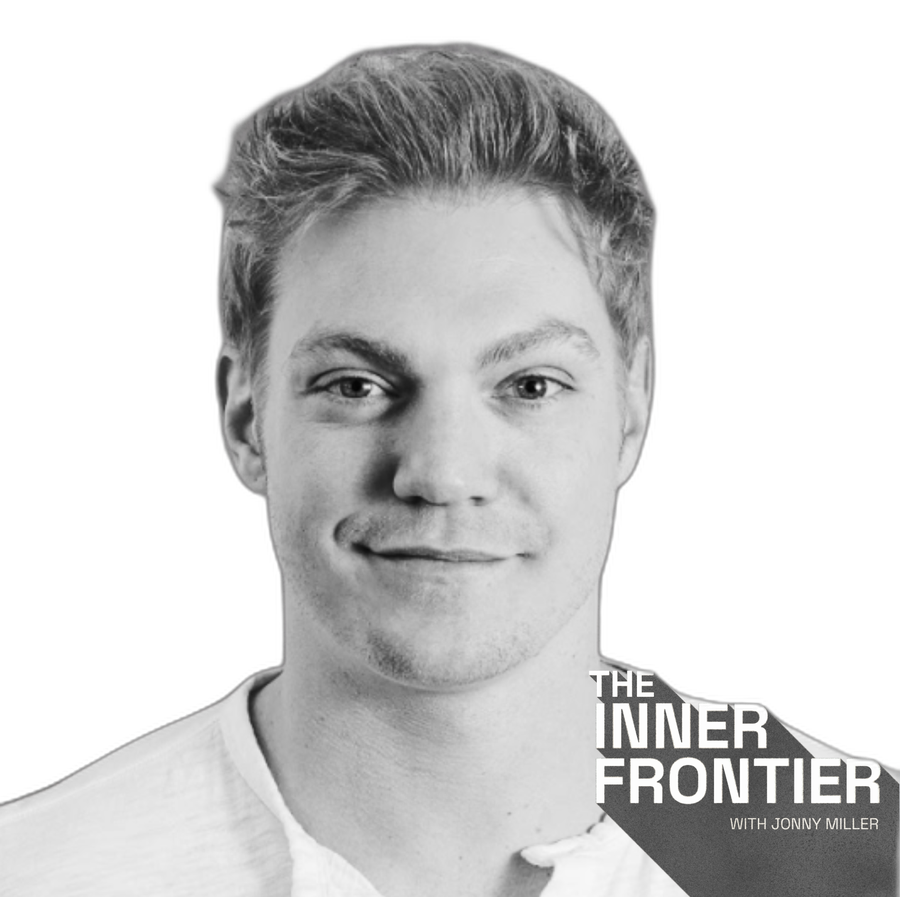
About the guest
Dylan Beynon
Dylan Beynon is the founder and CEO of Mindbloom, a mental health company focused on clinician-prescribed ketamine therapy. He is a non-clinician entrepreneur and three-time founder whose work centers on increasing access to mental health care through software, care design, clinical operations, and patient support rather than personally providing medical treatment.
Learn more →Listen to the episode
The container matters more than the compound
The core takeaway from this conversation with Dylan Beynon: ketamine does its best work inside a carefully designed container of clinical screening, safe setting, clear intention, skilled support, and rapid integration into behavior.
Dylan's framing is worth remembering: there may be "no magic pill," but there can be a "magic program." The molecule becomes useful when the surrounding architecture is strong enough to hold what emerges. Ketamine is a prescription medication that can alter perception, memory, body awareness, emotion, and judgment. It requires medical evaluation, dosing decisions, supervision, and follow-up from qualified clinicians.
Use this guide as a field manual for asking better questions and building a safer therapeutic container if you are already considering ketamine-assisted therapy with licensed support:
- screen for fit before chasing intensity;
- treat set and setting as part of the intervention;
- turn intentions into workable therapeutic targets;
- journal and integrate before the experience fades;
- choose the level of support that matches your nervous system, not your ego.
1This guide is educational only and is not medical advice, psychiatric advice, a dosing protocol, or an endorsement of at-home, unsupervised, or illegal ketamine use. Ketamine can carry medical and psychological risks and is not appropriate for everyone. Work only with qualified, licensed clinicians who can screen contraindications, coordinate with your existing care team, monitor safety, and advise whether in-person or higher-acuity care is needed.
Start with safety, not access
Most people lead with "How do I get this?" The better question: "What would make this inappropriate, unsafe, or under-supported for me?"
Dylan notes that Mindbloom screens some people out when their symptoms are high enough that they recommend in-person care with more intensive support. Your current medical, psychiatric, relational, and environmental situation needs to be able to safely hold the experience. That assessment comes first.
A useful pre-treatment question list:
| Domain | Ask the clinician or care team | Why it matters |
|---|---|---|
| Indication | What symptoms or diagnosis are we treating, and what outcomes would count as meaningful improvement? | Avoids vague "transformation" claims and gives the work a target. |
| Contraindications | What personal or family psychiatric history, cardiovascular risk, medication interaction, substance-use pattern, pregnancy status, or instability would make this a poor fit? | Screening is part of the treatment, not paperwork. |
| Setting | Should this be in-person, remote with support, or deferred until more stabilization is in place? | High distress, suicidality, dissociation, psychosis risk, or medical complexity may require higher-acuity care. |
| Route and dose | Why this route, dose range, and cadence for me specifically? | "More intense" is not automatically more therapeutic. |
| Session support | Who is available during and after the session, and what happens if I become panicked, confused, medically unwell, or emotionally destabilized? | Altered states reduce ordinary coping and decision-making. |
| Integration | What structured support happens in the 24-72 hours after each session? | Insights decay quickly unless they become practice. |
| Coordination | Should my therapist, psychiatrist, primary-care doctor, partner, or emergency contact be involved? | Fragmented care increases risk. |
The research base supports both interest and caution. In an early randomized, double-blind crossover trial with only seven participants, Berman and colleagues found rapid antidepressant effects after IV ketamine compared with saline, but the sample was tiny and the study was not a broad clinical protocol.1 Reviews since then generally describe ketamine's psychiatric effects as promising but often short-lived and highly dependent on protocol, population, and follow-up.2
The safety literature from psychedelic research carries relevant lessons here, even though ketamine is pharmacologically different from classic psychedelics. Johnson, Richards, and Griffiths emphasize careful participant selection, preparation, a safe environment, interpersonal support, and post-session follow-up as safeguards in human hallucinogen research.3 The same broad principle applies: altered-state work should be designed around risk reduction, not just access.
Design the room, the rhythm, and the nervous-system state
Dylan's strongest practical claim: what happens before, during, and after the ketamine session dramatically affects the quality, safety, and usefulness of the experience. Preparation is the first domino.
He and Jonny name two forms of safety that matter:
- External safety: the physical environment, sensory inputs, privacy, interruptions, lighting, sound, and practical support.
- Internal safety: the body's felt sense of enough calm, orientation, trust, and willingness to let the experience unfold without needing to control every moment.
A session container gets stronger when ordinary friction is removed before the medicine enters the picture:
| Before the session | Practical question |
|---|---|
| Space | Is the room quiet, private, comfortable, and free from interruptions? |
| Sound | Is the audio intentionally chosen, ad-free, and already tested? |
| Body | Have I eaten, hydrated, used the bathroom, and followed the clinician's preparation instructions? |
| Support | Does the right person know what is happening and how to help if needed? |
| Technology | Are notifications, doorbells, pets, children, work messages, and logistics handled? |
| Re-entry | Is there protected time afterward, with no driving, work, decisions, or social performance? |
Dylan contrasts a rushed clinical environment (waiting rooms, fluorescent lights, IV equipment, paperwork, travel) with a more intentionally held container. Some people need in-person monitoring and should absolutely be receiving in-person care. One setting is not universally better. Setting is not decorative. It influences whether the nervous system softens, defends, panics, numbs, or explores.
A simple design rule: if the setting would feel intrusive, chaotic, embarrassing, or unsafe while sober, do not assume ketamine will make it easier.
Turn intentions into invitations, not performance goals
Dylan describes intention setting as a "forcing function" for internal safety. It gives the mind a direction without trying to control the exact content of the journey.
The common mistake is turning intentions into demands: "I must have a breakthrough," "I need to solve my trauma today," "This session has to prove the treatment is working," "I should feel love, forgiveness, or awe." These collapse the open space that makes the medicine useful in the first place.
A more workable intention is specific, gentle, and open-ended:
| Less useful intention | More workable intention |
|---|---|
| "Fix my anxiety." | "Help me meet the part of me that feels unsafe." |
| "Get rid of grief." | "Let me feel what I have been holding with enough support." |
| "Make me confident." | "Show me one way I abandon myself when I feel exposed." |
| "Heal my relationship." | "Help me see my part clearly without collapsing into shame." |
| "Give me a breakthrough." | "Let me receive what is actually ready to be seen." |
Jonny's somatic frame is useful here: sometimes the work is not to think harder but to notice where the body is bracing, clenching, defending, or going numb. In his own description of ketamine-assisted somatic work, the value came from enough spaciousness to reduce defensive contraction while staying connected to felt sense.
That does not mean somatic ketamine work is right for everyone or that lower doses are universally better. The intention should match the therapeutic task. If the task is emotional contact, relational repair, grief, or body awareness, the question becomes: "What level of support helps me stay present enough to learn?"
Practice
Run the preparation-to-integration checklist
Use this only if you are already working with a qualified ketamine clinician or care team. It is not a dosing guide and should not replace your provider's instructions.
- Confirm clinical fit. Ask: "Has a licensed clinician screened my medical history, psychiatric history, medications, substance-use risk, and current symptom severity?"
- Clarify the container. Ask: "Who is responsible for prescribing, monitoring, session support, emergency planning, and integration?"
- Set one intention. Complete: "In this session, I am willing to gently meet ___." Keep it specific enough to matter and open enough to surprise you.
- Prepare external safety. Remove interruptions, test the music, arrange support, protect the schedule, and make re-entry simple.
- Prepare internal safety. Before the session, orient to the room, feel your feet, lengthen the exhale, and remind yourself: "I do not need to force the experience."
- Capture quickly. As soon as your care plan says it is appropriate, record words, images, body sensations, emotions, memories, questions, and fragments before they disappear.
- Choose one integration action. Within 24-48 hours, translate the session into one small behavior: a conversation, rest period, boundary, apology, walk, therapy topic, creative act, or nervous-system practice.
The win is not having the most dramatic journey. The win is creating enough safety, clarity, and follow-through that the experience can become life practice.
Integrate before the insight becomes mythology
Dylan is emphatic about immediate journaling. He compares it to dream recall: capture the thread quickly and more of the experience can coalesce into something useful. Wait, and it slips into a vague glow that feels important but cannot be acted on.
Integration means three different things that often get collapsed:
| Stage | Question | Output |
|---|---|---|
| Capture | What happened? | Raw notes, voice memo, drawing, body map, phrases, images |
| Meaning-making | What might this reveal? | Themes, patterns, questions for therapy, parts, needs, grief, boundaries |
| Behavioral integration | What will change this week? | One tiny, observable action |
The third stage is where psychedelic experiences most commonly fail to become transformation. Dylan describes integration as making sense of the experience, deciding what to do about it, and then actually doing it. He names that last part as the hardest. The body opens, you see something clearly, and then the gravity of old patterns pulls you back unless you anchor the insight in one specific behavioral change.
Try this integration map:
| Session material | Possible integration move |
|---|---|
| "I saw how exhausted I am." | Cancel one nonessential obligation and protect one evening of sleep. |
| "I felt love for my younger self." | Bring that part into therapy or write a compassionate letter. |
| "My chest finally softened." | Practice 3 minutes of interoceptive check-ins daily. |
| "I need to repair with someone." | Draft the repair without sending it impulsively. Review with a therapist or trusted support. |
| "I realized I keep proving my worth." | Choose one task done for practice, not validation. |
The academic literature supports caution here. A 2023 systematic review of ketamine plus psychotherapy found that combined approaches appear promising, but the studies varied widely by diagnosis, route, dose, psychotherapy type, sequencing, and design. The authors concluded that definitive recommendations for integration cannot yet be made.2 Integration matters. We should be humble about claiming any one protocol is proven best for everyone.
Choose the right depth for the work, not the biggest experience
A recurring theme in this conversation: different depths of experience serve different therapeutic purposes. Dylan distinguishes lighter, more cognitively workable states from deeper, more immersive states where the person is mostly "along for the ride." Jonny adds that for his own somatic work, too much ketamine can disconnect him from felt sense, while enough can loosen defensive contraction and make bodywork more productive.
The tactical takeaway: depth is a clinical design question, not a badge of courage.
More intensity may sometimes help someone who is highly defended, over-controlled, or rigid. It may also overwhelm, fragment, confuse, or make integration harder. Less intensity may allow more body awareness, verbal processing, and relational contact. It may also leave someone still white-knuckling the process. These are clinical decisions, not Reddit threads or spiritual bragging rights.
Bring these questions to your clinician or care team:
- What therapeutic task are we aiming at: symptom relief, grief contact, trauma processing, behavioral change, nervous-system regulation, or maintenance?
- Do I tend toward flooding, dissociation, panic, control, collapse, or emotional numbness?
- What level of experience helps me remain present enough to benefit?
- What signs would mean we should slow down, pause, change setting, or shift to in-person care?
- How will we know whether this is helping beyond the session itself?
This is especially important for people drawn to ketamine because they feel stuck. Stuckness makes intensity seductive. But the nervous system often changes through titrated, supported contact: enough novelty to loosen the pattern, enough safety to metabolize what appears, and enough repetition to make the new pattern stick.
Key takeaways
- Ketamine-assisted therapy works as a screened, supported clinical container. The architecture around the medicine matters as much as the molecule.
- The most important first question is whether ketamine is appropriate for your current medical, psychiatric, and environmental reality.
- Set and setting are not accessories. They influence whether the nervous system feels safe enough to soften and explore.
- Intentions work best when they are specific, gentle, and open-ended rather than outcome demands.
- Journaling, voice notes, art, and body mapping immediately after a session can preserve material that would otherwise fade.
- Integration means one small behavioral change, relational move, or nervous-system practice that follows from the session.
- The "right" depth of experience depends on the person, the clinical goal, the support available, and the integration plan.
Free assessment
Take the free nervous system assessment.
If you are exploring therapy, somatic work, psychedelic-assisted care, or better emotional regulation, the assessment can help you map your current nervous-system patterns and choose steadier next steps. It is not a ketamine screening tool or medical evaluation.
Take the Free AssessmentContinue exploring
- Read Somatics, Breathwork & Emotional Fluidity for a body-first guide to emotional contact, release, and integration without forcing catharsis.
- Read Navigate Challenging Emotions: Build an Emotional GPS for a practical way to turn difficult emotions into workable information.
- Read The Art and Science of Interoception for a deeper look at sensing internal body signals before they drive behavior.
- Read Breathwork for Anxiety: How Breathing Changes Thinking for a non-pharmacological pathway into state change and nervous-system regulation.
References
- Berman and colleagues conducted an early randomized, double-blind crossover trial in seven people with major depression and found symptom improvement within 72 hours after IV ketamine compared with saline. The sample was very small, so it should be read as early evidence, not a general treatment protocol. See "Antidepressant effects of ketamine in depressed patients," Biological Psychiatry (2000), https://pubmed.ncbi.nlm.nih.gov/10686270/. ↩
- Kew, Porter, Douglas, Glue, Mentzel, and Beaglehole reviewed 19 studies combining ketamine and psychotherapy and concluded that the approach appears promising, but heterogeneity in diagnoses, protocols, therapy types, and study designs prevents definitive recommendations for integration. See "Ketamine and psychotherapy for the treatment of psychiatric disorders: systematic review," BJPsych Open (2023), https://doi.org/10.1192/bjo.2023.53 and https://pubmed.ncbi.nlm.nih.gov/37128856/. ↩
- Johnson, Richards, and Griffiths emphasize careful volunteer selection, preparation, safe physical environments, interpersonal support, and follow-up as safeguards in human hallucinogen research. Ketamine is not a classic psychedelic, so this is adjacent safety context rather than a ketamine-specific clinical guideline. See "Human hallucinogen research: guidelines for safety," Journal of Psychopharmacology (2008), https://doi.org/10.1177/0269881108093587 and https://pubmed.ncbi.nlm.nih.gov/18593734/. ↩