Leverage Your Physiology: Posture, Breath, and Movement for Nervous System Regulation
About the guest
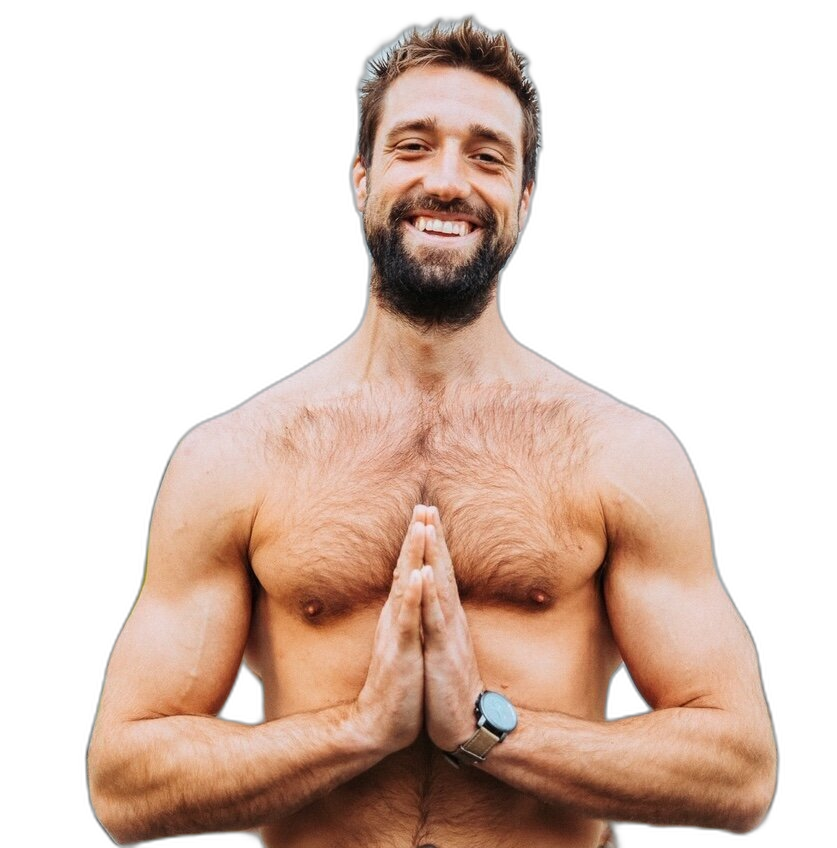
Aaron Alexander
Aaron Alexander is the bestselling author of The Align Method and host of The Align Podcast. A movement coach and manual therapist with two decades of experience, his work focuses on posture, breath, movement, and helping people live with more strength, ease, and embodied self-awareness.
Learn more →Listen to the episode
Your body is already changing your state. Learn to speak back.
Aaron Alexander's core invitation in this conversation is not to "fix your posture" or stack another rigid wellness protocol onto your day. It is simpler: your posture, breath, gaze, muscle tone, movement, and environment are already shaping your nervous system state. The practice is learning to notice those signals and speak the same language back.
If you feel stressed, scattered, collapsed, or braced, start with the body. Widen your visual field. Breathe through the nose. Let the exhale become slightly longer than the inhale. Unclench the jaw. Drop the shoulders without forcing them down. Go for a walk. Change position. And if the body is carrying safe-to-express charge, do not assume the answer is always calming down. Sometimes the system needs a contained way to move through activation.
None of this is magic. It is also not a medical promise. It is a practical way to work with the bidirectional loop between physiology and state. Research on posture and embodied cognition suggests that body position can influence affect and behavior, though effects vary by context and the "power pose" story is more nuanced than popular summaries imply.1 Slow breathing research links certain practices with autonomic regulation, heart-rate variability, and perceived calm, while still leaving room for individual differences.2
For Nervous System Mastery readers, the useful frame: physiology gives you levers for participation, not levers for perfect control.
Stop making "calm" the only regulation goal
One of Aaron's most important corrections comes when Jonny asks for down-regulation tools. Aaron's first move is to challenge the bias: do not make parasympathetic calm the morally superior state.
Activation is not the enemy. Sympathetic energy helps you run, lift, speak, protect, create, and meet intensity. The problem is not having a throttle. The problem is getting stuck on it without awareness, choice, or recovery.
That reframes the practical question. Instead of "How do I calm down as fast as possible?" ask:
- Am I in a situation where it is safe to express or complete the activation?
- Or am I in a situation where I need to settle enough to stay connected, skillful, and non-reactive?
Those are different interventions.
If you are alone, resourced, and the body wants to move, safe expression might help: shaking, sprinting, pushing against a wall, vocalizing, hitting a cushion, intense breathwork with proper support, or a cold plunge if appropriate for your health and experience level. Aaron compares this to a chronically tight muscle. Sometimes stretching is not enough. The system needs to feel the contraction more clearly before it can release.
If you are in a boardroom, on a date, with your child, or mid-conflict with a partner, the cleaner move is to downshift. Soften the eyes. Slow the breath. Orient to the room. Feel your feet. Give your body cues that the present moment is workable.
Regulation is not sedation. It is state flexibility.
Use posture as a question, not a diagnosis
Aaron is careful about "reading" people through body language. If you over-interpret someone's posture, voice, or tension, you can start projecting a story onto them that is not true.
That caution matters because posture is useful information, but it is not a courtroom transcript. A lifted chest could mean confidence, performance, tension, bracing, training history, or simply habit. Rounded shoulders could mean fatigue, sadness, screen posture, protection, pain, or nothing meaningful in that moment.
So use posture first as self-inquiry:
- Where am I gripping?
- What is my jaw doing?
- Are my shoulders subtly climbing toward my ears?
- Is my belly available for breath, or am I armouring there?
- Am I collapsed, inflated, frozen, leaning forward, or pulling away?
- What emotion would make sense if this posture were allowed to speak?
Aaron's point is that fear, grief, defensiveness, satisfaction, safety, and play do not only happen "in the head." They have postural and neuromuscular expressions. Pupils, jaw, traps, hands, breath, blood flow, orientation, and muscle tone all participate.
The move is not to force yourself into a fake confident shape. Ask: What position is my body using to communicate this state? And what small shift might communicate more safety, dignity, or availability?
Try small changes:
- Let the back of the neck lengthen.
- Let the tongue rest against the roof of the mouth.
- Let the shoulders widen rather than yanking them down.
- Feel the sit bones or the soles of the feet.
- Turn the torso slightly instead of staying locked straight ahead.
- Let your hands open if they are gripping.
Small cues often work better than dramatic corrections. The nervous system tends to trust what feels plausible.
Change state through eyes and breath first
Aaron gives two of the simplest physiological toggles in the episode: vision and breathing.
When you are threatened or intensely focused, your visual system narrows. You lock onto the screen, the person, the problem, or the imagined future. Aaron describes the opposite cue: relax the eyes, look farther away, and take in the panorama rather than a single point.
Panoramic vision is not a guaranteed off-switch for stress. But as a bottom-up experiment, it is remarkably accessible. Research on visually evoked threat suggests eye movements and visual scanning are linked with physiological arousal, supporting the broader idea that vision and internal state are coupled.3
Pair that with breath:
- Bring the breath through the nose if that feels available.
- Reduce the urge to gulp air.
- Let the exhale become longer than the inhale.
- Keep the breath quiet enough that you are not performing calm.
- Repeat for five rounds, then reassess.
Aaron explains the panic loop well. When you are over-breathing, the instinct may be to take in even more air, but that keeps the sense of air hunger going. His direction: slow the breath, use the nose, and emphasize the exhale.
A practical version:
- Inhale through the nose for 3-4 seconds.
- Exhale through the nose for 5-8 seconds.
- Let the gaze widen on the exhale.
- Pause briefly only if it feels easy.
- Stop if you feel dizzy, strained, or more panicked.
This is not about winning a breath-hold contest. You are giving your body a coherent signal: less emergency, more space.
Practice
Run the 3-minute physiology toggle audit
Use this when you notice stress, shutdown, scattered attention, or a state you want to understand. The goal is not to force calm. The goal is to learn which levers change your state reliably.
- Name the current state. Use plain language: "wired," "flat," "guarded," "sad," "rushed," "foggy," "ready to fight," or "not here."
- Find the body signature. Check eyes, jaw, throat, shoulders, chest, belly, hands, pelvis, and feet. Where is the state most obvious?
- Change one visual cue. Look toward the farthest point available. Let peripheral vision enter. If you are indoors, orient to the edges of the room.
- Change one respiratory cue. Take five nasal breaths with a slightly longer exhale. Do less than you think you need.
- Change one postural cue. Open the hands, widen the collarbones, soften the belly, lengthen the back of the neck, or stand up and shift weight from foot to foot.
- Retest. Ask: "What changed by 5 percent?" More space? More emotion? More fatigue? More charge? More clarity?
- Choose the next right dose. If activation is still high and safe to express, move. If you are settling, stay with the slower cue. If you are overwhelmed, seek support rather than forcing a protocol.
Track the result, not the ideal. Your nervous system becomes easier to work with when you learn its actual response patterns.
Let movement metabolize the state
Aaron's work is not only about posture in stillness. It is about living in a body that moves like a human: walking, squatting, reaching, rotating, playing, throwing, crawling, resting, breathing, and relating.
Many modern stress patterns are paired with immobilization. You sit. Stare. Clench. Think. Refresh. Push through. Then wonder why the body still feels threatened after the meeting ends.
Movement gives the state somewhere to go.
Aaron names a few simple options: take a walk, get outside, let the eyes see distance, feel sunlight when appropriate, use a band or gentle traction to open the shoulder and neck area that has crept into a defensive posture, breathe while the tissue has a different mechanical option.
A daily regulation menu:
- For screen stress: look out a window, widen the gaze, then walk for five minutes without your phone.
- For shoulder-and-jaw bracing: gently traction or stretch the neck and shoulder area, then breathe into the newly available space.
- For collapse: stand up, reach overhead, twist slowly, then take a brisk walk.
- For agitation: shake the arms and legs, exhale longer, then orient to the room.
- For numbness: use larger movement, music, cold water on the face, or a walk outside to bring signal back online.
- For over-control: choose an unstructured movement practice where you cannot optimize every rep.
Play belongs here too. Aaron frames play as a way organisms learn edges, social engagement, creativity, empathy, and physical sophistication. In nervous-system terms, play is not frivolous. It is flexible activation with enough safety to explore.
A person who can only be calm is not fully regulated. A person who can move between focus, effort, rest, contact, silliness, grief, and recovery has more range.
Build a personal physiology manual
The deepest takeaway from this episode is experimental. Aaron is not handing you a universal sequence. He is pointing to a language.
Your body is always speaking through toggles:
- visual focus or panoramic awareness;
- mouth breathing or nasal breathing;
- inhale bias or exhale bias;
- bracing or available muscle tone;
- stillness, walking, shaking, stretching, or play;
- isolation or contact;
- screen light, sunlight, horizon, room, sound, and touch.
The point is to learn enough of that language that you can participate in your state before it runs the entire conversation.
A useful prompt for the next week:
- When I am anxious, what does my body reliably do first?
- Which cue helps fastest: breath, gaze, posture, movement, sound, contact, or environment?
- Which cue do I overuse because it feels productive but does not actually help?
- Where do I need more expression rather than more control?
- Where do I need more containment rather than more catharsis?
This is how physiology becomes agency. Not because you can control every state. Because you can notice earlier, intervene more kindly, and build a wider repertoire.
Key takeaways
- Posture, breath, gaze, muscle tone, and movement are not separate from your nervous system state. They are part of how the state is produced and maintained.
- Regulation does not always mean calming down. Sometimes the body needs safe activation, expression, or completion before settling becomes available.
- Use posture as inquiry, not diagnosis. Body language is meaningful but easy to over-interpret.
- Vision and breath are fast, accessible toggles: widen the gaze, breathe through the nose, lengthen the exhale.
- Movement helps metabolize stress when the body has been stuck in bracing, sitting, or screen-bound focus.
- Play builds range. It trains the nervous system to move between activation, connection, experimentation, and recovery.
- Your goal is a personal physiology manual: a tested set of cues that help you shift state without hype or force.
Free assessment
Take the free nervous system assessment.
If you want to understand your own stress patterns more clearly, the assessment can help you map how your nervous system responds to pressure, recovery, activation, and shutdown.
Take the Free AssessmentContinue exploring
- Read The Art and Science of Interoception for a deeper look at sensing internal signals before they become reactivity.
- Read The Science of the Nervous System, Functional Breathwork & Interoception for a science-forward guide to breath and state regulation.
- Try Reset Your Nervous System for a simple body-first reset protocol.
- Read How to Increase Your Nervous System Capacity for more on safe stress dosing, recovery, and capacity.
References
- For cautious research context, Korner et al. reviewed 73 studies on expansive and contractive postures and movement. They found more robust effects for affective and behavioral responses than for hormonal claims, and concluded that effects may be driven more by the absence of contractive displays than by dramatic "expansive" posing. See "Expansive and Contractive Postures and Movement," Perspectives on Psychological Science (2020), https://doi.org/10.1177/1745691620919358. ↩
- Zaccaro et al. reviewed psychophysiological research on slow breathing and found evidence linking slow breathing practices with autonomic and psychological changes, including HRV-related measures and relaxation, while noting variation across methods and mechanisms. See "How Breath-Control Can Change Your Life," Frontiers in Human Neuroscience (2018), https://doi.org/10.3389/fnhum.2018.00353. ↩
- Yilmaz Balban et al. used an immersive virtual-reality threat paradigm and found that visual scanning behavior correlated with physiological arousal in response to visually evoked threat. This supports a cautious link between visual behavior and internal state; it does not prove that any single gaze practice will work for everyone. See "Human Responses to Visually Evoked Threat," Current Biology (2021), https://doi.org/10.1016/j.cub.2020.11.035. ↩