Post-Traumatic Growth and Human Development: A Practical Guide with Dr. Zachary Stein
About the guest
Dr. Zachary Stein
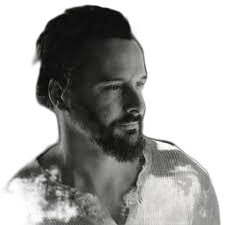
Dr. Zachary Stein, who also publishes as Zak Stein, was trained at the interface of philosophy, psychology, and education and works on issues related to human development, education, and global catastrophic risk. He is the author of Education in a Time Between Worlds and is associated with projects including the Civilization Research Institute, the Consilience Project, the Center for World Philosophy and Religion, and Lectica.
Learn more →Listen to the episode
Growth after tragedy depends on a capacity stack most people never receive
Zak Stein names post-traumatic growth as a stack of capacities: safety, meaning-making, emotional throughput, cognitive capacity, relationship, and cultural support. Growth becomes possible when enough of those are present at once, and when nobody is pressuring the person to find a silver lining before the wound has even closed.
Stein's frame names two common mistakes and a third possibility. The pre-tragic mistake explains suffering away too quickly; the tragic mistake makes the wound your entire identity. The post-tragic possibility is different: laughing, loving, grieving, and building again, without becoming naive about what happened.
Use this guide when you are:
- trying to make sense of grief, rupture, burnout, climate anxiety, or existential uncertainty;
- supporting someone in pain without rushing them into meaning;
- designing education, leadership, or community spaces for a more unstable world;
- wanting a nervous-system lens on human development that goes beyond "just regulate more";
- asking what "seeds" of wisdom, practice, and institution are worth preserving for the future.
1This is a reflection and practice guide, not medical advice, trauma treatment, grief counseling, or a substitute for qualified care. Trauma, depression, suicidality, panic, dissociation, and complicated grief deserve appropriate professional and relational support. Post-traumatic growth is not guaranteed, not required, and should never be used to pressure someone to find meaning before they are ready.
You have to know which station someone is at before you try to help
Stein describes the pre-tragic, tragic, and post-tragic as "stations" of personality or consciousness. They are not permanent identities. People move between them, especially when new losses arrive.
Most people I talk to who work in coaching or leadership skip straight to the post-tragic conversation. They hand someone a growth narrative when that person is still mid-collapse. A practical way to use the map:
| Station | How it often sounds | Helpful response | What to avoid |
|---|---|---|---|
| Pre-tragic | "Everything happens for a reason." "It will all work out." | Build basic honesty. Let reality become visible. | Premature reassurance, spiritual slogans, optimism as avoidance. |
| Tragic | "This cannot be fixed." "Something has broken." | Witness, stabilize, resource, grieve, protect time. | Treating grief as inefficiency or demanding productivity. |
| Post-tragic | "This still hurts, and it has changed what I know about life." | Help insight become practice, service, art, boundary, or institution. | Turning growth into superiority or a badge of spiritual status. |
The key move is sequencing. If someone is in the raw tragic, the most skillful response may be presence, food, sleep, money, logistics, therapy, silence, or a safe room to cry. Philosophy can wait.
Research on post-traumatic growth supports this caution. Tedeschi and Calhoun's Posttraumatic Growth Inventory describes self-reported positive changes after trauma across domains such as relationships, new possibilities, personal strength, spiritual change, and appreciation of life. That does not mean trauma is beneficial, that growth is inevitable, or that people who remain in pain are failing.1
For a complementary Nervous System Mastery conversation on grief and culture, see the Jamie Wheal guide linked below.
People need cultural containers for grief, and most of us were never given them
One of Stein's most practical claims: people need cultural resources to metabolize tragedy. Words, images, rituals, practices, communities, and stories strong enough to hold pain without reducing it.
When those resources are absent, people default to fixing ("Here is what you should do"), explaining ("Here is why this happened"), or escaping ("Here is a worldview that lets you not feel this").
A phrase can be post-tragic in one mouth and bypassing in another. "Everything happens for a reason" might emerge organically after years of integration, but when offered too early it shuts down the reality of tragedy.
Try this instead when someone is grieving or destabilized:
| Instead of saying... | Try... | Why it helps |
|---|---|---|
| "Everything happens for a reason." | "I will not try to explain this away." | Protects the dignity of the loss. |
| "At least..." | "This is real, and I am here." | Avoids shrinking the grief. |
| "You are so strong." | "You do not have to perform strength with me." | Reduces pressure to be inspiring. |
| "What is the lesson?" | "What support would make today one percent more bearable?" | Starts with capacity, not meaning. |
| "You should move on." | "What needs to be remembered, protected, or honored?" | Lets meaning emerge without coercion. |
A useful rule: do not give someone a worldview when what they need is witness. Meaning forced from the outside becomes another burden. Meaning that emerges from metabolized grief can become a deeper structure of life, but the difference is timing, consent, and readiness.
Development is an ecology: body, mind, context, relationship, and skill interact
Stein and I connect post-tragic capacity to the nervous system: the ability to sit with emotional intensity without blasting through the window of tolerance, shutting down, or reverting into a smaller identity.
He points to an interaction between several capacities that cannot be separated cleanly:
- Emotional self-regulation: can the body feel grief, fear, anger, and uncertainty without becoming totally flooded?
- Cognitive complexity: can the mind hold multiple variables, time horizons, perspectives, and tradeoffs under pressure?
- Personality maturity: can identity bend, grieve, and reorganize without needing to deny reality?
- Context: is the person fed, housed, rested, supported, and in a setting where their capacities can actually come online?
- Relationship: is there enough trust, co-regulation, and non-punitive witness for emotion to move?
This matters especially for high performers. Under duress, cognitive capacity drops, then the drop increases stress, which reduces capacity further. A vicious loop. Stein suggests the inverse is also possible: growing skill in one domain can support the others when the system is designed well.
A developmental design audit:
| If the problem looks like... | Do not only ask... | Also ask... |
|---|---|---|
| "I cannot regulate." | "What breathing technique should I use?" | "Am I under-supported, under-slept, underfed, isolated, or cognitively overloaded?" |
| "I cannot think clearly." | "Why am I not smarter?" | "What threat state, grief, conflict, or context is reducing available bandwidth?" |
| "I keep regressing." | "Why am I failing?" | "Did a new tragedy or unfamiliar domain require a new layer of support?" |
| "This person lacks maturity." | "What level are they?" | "What context would let their best capacity become available?" |
| "My practice is not working." | "Should I meditate harder?" | "Do I need movement, friendship, nutrition, therapy, nature, learning, or fewer inputs?" |
Interoception research gives a cautious bridge. Price and Hooven describe interoceptive awareness skills (noticing, accessing, and appraising internal body signals) as relevant to emotion regulation.2 Body awareness alone does not treat trauma or grief. The body can, however, provide earlier data for choosing support, pacing, boundary, or repair.
Practice
Run a 20-minute post-tragic capacity loop
Use this when you are not in acute crisis, but you can feel yourself tightening around grief, overwhelm, or existential concern. The dose should be small. Stop if you become flooded.
- Orient to enough safety. Look around the room or landscape. Name five neutral facts: "door," "light," "floor," "tree," "cup."
- Name the station without shame. "A tragic part is here." "A pre-tragic part wants to explain." "A post-tragic part is not available yet."
- Feel one body signal. Track one sensation for 30 to 60 seconds: pressure, heat, ache, numbness, tears, trembling, or breath. Do not force release.
- Add one resource. Put a hand on the body, call a trusted person, step outside, drink water, wrap in a blanket, or lower the task load.
- Ask a right-sized meaning question. Skip "Why did this happen?" Try: "What value is this grief revealing?" or "What needs protection now?"
- Choose one grounded action. Rest, eat, cancel, apologize, make the appointment, write the note, clean one surface, or ask for help.
You are not trying to become post-tragic on command. You are practicing the conditions under which grief can move, without turning into collapse, bypassing, or performance.
Nu's Ark: a thought experiment for deciding what to preserve when you cannot predict the future
Stein's "Nu's Ark" thought experiment asks: if a seed bank preserves biological material for future civilization, what would preserve the noetic seeds (the ideas, practices, educational architectures, and psychological resources) needed for humans after collapse or radical change?
The question is practical and educational. What do we give young people, teams, families, or future communities when we cannot know the conditions they will face? Stein's answer resists a fixed recipe. Under radical uncertainty, the best "seeds" must protect autonomy, context-sensitivity, and the ability to keep learning.
Try a personal Nu's Ark exercise:
| Seed type | Question | Example |
|---|---|---|
| Regulation seed | What helps a human return to enough safety to learn? | Orientation, breath, movement, sleep, co-regulation. |
| Meaning seed | What story helps people face tragedy without bypassing it? | Grief as praise, intergenerational responsibility, sacred obligation. |
| Learning seed | What teaches people how to keep learning? | How to ask better questions, test assumptions, seek feedback. |
| Relational seed | What helps people share reality? | Conflict repair, consent, listening, truth-telling, accountability. |
| Institutional seed | What structure should outlast a charismatic founder? | Peer councils, transparent governance, apprenticeship, rotating leadership. |
| Discernment seed | What prevents wisdom from becoming ideology? | Humility, plural perspectives, error correction, contact with reality. |
For leaders, educators, and parents, the tactical shift runs from content transfer toward capacity transmission. You cannot know the future. You can help people build the nervous-system, relational, cognitive, and ethical capacities to meet futures you cannot imagine.
For another guide on transformation containers and integration, see the Brooks Barron guide linked below.
"Global intimacy disorder" names the root problem, and repair starts local
Late in the conversation, Stein names a root-level diagnosis: a widespread disorder of human intimacy. He means something broader than sexual or romantic connection. He is pointing at the capacity to share reality together.
If the metacrisis is partly a failure of shared value, shared reality, and shared care, then nervous-system work is not only private self-soothing. It becomes training for contact.
Practice intimacy at four scales:
- With self: Can I tell the truth about my own state without instantly fixing, judging, or branding it?
- With another: Can I share reality without using honesty as attack or agreement as the price of belonging?
- With the world: Can I let ecological, cultural, and historical grief touch me at a dose I can metabolize?
- With the future: Can I act as if people after me are real, not abstractions?
Stein's answer to existential overwhelm is surprisingly grounded: attend to what is truly valuable, let that contact reconstitute courage, and then move along the vector of value into work.
That gives a simple decision filter:
- What is actually sacred or valuable here?
- What does my body do when I remember that?
- What action protects or serves that value without grandiosity?
- Who else needs to be included for this to become shared reality?
For a leadership lens on aliveness, responsibility, and honest contact, see the Jim Dethmer guide linked below. For a body-first foundation, see the interoception guide linked below.
Key takeaways
- Post-traumatic growth is not guaranteed, not morally required, and not evidence that trauma was "for the best."
- Pre-tragic consciousness explains too quickly. Tragic consciousness can get stuck in pain. Post-tragic consciousness can grieve, laugh, love, and build without naivety, but people move between stations and new losses reopen the cycle.
- People need cultural resources for grief: language, ritual, practice, community, material support, and enough safety for meaning to emerge on its own schedule.
- Nervous-system capacity, cognitive complexity, context, and relationship are interdependent. Treating regulation as a standalone fix misses the ecology.
- Nu's Ark reframes education under uncertainty: preserve capacities, not just content.
- "Global intimacy disorder" points to a repair path that starts local: strengthen the ability to share reality with self, others, the world, and future generations.
- When existential risk feels overwhelming, begin by attending to what is truly valuable. Then choose the smallest grounded action that serves it.
Free assessment
Take the free nervous system assessment.
If grief, uncertainty, existential overwhelm, or responsibility for the future are pulling you into shutdown, urgency, or disconnection, the assessment can help you map your current nervous-system patterns and choose a steadier next step.
Take the Free AssessmentContinue exploring
- Read Meaning Crisis, Post-Traumatic Growth, and Homegrown Humans with Jamie Wheal for a companion guide on grief, culture, meaning, and local repair.
- Read Wilderness Rites of Passage for Leadership with Brooks Barron for a practical map of thresholds, identity change, and integration.
- Read Full Aliveness and Conscious Leadership with Jim Dethmer for tools on responsibility, truth-telling, and emotional aliveness.
- Read The Art and Science of Interoception to deepen the body-awareness foundation behind regulation and choice.
References
- Tedeschi and Calhoun's Posttraumatic Growth Inventory describes self-reported positive changes after traumatic events across domains such as relating to others, new possibilities, personal strength, spiritual change, and appreciation of life. This does not imply that trauma is beneficial or that growth is required. See Richard G. Tedeschi and Lawrence G. Calhoun, "The Posttraumatic Growth Inventory: Measuring the Positive Legacy of Trauma," Journal of Traumatic Stress 9, no. 3 (1996): 455–471, https://doi.org/10.1002/jts.2490090305. ↩
- Price and Hooven describe interoceptive awareness skills as relevant to emotion regulation, especially the ability to identify, access, and appraise internal body signals. See Cynthia J. Price and Carole Hooven, "Interoceptive Awareness Skills for Emotion Regulation," Frontiers in Psychology 9 (2018), https://doi.org/10.3389/fpsyg.2018.00798. ↩