Public Speaking Anxiety: Build Confidence Without Memorising a Script
About the guest
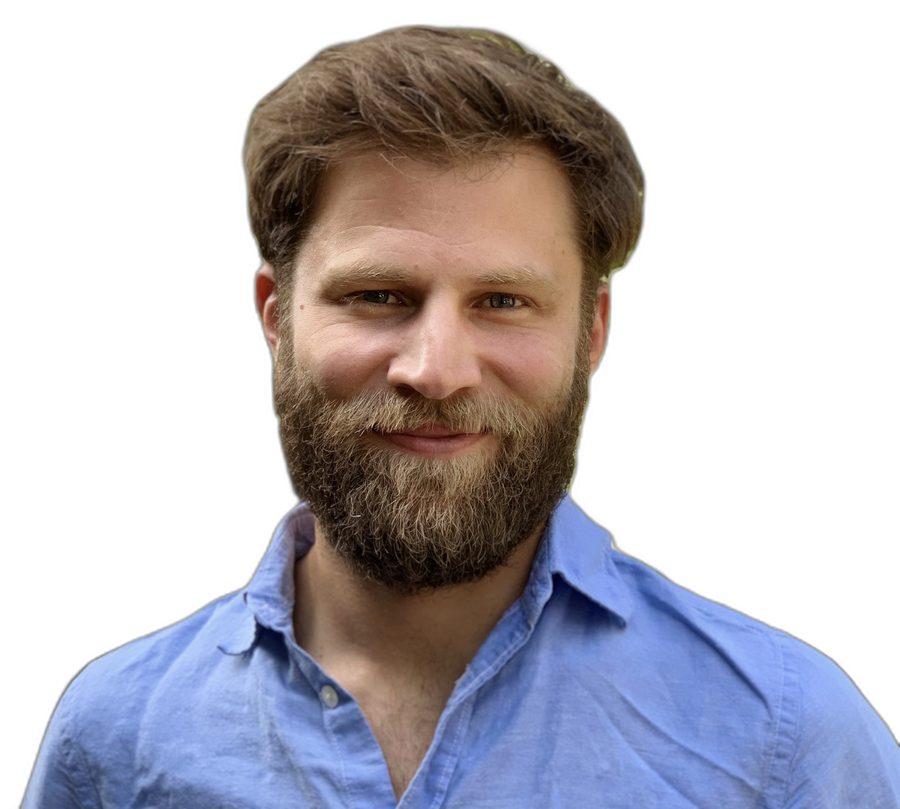
Tristan de Montebello
Tristan de Montebello is the co-founder of Ultraspeaking, a communication training company built around live practice, speaking games, and feedback. In 2017, he went from avoiding public speaking to becoming the fastest competitor in history to reach the finals of the World Championship of Public Speaking, a seven-month learning project later featured in Scott Young's work on ultralearning.
Learn more →Listen to the episode
The fear is losing access to yourself while people watch
Public speaking anxiety arrives as a body-level prediction before the words do. The throat tightens, attention narrows, time speeds up, and the mind starts checking whether the next sentence is still there.
The insight from Tristan de Montebello: confidence is trained through contact with uncertainty. You build trust that something usable can arise while you are already speaking, rather than stacking your sense of safety on a memorised script.
That matters because most speaking is not a stage talk. It is the meeting question you did not expect, the toast you were asked to give five minutes ago, the interview answer where your mind goes momentarily white. The moment where all eyes turn toward you and your nervous system asks whether you are still safe. 1The SEO phrase is "public speaking anxiety." The lived mechanism is simpler: can I stay connected to myself while other people are watching?
Memorised scripts become the thing you fear losing
Tristan's first phase of training looked like traditional public speaking: write the speech, polish the story, memorise the sequence, perform it with conviction. It worked well enough to reach the early competition rounds. Then it stopped transferring.
His old fear was blanking in front of an audience. A memorised speech made that fear sharper because memory became a chain, one word after the next. One broken link and the whole chain dropped.
The alternative is building a more resilient relationship with attention:
- Know the direction, not every word.
- Practise recovering from blank moments.
- Learn how silence feels in the body.
- Build evidence that the next sentence can arrive after the old plan disappears.
The first time Tristan blanked during an unprepared speech, the pause felt catastrophic from the inside. From the outside, someone told him it looked like one of the most powerful pauses they had seen. What feels like catastrophe internally can read as confidence externally.
Many small reps give the fear response competition
Tristan's answer to "how do you get out of your own way?" is direct: you prove it to yourself through reps.
Many small, playful, recoverable exposures. A topic is thrown at you, you feel the deer-in-headlights moment, you find your way through. Then you do it again, with enough feedback and safety that the old alarm starts to lose its grip.
The research on public speaking anxiety lines up here: exposure-based and psychological interventions can reduce public-speaking fear, but the details matter (dosage, context, self-efficacy, and whether gains transfer into real life).1 Flooding the system does not work. Safe, repeated contact with the feared moment lets the old prediction lose its monopoly.
Public speaking anxiety says: "If I do not know the answer first, I am unsafe."
Training says: "I can step in before certainty arrives, and discover that my system still has options."
Co-regulation lets expression happen at the edge of capacity
The co-regulation angle is relevant here. A coach, therapist, facilitator, or group can lend nervous system capacity so someone stays with more sensation than they could alone.
Tristan recognises the same pattern in the Ultraspeaking container. At first, he and Michael Gendler would spend a long time helping a person feel safe enough to try. Eventually they compressed that into games, direct feedback, and a learning environment that was playful without being passive.
The sweet spot is safety at the edge of capacity. Too little safety and the system protects itself. Too little edge and nothing new is learned.
For speaking practice, that means:
- Start with low-stakes reps before high-stakes stages.
- Make the first goal expression, not perfection.
- Use feedback that points the speaker toward more aliveness.
- Keep the practice playful enough that the body wants another rep.
Research on social-evaluative threat helps explain why speaking in front of others is so activating. The Trier Social Stress Test (one of the most reliable lab methods for inducing acute stress) uses free speech and mental arithmetic in front of an audience, reliably producing heart-rate and cortisol responses in many participants.2 This is a whole-body threat simulation, not a mindset problem.
Practice
Raise your hand before you know the answer
This is Tristan's simplest experiment for building impromptu speaking capacity. Use it in low-stakes rooms first: team meetings, friendly group calls, workshops, masterminds, or dinner conversations.
- Find a safe-enough room. Choose a setting where being imperfect is acceptable and repair is available.
- Listen for a real opening. A question is asked. A topic appears. A moment invites contribution.
- Signal before certainty. Raise your hand, unmute, or say "I have a thought" before the full answer is assembled.
- Take one breath. Feel your feet, relax the jaw, and let the first honest sentence arrive.
- Complete the rep. Say the thing, then track what happened: did the body survive uncertainty? Did the next thought appear after you began?
Keep the dose small. The goal is to give your nervous system repeated evidence that expression can begin before total certainty.
Stop shaking the snow globe and the butler appears
Toward the end of the episode, Tristan offers one of the lovelier metaphors in the conversation: the butler in your subconscious.
Speaking, in this frame, is a game of access. Somewhere beneath the surface there are stories, associations, images, insights, memories ready to be served. But if the system is shaking the snow globe (racing, grasping, forcing, self-monitoring) it becomes hard to see what is available.
The move is counterintuitive: stop speaking, or at least slow down enough that the dust settles. Relax the body. Let the silence be a doorway rather than proof of failure. Then the next idea can often appear. 2This is where silence becomes a regulation tool. A pause is not empty if it lets the body regain access to the next truthful sentence.
The shift is learnable: from treating silence as social death to treating silence as contact.
Confidence is a stack of proof
Tristan is careful that "speak before you think" still needs craft. If the speaker repeatedly says something and it lands poorly, trust will not build. The work combines expression with feedback: end stronger, pause cleaner, set a clearer direction, use more vocal range, try again.
That is why the most useful public speaking training looks less like downloading tips and more like building a proof stack:
- I can blank and recover.
- I can pause and stay with myself.
- I can speak before the sentence is finished in my head.
- I can receive direct feedback without collapsing.
- I can feel activation and still remain in relationship with the room.
The anxiety may not vanish and the old circuitry can still fire, but another pathway becomes more available, built from repeated moments where the body expected danger and encountered expression instead.
Key takeaways
- Public speaking anxiety is often a fear of losing access to yourself under social attention.
- Memorised scripts can help certain performances but become brittle when the moment changes.
- Low-stakes, repeated impromptu reps create a proof stack that competes with the fear response.
- Safety plus edge is the training zone: enough support to stay present, enough uncertainty to learn.
- Pauses can become access points. Let the snow settle and the next idea may have room to arrive.
Free assessment
Take the free nervous system assessment.
Map how your nervous system responds to pressure, visibility, and uncertainty, then get a clearer next step for building regulation without forcing yourself into fake confidence.
Take the Free AssessmentContinue exploring
- Read How to Work With Chronic Anxiety for a related guide on avoidance, validation, and anxiety loops.
- Read How to Increase Your Nervous System Capacity for more on training controlled stress and real-life intensity.
- Try Reset Your Nervous System before a high-stakes conversation or presentation.
References
- For research context, a 2025 systematic review and meta-analysis of public-speaking-anxiety interventions found an overall effect of psychological interventions across 42 interventions, while noting high heterogeneity and the need for stronger evidence on long-term efficacy, real-world transfer, and treatment matching. See "Review and Analysis of Successful PSA Interventions: An Applied Perspective," PubMed (2025), https://pubmed.ncbi.nlm.nih.gov/39970240/. For exposure-specific context, Reeves et al. found large reductions for both virtual-reality and in-vivo exposure therapy versus controls, while noting the evidence base was relatively small and heterogeneous: https://pmc.ncbi.nlm.nih.gov/articles/PMC9158252/. ↩
- Kirschbaum, Pirke, and Hellhammer's original Trier Social Stress Test paper describes a laboratory stress protocol using anticipation, free speech, and mental arithmetic in front of an audience, producing significant endocrine and heart-rate changes across studies. See Neuropsychobiology (1993), https://pubmed.ncbi.nlm.nih.gov/8255414/. ↩