Reimagining Trauma and Neuroscience: Michael Edward Johnson’s 'Latch' Hypothesis
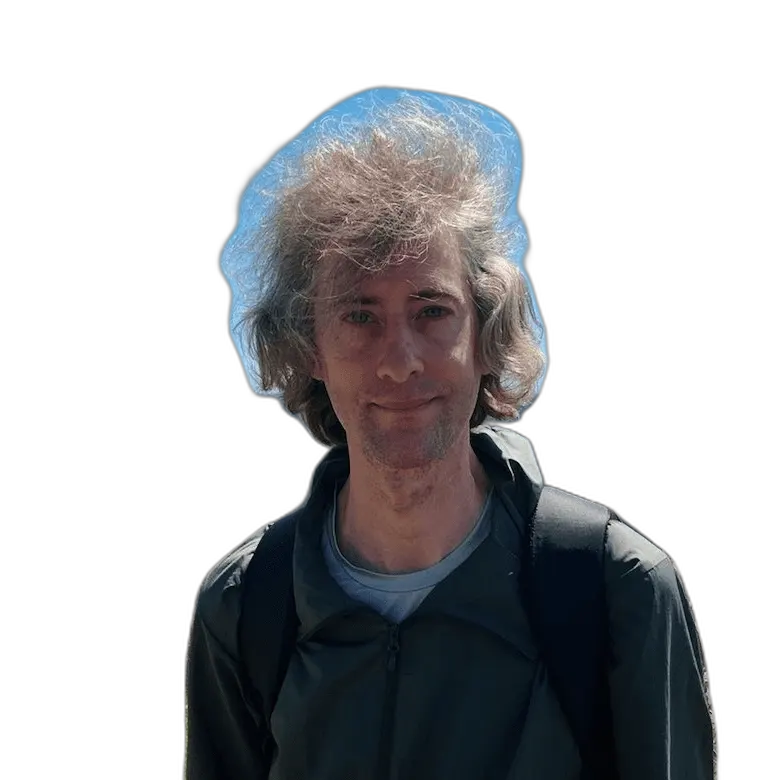
About the guest
Michael Edward Johnson
Michael Edward Johnson is a theoretical neuroscientist and consciousness researcher whose writing on OpenTheory includes Principia Qualia. The archived Qualia Research Institute profile for his work describes a collection of his research publications and blog posts there, while this episode focuses on his newer proposed theory of trauma, vascular latching, and what he calls vasocomputation.
Learn more →Listen to the episode
Treat this episode as a proposed model, not settled neuroscience
This is one of the most intellectually ambitious episodes in the Nervous System Mastery archive. Michael Edward Johnson offers a theory for how trauma may become biologically persistent: not only through memory, narrative, or generalized autonomic patterning, but through long-lived vascular “latches” that restrict blood flow to parts of the nervous system and freeze certain patterns in place.
That is a proposal, not an established clinical fact.
Some of the background pieces are real and well studied: smooth muscle can sustain force through latch-state physiology, and brain function depends on tightly regulated blood flow.12 The larger step Michael takes in this conversation is to argue that these known physiological features may help explain trauma storage, emotional rigidity, attentional blind spots, and even some of what happens in meditation or somatic healing.
1The high-integrity way to read this episode is to separate three layers: established vascular physiology, plausible-but-unproven inference, and strong speculative extrapolation. The episode is most useful when those layers stay distinct.
If you do that, the conversation becomes much more valuable. You don't have to choose between “this explains everything” and “this is nonsense.” You can treat it as a serious hypothesis with clear practical and research implications.
The latch model in plain English
Michael's basic claim is surprisingly simple.
- Blood vessels are wrapped in smooth muscle that can contract, relax, and in some cases maintain a kind of latched state.1
- Blood flow helps regulate how dynamically neural tissue can update. When flow changes, sensitivity and flexibility change too.2
- His proposal: under overwhelming, developmentally impossible, or highly survival-relevant conditions, the body may “freeze” certain patterns by restricting local flow and preserving a known-safe configuration.
- His extension: if those latches persist, they may function as a physical substrate for what many practitioners call stored trauma, emotional debt, or body-held patterning.
A useful way to hold the model is this:
| Layer | More established | More speculative |
|---|---|---|
| Smooth muscle | Smooth muscle latch-state physiology is a known feature of contraction mechanics.1 | Trauma regularly creates durable vascular latches in the way Michael proposes. |
| Brain and blood flow | Neural activity and blood flow are tightly linked through neurovascular coupling.2 | Restricting flow is a primary mechanism by which the body locks emotional and cognitive patterns for years. |
| Healing modalities | Breath, arousal shifts, safety, attention, and some therapies can change state. | Their key mechanism is specifically unlatching vascular constrictions tied to trauma. |
The guide below slows those moves down. It separates established physiology from the episode’s larger explanatory claims, so the mechanism stays visible instead of getting smuggled in as fact.
Why this theory is interesting for nervous-system work
The most useful part of the episode is not the jargon. It is the way Michael tries to connect trauma, attention, and agency.
He suggests that if certain networks receive only “safe mode” levels of flow, they may remain stable but less available for flexible updating. Later he pushes this further: if you cannot bring attention into a region or pattern, you may also lose access to some choices, feelings, or forms of response.
That lands because many people already recognize the lived version of it:
- “I understand the pattern cognitively, but I still can't change it.”
- “I can talk about the feeling, but I can't actually feel it.”
- “Certain triggers make my world suddenly narrow and repetitive.”
- “Safety increases access; force makes me clamp down harder.”
Whether or not Michael's mechanism turns out to be right, that agency question is worth keeping.
| If the model were directionally right... | You might expect to notice... |
|---|---|
| Some patterns are physically constrained, not just psychologically explained | numb zones, chronic bracing, inaccessible emotion, repetitive reactions |
| Healing requires more than insight | shifts in sensation, attention, and bodily range, not only better stories |
| Safety matters mechanistically, not just sentimentally | trusted context, pacing, and permission increase access |
| Catharsis is not the whole game | the lasting win is more freedom, not just more intensity |
That last point is especially important for Nervous System Mastery readers. The point of somatic work is not to produce the biggest release. It is to increase available range without losing orientation.
Breathwork, psychedelics, and meditation in this model: hypotheses, not proof
Jonny presses on the obvious question: if latches are real, what opens them? Michael offers several possibilities, but he does so as a theorist, not from settled evidence.
His suggestions in the episode include:
- Breathwork may increase the system's “temperature” or energy, making fixed patterns more open to reorganization.
- Psychedelics may affect vascular dynamics more strongly than most people assume, potentially cycling constriction and relaxation in a way that could “pop” latches.
- Safety and permission may allow incomplete reflexes or held patterns to finish without forcing them.
- Meditation may work more slowly by reducing control reflexes and exposing the system to sensations it previously could not tolerate or predict.
The right way to read this section is cautiously:
- Michael is offering mechanistic hypotheses, not established treatment pathways.
- The episode does not show that breathwork, psychedelics, humming, MDMA-assisted psychotherapy, or meditation work because of vascular unlatching.
- Nothing here justifies DIY trauma treatment, aggressive catharsis, or unsupervised use of intense practices or substances.
A cleaner translation is: some modalities may help because they increase flexibility, safety, and access. Michael is proposing one possible deeper mechanism for that. It is intriguing. It is not proven.
Safety may matter more than force
One of the strongest threads in the conversation is Jonny's suggestion that enough internal and external safety can let incomplete processes finish themselves. Michael's meditation framing points the same direction: the body may open more when it is not being coerced.
That yields a practical principle I trust more than the theory itself:
Do not assume the body changes best through intensity.
Sometimes intensity helps. Sometimes it overwhelms. Sometimes it produces a dramatic experience with very little durable change. The steadier question is:
- Does this practice increase access?
- Does it widen my window without blowing me apart?
- Do I feel more choice afterward?
- Can I stay in contact with sensation without collapsing, dissociating, or performing?
That is a better filter than “Did I have a huge release?”
Practice
Use this theory for observation, not self-diagnosis
If this episode activates a lot of curiosity, keep the experiment conservative. You do not need to prove or disprove Michael’s model in your own body this week.
- Pick one ordinary trigger. A tense email, conflict, social pressure, urgency, or a shutdown moment is enough.
- Map what narrows first. Notice breath, jaw, throat, chest, belly, pelvic floor, hands, vision, voice, and attention. Where does your world get smaller?
- Change one safety variable. Slow the pace. Lengthen the exhale. Hum softly. Put your feet on the ground. Step outside. Talk to a trusted person. Reduce stimulation.
- Track access, not drama. Ask: “Do I have more sensation, more choice, or more room for attention now?”
- Stop before overwhelm. If you start flooding, dissociating, spiraling, or chasing a breakthrough, reduce intensity and seek qualified support rather than pushing through.
The win is not “I released the latch.” The win is learning which conditions help your system move from rigidity toward contact.
What would make this more than a compelling story?
This is where the episode gets especially strong. Michael does not only make sweeping claims; he also names ways the theory could fail or be supported. He says it should be “extremely testable” and points to Doppler ultrasound, fMRI with contrast, thermal imaging, and density signatures in tissue as possible research directions.
That gives us a useful standard.
| Prediction from the episode | Possible measurement | What would count as support | What would still remain open |
|---|---|---|---|
| Trauma-related patterning corresponds with localized flow restrictions | Doppler, fMRI, thermal imaging | reproducible differences between relevant groups and controls | whether restriction is cause, correlate, or consequence |
| Change in symptoms should map to change in circulation patterns | before/after scans around interventions | flow changes that track durable functional improvement | which intervention variable actually mattered |
| Latches may have a distinct physical signature | ultrasound or related density imaging | reliable tissue-level pattern identifiable across cases | whether that signature is specific to trauma-related processes |
| Advanced meditators may show different vascular freedom than highly traumatized populations | comparative imaging studies | consistent between-group differences in predicted directions | whether meditation causes the difference or selects for it |
This is the real scientific hinge. A theory earns more trust when it makes risky predictions that can be checked.
Until then, the intellectually honest posture is:
- interesting theory;
- plausible links to real physiology;
- no consensus evidence yet that trauma is literally stored as vascular latching in the specific way described here.
Where this may update polyvagal-style thinking
Near the end, Jonny asks Michael about polyvagal theory. Michael's answer is measured: he thinks parts of the framing are practically useful, but he is more interested in models that cash out in something directly physical and measurable.
That is a healthy standard.
In practice, a lot of Nervous System Mastery readers will still find concepts like:
- window of tolerance,
- collapse versus overwhelm,
- ventral safety,
- social regulation,
- autonomic state shifts
useful for coaching, self-observation, and language.
Michael's contribution is not that those frameworks become useless. It is that he wants a more “gears-level” account beneath them. If his theory survives testing, it could become one candidate mechanism. If it doesn't, the practical observations that made those frameworks useful will still matter.
Key takeaways
- Michael Edward Johnson's “latch” or vasocomputation model is best treated as a testable hypothesis, not established neuroscience.
- The episode builds on real physiology—smooth muscle latch states and neurovascular coupling—but extends that physiology into a much larger trauma theory that remains unproven.
- The practical value of the conversation lies in how it links trauma, attention, rigidity, and agency.
- Breathwork, psychedelics, humming, safety, and meditation are discussed here as possible mechanisms of change, not as proven ways of releasing vascular latches.
- The cleanest research question is not “Does this sound profound?” but “Can this model make accurate, measurable predictions?”
- For actual practice, prioritize safety, pacing, and increased access over dramatic catharsis.
Free assessment
Take the free nervous system assessment.
If this episode leaves you wondering whether your system runs more through hypervigilance, collapse, emotional armoring, or restricted access to sensation, the assessment can help you map your current pattern and choose a steadier next step.
Take the Free AssessmentContinue exploring
- Read Functional Breathwork: Use Interoception to Regulate Your Nervous System for a more grounded guide to matching breath practices to state.
- Read Somatics, Breathwork & Emotional Fluidity for a practical frame on feeling more without losing agency.
- Read How to Increase Your Nervous System Capacity for a companion guide on staying in contact with intensity without collapsing.
- Read The Art and Science of Interoception to deepen the body-based awareness that makes any nervous-system theory more testable in lived experience.
References
- Smooth-muscle latch-state physiology is established background rather than a new claim from this episode. See Rembold, “The latch-bridge hypothesis of smooth muscle contraction” (2005): https://pubmed.ncbi.nlm.nih.gov/16333357/. ↩
- Neurovascular coupling describes the close link between neural activity and cerebral blood flow, though mechanisms remain complex. See Phillips et al., “Neurovascular coupling in humans” (2016): https://pubmed.ncbi.nlm.nih.gov/26661243/. ↩