Soul Initiation, Mythopoetic Identity, and Becoming Fully Human with Bill Plotkin
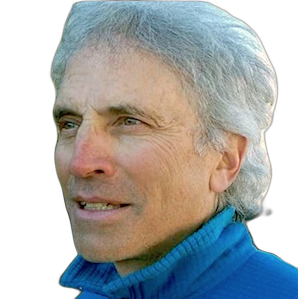
About the guest
Bill Plotkin
Bill Plotkin, Ph.D., is a depth psychologist, wilderness guide, and founder of Animas Valley Institute. He has guided thousands of seekers through nature-based initiatory passages and is the author of Soulcraft, Nature and the Human Soul, Wild Mind, and The Journey of Soul Initiation.
Learn more →Listen to the episode
Becoming fully human may require more than success, self-knowledge, or spiritual peak experiences
In this conversation, Bill Plotkin offers a nature-based developmental map for soul initiation, mythopoetic identity, and what it might mean to become more fully human. You do not have to accept his framework as universal truth to find it useful. The practical value is that he gives language to a common modern problem: many people become functional, intelligent, socially skilled, and even spiritually curious without ever feeling deeply initiated into a life that is truly their own.
Plotkin's core distinction is sharp. In his view, there is a difference between building a workable social identity and discovering what he calls a deeper soul-level identity. The first matters. The second cannot be rushed, optimized, or faked by collecting more insights.
Use this guide if you are:
- curious about soul initiation or mythopoetic identity without wanting to become dogmatic;
- sensing that career success, social belonging, or self-improvement still do not answer a deeper question;
- trying to understand what Plotkin means by true adulthood and becoming fully human;
- integrating a retreat, vision, wilderness threshold, or symbolic inner experience back into ordinary life;
- looking for a spiritual-development lens that still leaves room for discernment, nervous-system regulation, and practical responsibility.
1This is a reflective guide, not therapy, psychiatric care, or a recommendation to force solitude, fasting, psychedelic work, or identity-dissolving practices. Plotkin explicitly warns that trying to push soul-initiation work before you are ready can be destabilizing, and that for many people strong social connection remains the healthier medicine.
First, distinguish personal authenticity from soul initiation
One of the most useful moves in the episode is Plotkin's distinction between early authenticity work and later initiatory work. In his framework, many people are still doing the necessary developmental labor of learning who they are socially, emotionally, and vocationally. That is not failure. He explicitly says it is a valid stage of life and one from which a person can still contribute.
A practical translation:
| If your main question is... | Plotkin would likely call this... | Better next move |
|---|---|---|
| "Who am I around other people?" | personal authenticity work | clarify values, emotions, boundaries, and belonging |
| "What work actually brings me alive?" | social/vocational authenticity | test roles, interests, and real-world fit |
| "Am I living as myself or performing for acceptance?" | early-adolescent developmental work | build honesty before chasing revelation |
| "What is the deeper gift or ecological niche I am here to embody?" | later initiatory terrain | move more slowly, seek guidance, and respect timing |
| "I had a powerful vision. Now what?" | metamorphosis and enactment | integrate through modest experiments, not declarations |
People often confuse a longing for soul with a need for better boundaries, better community, more emotional honesty, or a less performative career path. Plotkin's claim is not that these are small concerns. It is that they are different concerns.
Plotkin's definition of true adulthood is contribution-shaped
Plotkin's description of a true adult is far more demanding than conventional adulthood. It is not about age, competence, status, or independence alone. In his language, a true adult is someone who:
- experiences primary belonging in the larger Earth community rather than only in a human tribe or role;
- has glimpsed a unique place or ecological niche in that larger web;
- has found a way to embody that niche as a gift to life, including their human community.
That is where the episode becomes especially relevant for searchers asking how to become fully human. Plotkin is arguing that adulthood is not just self-management. It is gifted participation.
| Conventional adulthood | Plotkin's "true adulthood" |
|---|---|
| be responsible, productive, and socially legible | discover and embody a life-enhancing gift |
| build a stable identity | let identity be reorganized around deeper belonging |
| succeed inside existing systems | become, in his words, a visionary artisan of cultural regeneration |
You may or may not share his cosmology. Even so, the challenge underneath it is useful: Is your life organized around performance, or around contribution that feels deeply yours?
The descent to soul has five phases, and the middle is not a bug
Plotkin's map of the descent to soul is one of the clearest parts of the conversation. Jonny summarizes it through the caterpillar-to-butterfly metaphor, and Plotkin agrees: the process includes preparation, dissolution, soul encounter, metamorphosis, and enactment.
| Phase | Plotkin's description | Practical translation |
|---|---|---|
| Preparation | strengthen the foundations of the self | build enough wholeness, honesty, and capacity to tolerate change |
| Dissolution / dismemberment | old identity loosens or falls apart | the social self may stop feeling sufficient or coherent |
| Soul encounter | glimpse the truth at the center of the image you were born with | encounter a symbolic sense of deeper vocation or identity |
| Metamorphosis | the encounter keeps working on you over time | do not rush to monetize, explain, or perform the insight |
| Enactment | the gift becomes lived contribution | life reorganizes around service, expression, and participation |
One of Plotkin's strongest cautions is that soul encounter is not primarily information. In the Western mind, we tend to assume that if insight arrives, action should follow immediately. Plotkin says no: the encounter may be more like a catalytic seed or a lightning strike. Something has happened, but it may take months or years before the psyche can metabolize it.
That is a very practical warning for modern seekers. If you have a profound retreat, medicine, wilderness, or dream experience, the next move is not automatically to announce a mission statement. It may be to stay with the soup for a while.
Do not skip the four facets of wholeness
Before the descent, Plotkin says people need to cultivate what he calls the four innate facets of human wholeness. These are not personality types. They are capacities he believes support a fuller range of humanness.
| Facet | What it develops | Why it matters |
|---|---|---|
| North — Nurturing Generative Adult | leadership, healing, responsibility, generativity | helps you act, care, and create in ways that support life |
| East — Innocent Sage | presence, wisdom, big-picture seeing, nonattachment | helps you perceive clearly instead of reacting compulsively |
| South — Wild Indigenous One | embodiment, emotion, kinship with the more-than-human world | helps you trust feeling, aliveness, and the body's intelligence |
| West — Dark Muse Beloved | imagination, dream life, intimacy with mystery, comfort with endings | helps you relate to the unknown without collapsing into control |
Plotkin also says modern culture especially suppresses the South and West facets: feeling, embodiment, deep imagination, dream life, darkness, and intimacy with the unknown. That claim may sound mythic, but it lands practically. Many people are highly trained in analysis and productivity while remaining undertrained in:
- feeling without immediately fixing;
- listening to the body;
- staying close to grief, endings, or ambiguity;
- letting imagination reveal something before the strategic mind takes over.
If you are drawn to soul language but weak in those capacities, Plotkin would likely say the next step is not bigger revelation. It is fuller preparation.
Sacred wound work reframes vulnerability without glamorizing trauma
Another memorable section of the episode is Plotkin's distinction between core wound and sacred wound. In his framing, each person is born with some innate sensitivity or vulnerability, and then life events strike that sensitivity. The wound becomes "sacred" not simply because pain is noble, but because conscious work with that wound can open a person to soul rather than harden them against it.
His metaphors are vivid:
- the Dineh weaving includes a deliberate imperfection, a "spirit line," through which mystery can enter;
- Leonard Cohen's line, "there's a crack in everything," points to the same principle;
- without some vulnerable opening, the ego could become too armored for deeper initiation.
The honest takeaway is important: wounds are not automatically wisdom. Some pain first needs safety, grieving, boundaries, and skilled support. Plotkin's contribution is not "trauma is good." It is closer to: a vulnerable place may become a doorway if it is worked with carefully enough.
Practice
Run the 7-day sacred-question experiment
Use this if the episode stirs something real in you, but you do not want to inflate that stirring into a grand identity claim.
- Choose one live question. Examples: “What role am I outgrowing?” “What wants to become more true in me?” “What am I pretending not to know?”
- Give the question actual space. Spend 10–20 minutes outside, walking slowly or sitting somewhere quiet, and repeat the question without trying to solve it.
- Do not wrestle answers into certainty. If an answer appears, imagine placing it on Plotkin's “shelf of the world's best answers,” then keep swimming in the question.
- Choose one experimental threshold crossing. Have one more honest conversation, make one cleaner request, write from a different voice, or spend one hour in nature without a productivity agenda.
- Stay modest. Do not announce a destiny. Just test what it feels like to show up a little differently.
- Track the body's response. Notice what brings more steadiness, aliveness, grief, clarity, or clean discomfort.
- Review after seven days. Ask: “What became more honest?” and “What became more dramatic without becoming more true?” Keep the first. Drop the second.
The win is not having the perfect myth about yourself. The win is a more grounded relationship with the question and one embodied experiment.
After a glimpse, think experiment — not declaration
The most practical part of Plotkin's integration advice is what he calls experimental threshold crossings. After a soul encounter, a person does not yet need to save the world. They need a bridge between the symbolic insight and ordinary social life.
His examples are refreshingly humble:
- have one conversation from the new place in you;
- attend one gathering you would normally avoid, but show up differently;
- write one poem or message from that inner image;
- express love, choice, or truth in a new way with someone close to you;
- make dinner, speak, walk, or create from that altered inner posture.
This is where mythopoetic identity becomes practical. It is not a branding exercise. It is a small, repeated experiment in embodiment.
A useful translation for everyday life:
| Instead of... | Try... |
|---|---|
| making a huge proclamation after an insight | testing one behavior that fits the insight |
| treating a vision as a business plan | treating it as a symbolic compass |
| asking "How do I serve the whole world?" | asking "How do I show up differently today?" |
| forcing enactment too early | allowing metamorphosis to keep doing its work |
Let the question change you before you weaponize an answer
Near the end of the episode, Jonny asks what it means to fill one's space with a question. Plotkin's answer is one of the best parts of the conversation. Rather than demanding immediate answers from the strategic mind, he suggests repeating the sacred question, letting its wording evolve, and allowing the question itself to work on you.
That is a direct antidote to one of the most common spiritual-development traps: turning mystery into certainty too quickly.
His metaphor is excellent. If an answer arises, place it on a shelf behind you labeled "some of the world's best answers" — then turn back and keep swimming in the question.
For Nervous System Mastery readers, this is also a nervous-system practice. A body that cannot tolerate uncertainty will try to solve existential questions too fast. Sometimes the healthier move is not more analysis. It is more capacity to remain in living contact with what has not resolved yet.
Practical takeaways
- Do not confuse authenticity work with soul-initiation work. Both matter, but they are not the same project.
- Plotkin's version of true adulthood centers on discovering and embodying a gift, not merely building a socially successful identity.
- Preparation matters. If feeling, embodiment, imagination, and presence are weak, bigger insight is not automatically the answer.
- A powerful inner experience may be the beginning of metamorphosis, not the end of confusion.
- Work with wounds carefully. Vulnerability can become a doorway, but pain should not be romanticized or rushed into meaning.
- If solitude is making you more brittle, isolated, or unwell, do not automatically call it initiation. Plotkin explicitly says developmental stage-matching matters.
- Some questions are wiser lived than solved. Let the question deepen before you turn it into a slogan.
Free assessment
Take the free nervous system assessment.
If identity change, spiritual searching, or a major life threshold is stirring urgency, confusion, or self-doubt, the assessment can help you map your current nervous-system patterns and choose a steadier next step.
Take the Free AssessmentContinue exploring
- Read Wilderness Rites of Passage for Leadership for a grounded guide to threshold experiences, wilderness practice, and integration.
- Read Meaning Crisis, Post-Traumatic Growth, and Homegrown Humans with Jamie Wheal for a complementary map of meaning, grief, and contribution.
- Read Emotional Freedom & Healthy Ambition for a practical lens on ambition, honesty, and moving without self-abandonment.
- Read The Art and Science of Interoception to deepen the body awareness that helps discern whether a threshold is clarifying you or destabilizing you.